Smart is green. PCM, Phase Change Materials

06 March 2019

An “energy-smart façade” that generates and stores energy throughout the year makes this house, designed by zillerplus Architekten und Stadtplaner München, an “efficient house plus” – a building that is capable of generating more energy than its residents use. This is made possible by techniques such as the use of particularly clever phase-change materials (PCMs), which are also used in “pocket warmers”.
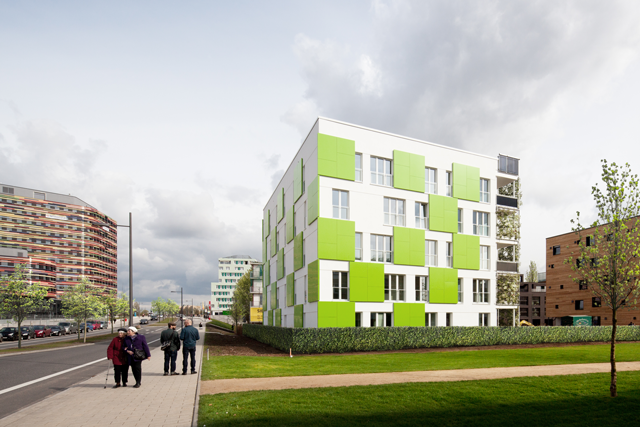
Smart is green

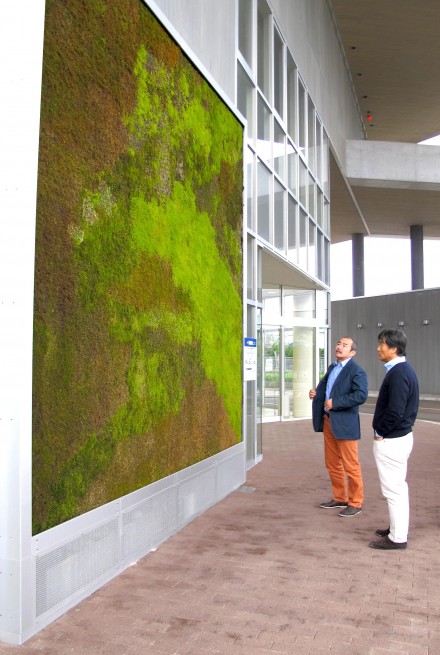
One Façade, Three Layers: all the Better for the Climate   The outer shell of the Smart is Green building is made up of layers including a vertical garden façade that acts as a heat shield during summer, along with insulating glazing, which protects from both heat and cold, and a PCM “curtain”. PCMs are in a constant aggregate state between solid and liquid. Like “pocket warmers”, which absorb heat when immersed in hot water and can be used to warm freezing hands when it is cold, these materials can absorb the warmth from the sun’s energy and release it later. Excess heat is thus removed from the area during the day, preventing the apartments from overheating. This stored heat is then released during the cooler hours of the night. Smart is green
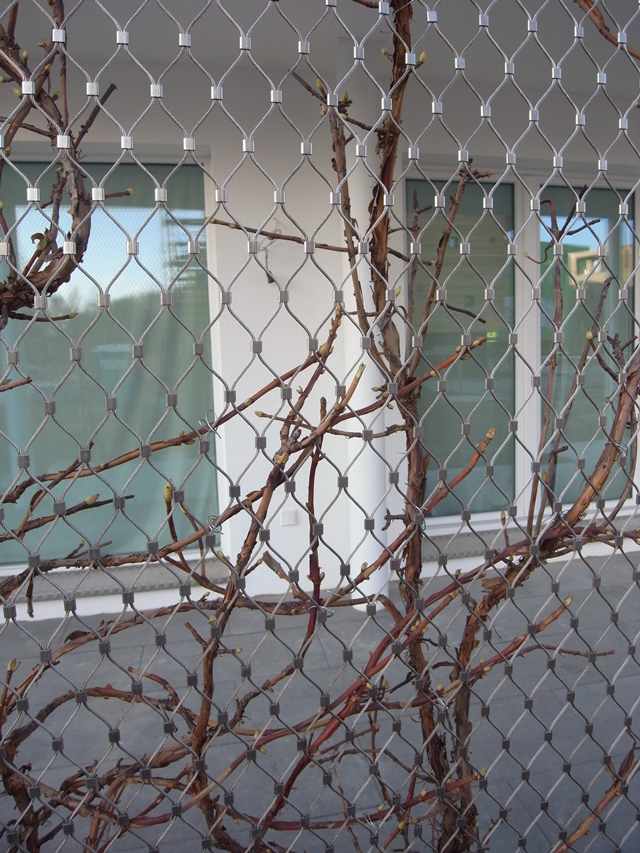
Peak temperatures during both summer and winter can thus be intercepted and balanced out, resulting in a very pleasant interior climate. PCMs are also used for the building’s central heating storage facility, with a volume that is only half that of a conventional storage tank. The surplus heat from the solar thermal facility is stored here and maintained at the right temperature for under-floor heating. If there is a significant excess of solar energy, it is fed into the Wilhelmsburg local Energy Network.
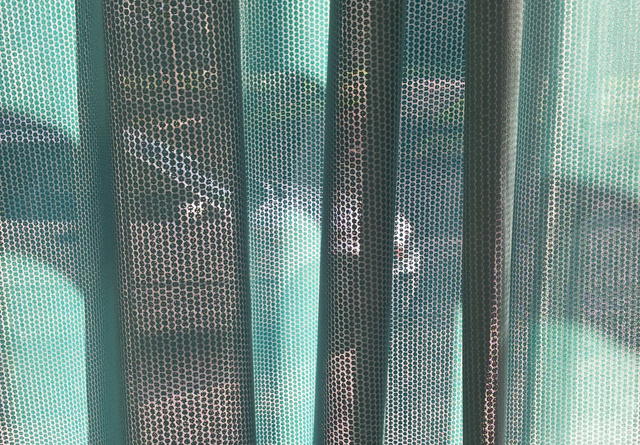
Smart is green

In return, this ensures a sustainable heat supply, especially in long periods of cold weather. Both the exterior cladding and the roof are mounted with photovoltaic surfaces that transform energy from sunlight into electrical energy, and solar thermal surfaces, which convert solar power into heat energy. The façade and roof therefore play an active role in the building’s ingenious engineering concept, using innovative forms of technology to generate energy that can be consumed within the house itself. Moreover, such technologies are integrated into the very architectural concept behind the building.   Tomorrow’s Properties Will Help their Residents to Get Around   Like all of the concepts behind the Smart Material Houses, the façade with its clever materials is not the only innovative element – the integrated concept for the whole project is also groundbreaking. In Smart is Green this can be seen in the ground plan and the way in which it can be accessed, with various entrances to the individual apartments via stairs or lifts. The house is laid out so that the apartments can be configured or modified in a versatile way, allowing them to be partitioned or extended in order to meet the needs and changing living arrangements of their inhabitants. The attractiveness of “green living” is also embodied by the spacious terraces on each landing, each containing a small garden, between the planted and glazed areas on the southern side of the building.   The Technical Innovation Doesn’t Stop with the Building   Just in front of the green façade are facilities for providing green energy for getting around in the future, in the form of a fast charging station for electric cars. Surplus energy can be offloaded onto vehicles, which act as energy storage devices and can thus make an important contribution to the energy design of the building. E-cars also form a natural part of the mobility concept, as a car-sharing system is planned for the residents. All of this will make car-sharing among neighbours an attractive alternative to owning private vehicles. Extra charging devices for electric bicycles and scooters can also be installed in combi-boxes on the ground floor upon request. (Fabiana Cambiaso - Università La Sapienza) www.zillerplus.de   Smart Green, Zillerplus Architekten Prototype IBA 2013 Hamburg Completed: 2013 Site: Hamburg, Germany Materials: Phase change Materials (PCM), Steel, Concrete Applications: Curtains, Solar Shading Figures: © Zillerplus Architekten.

Marco Mignatti  

Materials

Dolomitenblick, my project with copper

Dolomitenblick - Ulla Hell architect presents his project in a residential area in the hilly landscape of the Dolomiti. And he explains why he chose copper as façade material. www.plasmastudio.com/
Materials

Natural materials. From banana trees, a valuable and environmentally friendly product

15 March 2019

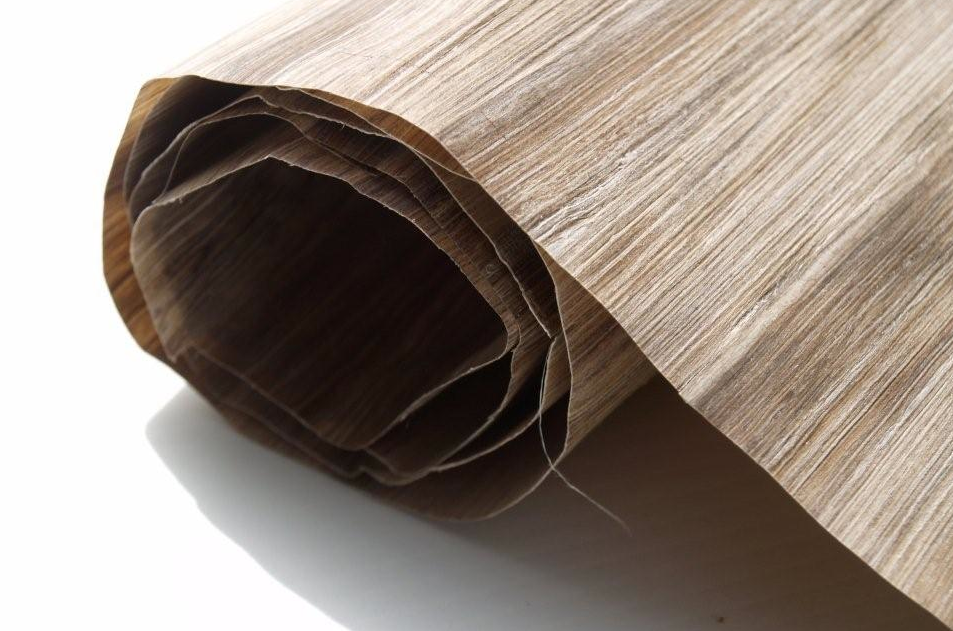
The stems of banana plants, which were traditionally destined to be discarded, become a new natural material today. green bladeGreen Blade is the quality and eco-friendly semi-finished product presented at Made by French company FIBandCo, the result of a process carried out on these plants. The result is a natural plating, ethical and sustainable coating. green bladeGreen Blade has the look of wood and it comes in four hot colors obtained through a manufacturing process, without the use of water or chemicals. This material is born in the wild and is treated with ECHO and responsible processing. In the hands of architects, designers and planners it becomes versatile material. It is used mainly in the form of plating, for cladding and architectural panels, but also to decorate kitchens, furniture and design objects thanks to its flexibility, thin thicknesses and translucent effect. green bladeAn added value is that FIBandCo is a company committed to sustainable development. The bosses of the company are two young French engineers former students of ESIEE Paris, l'École de l'Innovation Technologique, who developed this particular innovative process to enhance the stems of banana plants in small units installed in the heart of banana plantations. The company was founded in Martinique, in the heart of the plantations: a choice that makes it possible to optimize resources and reduce carbon emissions. The fiber manufacturing process does not require the use of any chemical agent and the company produces its energy through solar panels. A green-oriented style, for sure!   www.fibandco.fr

Marco Mignatti

Materials

Mapei: eco-friendly products for quality architectures

Founded in 1937 in Milan, Mapei has become the world's largest producer of adhesives and building products. By the time the company has developed a stronger sensitivity to sustainability, it allocated more than 70% of investments in research and development for the study of eco-sustainable products. In 2000 it was awarded the "business award for Eco efficient" in "environmentally-friendly" category in an important initiative of the Lombardy region and the Chamber of Commerce. Today the commitment is even stronger, as shown by some of the main building where Mapei was involved, alongside the best international architects.   The Marina Bay Sands resort in Singapore, designed by Israeli architect Moshe Safdie, also includes the ArtScience Museum and the Gardens By the Bay: a futuristic project for which several coatings, such as ceramics, marble, slate and bamboo, were laid. Waterproofing works were made to ensure moisture protection and impact resistance. For this, Mapei products with very low emission of volatile organic compounds (VOC) have been chosen.   Dragon Bridge is in Da Nang in Vietnam. It is a concrete bridge with steel arches in the shape of a dragon. The weight of the bays and the exposure of atmospheric aggression made the use of specific products necessary, in order to achieve the concrete to protect the structure. Mapei has provided concrete additives and eco-friendly paint resistant to ultraviolet rays.   Environmental responsibility is very important for the company and his choices, starting from design and operation; ensuring greater durability means avoiding subsequent interventions on buildings and infrastructures. Mapei’s products are the result of intensive research, aimed to obtain innovative formulas integrated into complete application systems, more effective. Special attention is also compatible with substances of health professionals working in business and advanced technology solutions that contribute to environmental protection. The eco-sustainability is a commitment that requires, application and research method, but above all experience. And that's why Mapei is committed to working on large architectural projects and achievements are also important from an environmental point of view.
Materials

Carbon fiber and robots. A Pavilion inspired by a beetle

The Institute for Computing Design (ICD) and the Institute of Building Structures and Structural Design (ITKE) at the University of Stuttgart have designed a Pavilion visually and physically reminiscent of an insect, or rather a beetle. The working group is not new to these recent projects: in fact another hall has been recently designed, and it is based on the exoskeleton of a lobster; its structure is designed and built on the model of the skeleton of a sea urchin.   The project is based on robotic development of double modules structures composed of layers of carbon fiber: in this way the entire architecture remains minimal and lightweight, allowing a high degree of freedom. It covers an area of 50 square meters, but weighs only 593 kg. Beetle-Shells-Structure-7-495x350The team of researchers and students have used high resolution 3D models of various beetle shells – known as elytra – to conduct an analysis of the complex internal structures, working closely with biologists and paleontologists of the University of Tuebingen. Beetle-Shells-Structure-6-495x350These structures were converted then into a set of design principles, made with glass and carbon fiber reinforced polymer to give the hall an optimal strength-to-weight ratio.   "The project presents a new approach to composite fiber structures in architecture", explained researcher and member of the ICD team Marshall Prado.
Materials

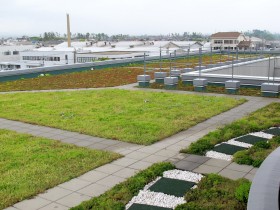
Greenbiz, innovative material for vertical gardens, and not only

05 October 2018

Looking for a new balance between the natural environment and the built one, creative and constructive process of housing is looking for new concepts and objectives.

Greenbiz

The architect Marco Piva presented at Made the installation "Space for Life" that addresses the issues of small-scale residences, their possible aggregations in more and more complex structures.

Greenbiz

Constructive solutions are made in relation to the highest energy standards. The manufacturing technology is that of wood, renewable natural material; energy performances are in "class A"; renewable energies are used and the structure is earthquake-proof and fire resistant.

Greenbiz Greenbiz

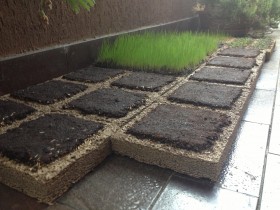
The building materials are sustainable and high performance. The vertical walls are made with the innovative Greenbiz. Born in Japan, result of research and studies, it is a unique and worldwide patented material, result of a virtuous cycle of production. Cooking at very high temperatures, above 1000° c, makes the matter be like ceramics, so it is inert, fireproof and ultra-micro porous and lightweight.

Greenbiz

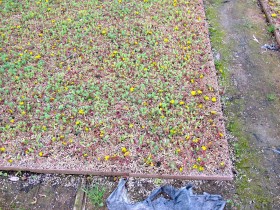
The characteristics of absorption and thermal insulation combined with the ability to absorb water and hold it for 50% of its volume makes it the best possible material for industrial roofing and terraces with hanging gardens. Used as a coating, it works as a coat and it allows the creation of vertical green.   www.greenbizitalia.it

Edoardo Croci

Materials

Fibra di carbonio e robot. Il padiglione "coleottero"

02 October 2018

L'Istituto per Design Informatico (ICD) e l'Istituto di Strutture edilizie e Progettazione Strutturale (ITKE) dell’Università di Stoccarda hanno realizzato un padiglione che ricorda visivamente e materialmente un insetto, o meglio un coleottero. Il gruppo di lavoro non è certo nuovo a questi progetti: recente è infatti un altro padiglione basato sull'esoscheletro di un'aragosta e una struttura progettata e costruita invece sul modello dello scheletro di un riccio di mare. Il progetto è basato sullo sviluppo robotizzato per moduli delle doppie strutture composte da strati di fibra di carbonio: in questo modo l’intera architettura rimane minima e leggera, permettendo un elevato grado di libertà geometrica. Si estende su una superficie di 50 metri quadrati, ma pesa solo 593 chilogrammi.

Beetle-Shells-Structure-7-495x350

Il team di ricercatori e studenti ha utilizzato modelli 3D ad alta risoluzione di vari gusci di scarabeo - noti come elitre – per condurre un'analisi delle strutture interne complesse, lavorando a stretto contatto con biologi e paleontologi dell'Università di Tuebingen.

Beetle-Shells-Structure-6-495x350

Queste strutture sono state poi convertite in una serie di principi di progettazione, realizzati con vetro e fibra di carbonio polimeri rinforzati per dare il padiglione un rapporto resistenza-peso ottimale. "Il progetto presenta un nuovo approccio alle strutture in fibra composita in architettura", ha spiegato ICD ricercatore e membro del team Marshall Prado.  

Edoardo Croci

Materials

Porcelain stoneware, the elegance that comes from innovation

20 March 2019

Porcelain stoneware is a favourite material for covering interior and exterior environments. Resistant, hygienic and high quality, it allows infinite customization to suit the tastes and needs of all. In addition to the many color variations, from classic to the most refined nuances, now there are also new and innovative formats. Dgs Ceramiche is one of the most qualified companies in the industry. And at Cersaie 2015 it presented a new collection of porcelain stoneware slabs with new colours and formats, designed for any type of construction. The trends presented in the exhibition remind nature, taking the colors of the trees, and Earth, sky and leaves. DSG Ceramics is the Division of Bassanesi Ceramics, specialized in porcelain stoneware tiles, even of different sizes. The larger formats, 120 × 120 cm, with a thickness that varies from 12 to 4.8 mm, make beautiful coverings from the aesthetic point of view, able to interact harmoniously with the environment. Made of porcelain, these plates can be enriched with decorative effects without the use of glazes. The result, fruit of continuous research and innovation in production techniques, helps to decorate the rooms with style. Porcelain stoneware is an interesting alternative to ceramic, a material that resists abrasion, waterproof and durable, as well as guaranteeing an investment of lasting quality.

Edoardo Croci

Materials