Walks of Design

15 December 2018

New B&B Italia Designs 2018
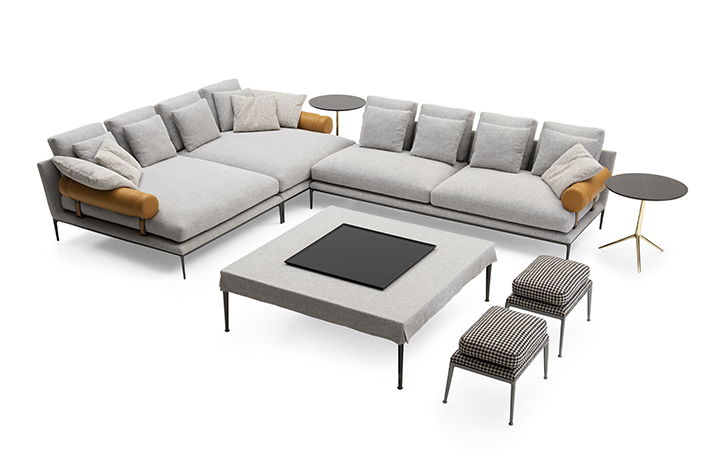
 

atoll


B&B ATOLL
design by Antonio Citterio

«B&B Atoll is a versatile collection that reinterprets traditional elements, like the bolster, associating them with a sleek, refined structure that fits smoothly into the contemporary language. It is versatile because it can be used in a wide range of settings, from the most formal, when partnered with the armchairs, to informal situations, thanks to the possibility of creating an L-shaped configuration with the daybed as end element.»


                                                                                                                                                                                                                  Antonio Citterio


Named after the coral formation B&B Atoll, the new modular seating system by Antonio Citterio, is a refined expression of a balanced aesthetic form and a decisive contemporary style that is also extremely elegant. The system is built on three basic platforms - 190 cm and 240 cm, both with 90 cm depth, and 130 cm with 140 cm deep - that are complemented by armrest and backrest elements to form various types of seats: sofas, dormeuses, corner-end modules, single or modular elements with chaise longue and pouf. The frames have light, slender lines and are applied on high die-cast supports with metal profile emphasising the line between the structure and upholstery. Two finishes are available, pewter and black chrome. The pieces are given even more character by a supporting element to be placed wherever desired, a bolster in two sizes - 65 and 90 cm - attached by leather straps to a die-cast structure. This accessory can be inserted between the seat cushion and the base structure to provide an additional support or become an armrest or backrest at will. B&B Atoll is a dynamic project with a constantly fresh ability to adapt to different compositions and create different seating types, from informal relax versions to most formal, also made possible by the use of complementary back cushions.
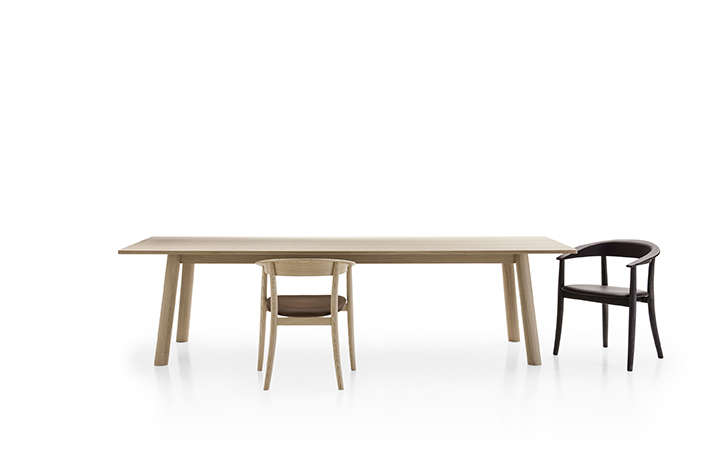
bull


BULL
design by Naoto Fukasawa

«As its name expresses, Bull is a table with 4 toned legs that stand firm on the ground. I designed this very firm looking table together with an elegant chair as a pair. Together they look if they were truly “The Beauty and the Beast”. The beast, after all, is a great looking table.»


                                                                                                                                                                                                               Naoto Fukasawa


The aim of Naoto Fukasawa’s Bull table is to communicate the immediate impression of a very solid yet extremely refined object. A stylistic formula that forms part of the designer’s distinctive language and which, in the case of Bull, uses a subtle structural tension among the elements: the legs with an ample round section, which although slightly inclined seem to be solidly “planted in the ground”, and in contrast a slim top that seems simply to be resting lightly on the frame. Available in two sizes - 240 and 280 cm - Bull can be entirely in oak in light, grey, black and smoked versions, or with an oak structure and top in black Marquinia or white Carrara statuarietto marble, both with matt finish.
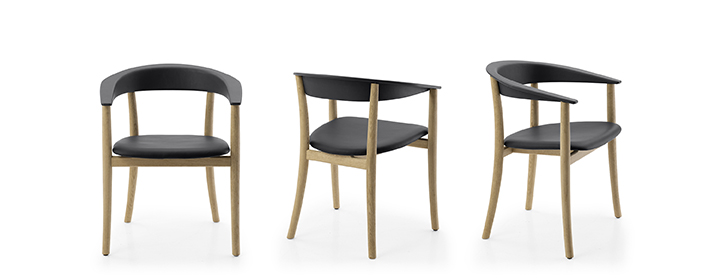
belle


BELLE
design by Naoto Fukasawa

«The character of this elegant chair is expressed by the back support and the armrests, and highlighted by the obtuse angle line around the elbow area. All four legs are slightly curved outwards at the bottom to give a classic feel as well. The chair is named “Belle” after the story of “The Beauty and the Beast”.»


                                                                                                                                                                                                               Naoto Fukasawa


With a clever play of literary and stylistic references, the Belle chair is the delicate, feminine counterpart to the Bull table. With rounded lines and padded seat with leather upholstery, it reinterprets the detail of the rounded section of the table legs, and as it develops downwards adds a small element of curvature that creates a graceful touch. Towards the top, the legs join the chair back with elegant, elbow-shaped arms. Two solutions are offered for the backrest, oak wood in the same finishes as available for the frame - light, grey, black and smoked - or leather upholstery matching the seat, obtained thanks to a special manufacturing technology.
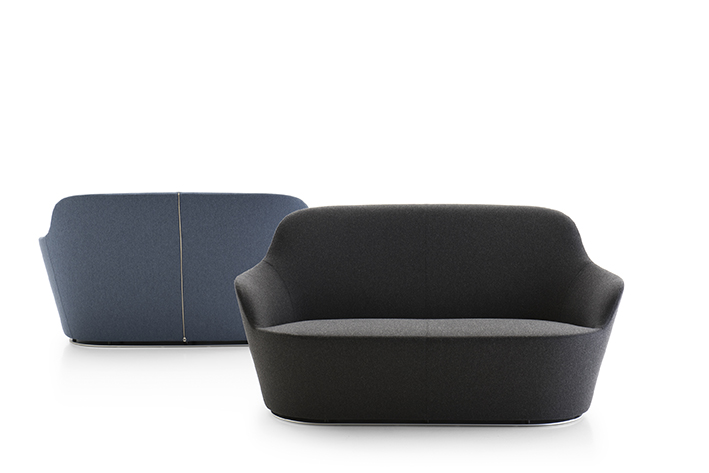
harbor


HARBOR
design by Naoto Fukasawa

“When I was working on the Papilio family project, I realized that the iconic strength of B&B Italia is in working with polyurethane foam as a mass. Hence the idea for this design to sculpt a form out of this material as if I was making a sculpture out of Carrara marble blocks. It is true to me that B&B Italia is a brand that creates sculptures in polyurethane. The name Harbor comes from a feeling of having a place to come back to. I also wanted this seat to have a feeling of wrapping around our body”.


                                                                                                                                                                                                               Naoto Fukasawa


The Harbor series of armchairs and pouf, presented with success in 2017, is enhanced by a new, equally contemporary and sinuous sofa. A range extention in the sign of design continuity, result of Fukasawa’s research into seating in the shape of upside-down truncated cone. The sofa reflects in particular the architectural, ergonomic shape of the conversation armchair, compounding its welcoming appeal by hosting two people. In fabric or leather, it has a visible metal zip on the rear of the backrest that acts as a decorative element and also allows the cover to be removed.
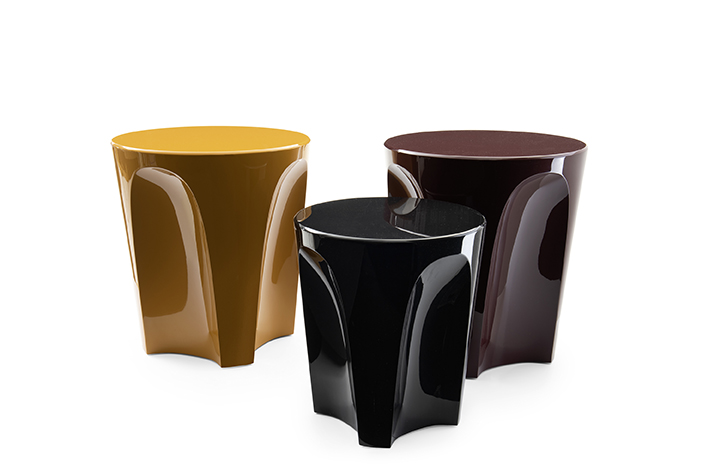
colosseo


COLOSSEO
design by Naoto Fukasawa

«Like the Harbor armchairs that are carved out from an upside down conical mass, these small tables were originally made by the same process. However they looked rather too solid and heavy so I shaved off some of the mass, then its arches resembled the Roman arches of Colosseum.»


                                                                                                                                                                                                               Naoto Fukasawa


Colosseo fits smoothly into the highly successful product category of accessories, furnishing elements that change function according to occasion and need, and for Colosseo this means transforming from coffee table to pouf. When designing this new product, Fukasawa arrived at the shape he was searching for by considering a solid in the form of an upside-down truncated cone, lightened by arch-shaped grooves that define the surface, creating an assonance with the structure of the famous Roman arena it is named after. Made of hard polyurethane painted in sixteen glossy colours, Colosseo is available in two sizes: 40 cm diameter x 45 cm height and 50 cm diameter x 55 cm height.
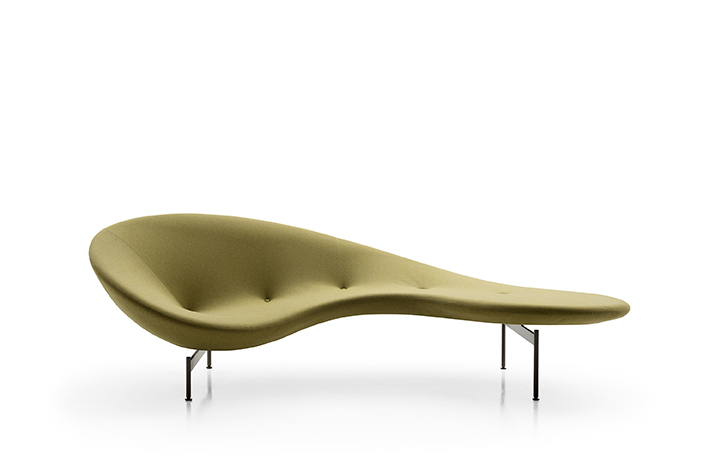
eda-mame


EDA-MAME
design by Piero Lissoni

«It’s as if it were a surface, a Möbius strip. Eda-Mame is strangely full of curves, it welcomes you and, if you want, it lets you drink an aperitif, almost as if it were an upholstered table


                                                                                                                                                                                                                      Piero Lissoni


Shaped by an organic development inspired by the form of a soy bean, the typical ingredient in Oriental cuisine, Eda-Mame is a furnishing element with a strong impact created by a sculptural design that can give great incisiveness to a space. A single object that is a fusion of three types of seating - high-back chair, easy chair and pouf. Its threefold nature lends Eda-Mame extreme versatility in both residential and public settings, and can also highlight areas for co-working, passage and short stays, like hotel lobbies. Made of moulded foam, Eda-Mame is upholstered in a stretch fabric with a light stitching. The support base is made of crosspieces with rounded steel feet connected to each other by a bar, all in pewter painted finish.
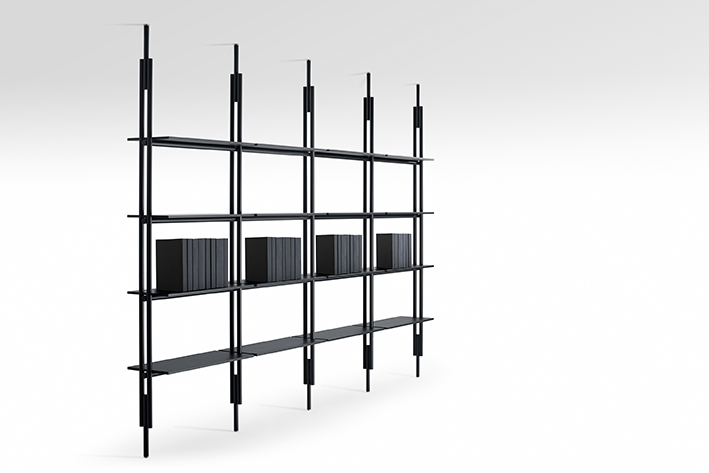
Jack


JACK
design by Michael Anastassiades

«This bookcase system started as a stacking exercise of an assembly of rods of the same diameter. The selected design is a reduced configuration, providing the optimum structure and modularity to address a diverse range of interior spaces. The technical solutions are discreet, allowing for arrangements that feel specifically fitted to a particular room. Its discipline lies in the structural rules used to build from one form to the next, assembling to make a cohesive composition.»


                                                                                                                                                                                                     Michael Anastassiades


Jack is the result of the first collaboration between B&B Italia and Michael Anastassiades. Known for his skills in working with light, the Cypriot designer has designed a modular bookcase system with a striking degree of technological perfection. In its search for the creation of an innovative language, this design challenge revisits and modernises a design classic, the 1950’s room centre bookcase, transforming it into a complement with a clean, essential yet architectural structure. The genius of the piece lies in concealing the engineered supports, including those holding up the laminated shelves, inside the vertical elements with a rounded section made of extruded aluminium and integrated by an exclusive, totally-invisible, floor-ceiling telescopic adjustment system. The system is available in 14 heights, ranging from 219 to 323 cm and taking in all measurements in-between, while the shelves are in two lengths, 75 and 90 cm, both 30 cm deep. Two are the finishes provided for the vertical elements and shelves for single-colour solutions, chalk white and black, both matt.
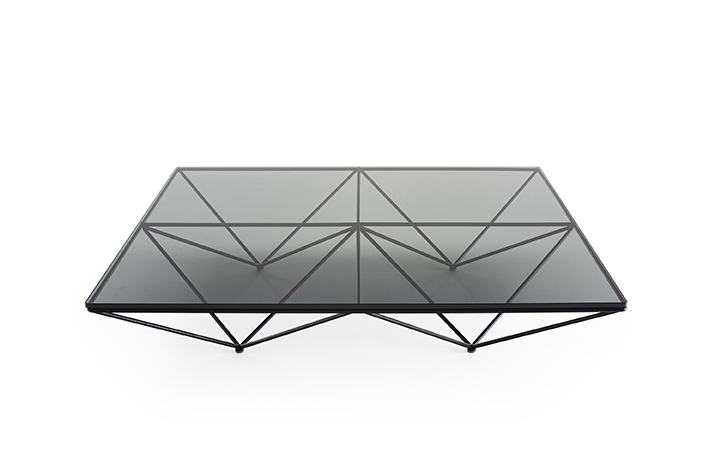
Alanda


ALANDA ’18
design by Paolo Piva

The Alanda coffee table, an iconic piece that ushered in the 1980s, is now revisited in homage to Paolo Piva, the great architect and designer who passed away last year. A highly successful classic and sought-after vintage furnishing complements, Alanda is one of the most typical design objects of a period with a wealth of strong, daring stylistic signs, often in a dialogue with architecture, reproducing its most attractive, characteristic elements in miniature. The Alanda’s structure, serving as both pedestal and support, recalls a group of upturned pyramids, a geodetic frame that has always characterized it as if it was a magical object, entrapping and amplifying cosmic energy. Alanda ‘18 is offered in two sizes - 120 x 120 cm
and 120 x 180 cm - with structure in glossy black painted steel and top in extralight or smoked glass.


New Maxalto Designs 2018
 

Nidus


NIDUS
design by Antonio Citterio

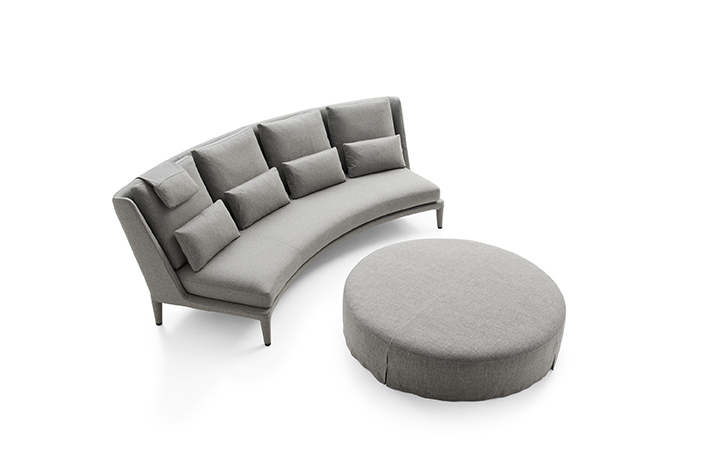
«Nidus is a curved sofa with no arms for formal use as a conversation seat. I felt that this type of product was lacking in my interior design projects, intended for large interiors where there is the need to create lounges with different groups of seating. It’s part of the experimentation in creating high-backed sofas, which provide a degree of comfort to seating designed for socialising.»


                                                                                                                                                                                                                  Antonio Citterio


The Nidus collection of upholstered furniture was inspired by the precise need to create a series of formal proposals with a relaxed feel, for moments of socialising and conversation in a harmonious, relaxed setting. Antonio Citterio has achieved this objective by paying great attention to structural details like the embracing shape of the curved sofas, available in two sizes. Together with the absence of arms and the high back, this solution makes it possible to bring people together in a fresh, relaxed and unusual way. This extrovert approach is also embodied by the armchairs, offered in three versions, only one of which with arms, intended as items to be arranged freely. All the Nidus pieces can be complemented by a comfy removable headrest, and have feet upholstered in the same fabric or leather as the seats, with the addition of a small metal detail at the base that is decorative and also guarantees protection against impacts.
Caratos


CARATOS
design by Antonio Citterio

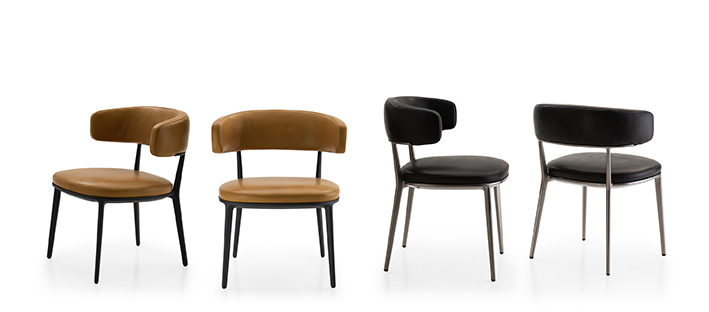
«After 25 years of presenting products that use artisanal materials and processes, I felt the need to offer a “moulded” piece, a chair with a fusion structure, thanks to a significant industrial investment by the company. At the same time, I wanted it be part of the Maxalto collection. Caratos is absolutely contemporary, but recalls some twentieth century objects, echoing the idea of bronze, through a “full” opaque finishing that absorbs light,
and the great quality of the leather upholstery, giving it a “saddlery” look.»


                                                                                                                                                                                                                  Antonio Citterio


Chairs in two versions, armchairs, poufs and coffee tables are the new proposals that extend the Caratos series launched last year. These new items both reflect and strengthen the original designs’ essential features while softening them by introducing embracing shapes. The light die-cast graphite or amber painted aluminium structure is retained, while padded backrests contribute to the formation of the armrests, creating seating with no postural restrictions at all, encouraging conversation and relations between neighbours. The poufs and coffee tables echo the design of the frames and are ideal complements to the seats to create conversation areas and social settings.


New B&B Italia Outdoor Collection 2018


Bay


BAY
design by Doshi Levien

Bay is a collection of sculptural and monolithic yet visually light outdoor seats comprising of a sofa in two sizes, an armchair and a high-backed armchair. Their enveloping volumes are marked by a double polypropylene fibre interlacing that creates “air pockets”, granting transparency and lightness to the furniture. The frame accommodates padded solid seats and soft cushions for added comfort. The colours combinations are extremely refined, with tortora and anthracite for the interlacing, paired with elegant block colour and patterned fabrics for the seats and cushions.
Tabour


TABOUR OUTDOOR
design by Doshi Levien

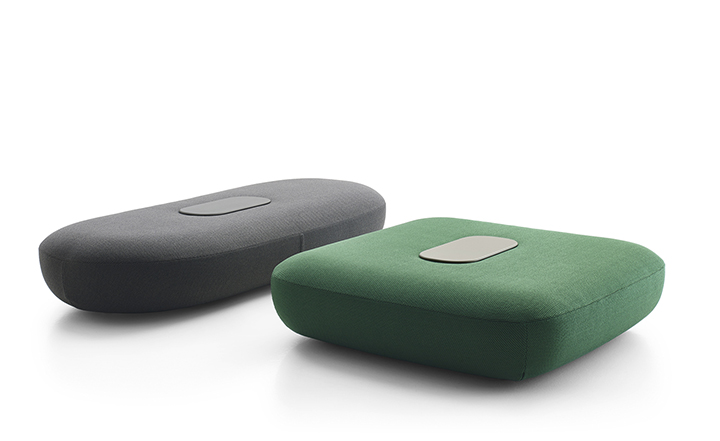
Tabour, the collection of indoor ottomans introduced in 2016, now features a new outdoor version. Oblong oval and square in shape, they resemble primeval marine creatures or large unicellular animals, associating the sensuality of the organic shapes with highly technological materials. The fabric is stretched over the padded frame by a sort of oversized “button” that serves as a tray, painted white, tortora or anthracite.
Fiore


FIORE
design by Naoto Fukasawa

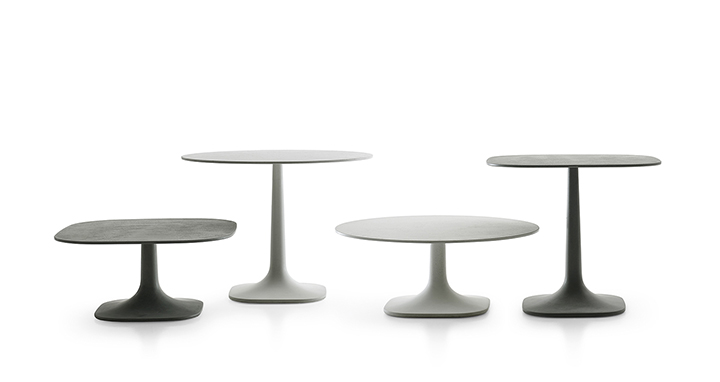
Fiore is a new series of outdoor tables, round and square available in two heights, in white or greige cement. “Many years ago, I called my chairs “Papilio” because their silhouettes reminded me of butterflies,” says Naoto Fukasawa. “Now I have called my latest project “Fiore”, meaning flower in Italian, because the Papilio chairs sit around these tables like butterflies flying around a flower. The combination of a Fiore table with the Papilio chairs creates a pleasant outdoor environment for a coffee or a quick meal.” An outdoor solution that offers utmost flexibility, suitable both in residential and public settings.
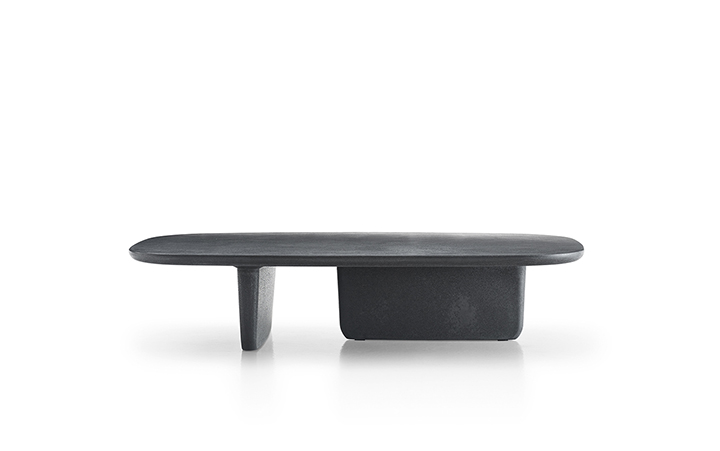
Tobi-Ishi


TOBI-ISHI OUTDOOR
design by Barber & Osgerby

The iconic Tobi-Ishi table - whose inspiration from the East is clear even in the name, which refers to the ornamental stones used in traditional Japanese gardens - is now presented in a low, cement version that emphasizes its sculptural, textural aspect. Available in two finishes: grey and anthracite.

Edoardo Croci

Materials

Zintek®: zinc-titanium's steel mesh

19 October 2018

The Psenner distillery is a space that combines innovative design and tasting, and the first European project made with zinc-steel mesh titanium by Zintek®. One of the most famous distillery in South Tyrol, and established itself at the international level, Psenner is over 60 years grappa and distillates' synonymous. The company want to communicate its own identity based on transparency and visibility, this inspired the architects Freissinger and Elzmbaumer, who have built the project: the image of manufacturing processes move from inside to outside. The skin envelope comes from the three basic stages of Psenner production - distillation, evaporation and condensation - occurring in copper stills and tubes. These produce tube shapes that characterizes the showroom, and Onyx backlit display changes color creating a different atmospheres. And here the "bubbles" of steam come, as round shapes in the steel's zintek® mesh which is the production's shed covering. The sheet metal, chosen for its texture, was deliberately mounted to reverse, with openings upward to maximise the nighttime lighting, through white light filtered by satin glass, which lit up from within the walls of the building. An effect of great suggestion possible by the workmanship of the slabs and the quality of the workers who have made the work, the Schmidt AS Bolzano. Zintek ®, is therefore ideal for innovative project due to its excellent processability and able to blend perfectly with other materials used, first of all, the total white glass that reduces the difference between internal and external. The Psenner's new headquarters is today a point of reference for the world of wine (it will be promotion site for events and educational and informative activities) as well as industrial design. (Fabiana Cambiaso Università La Sapienza Roma).

Carlo Bardelli

Materials

Polli-Bricks: recycled plastic

04 October 2018

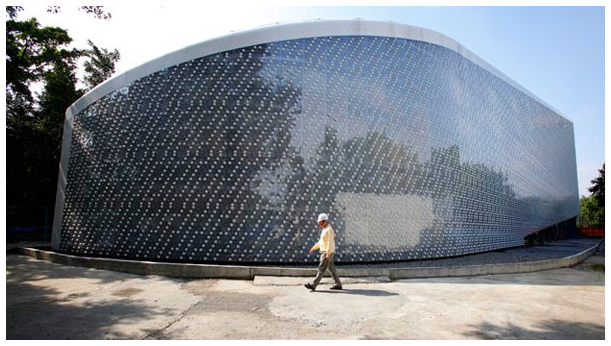
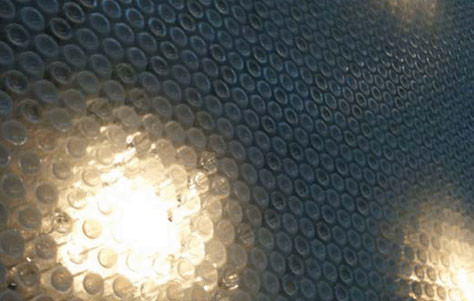
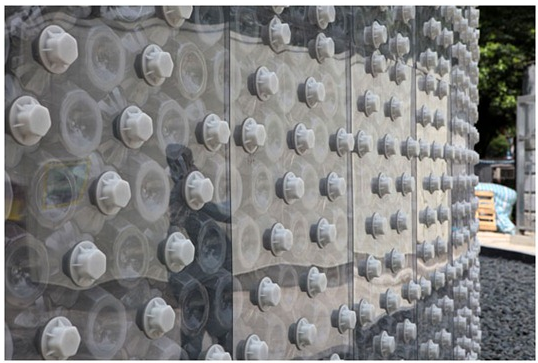
The creative minds at miniWIZ recently debuted the Polli-Brick, a recycled polymer bottle that can be interlocked to build an incredible array of structures. Made from recycled PET bottles, the lightweight bricks offer excellent acoustic and thermal insulation and can build anything from fences and roofs to pots for plants, skylights and beautiful walls of light. POLLIAnyone who has taken a trip to the United States’ southwest desert has likely seen early examples of recycled-bottle architecture. From miner’s shacks to elaborate residences, these practical and ingenious structures helped early frontiersmen and women settle The West. Now miniWIZ, the creative team that brought us the HY-mini, miniNOTE and SOLARBULD, have taken the idea and transformed it into a fantastic new technology. polli brickPolli-Bricks possess incredible thermal and sound insulating characteristics in addition to an awesome strength to weight ratio, which should make them a hit with architects and builders alike. While you can’t yet get these at your local building supply mega-store, the economy, versatility and structural potential of the Polli-Brick may just be what a struggling building market needs. PolliWe love the simple beauty of the Polli-Bricks and are happy to report that it has been chosen for inclusion in the Far Eastern Group Fashion Pavillion in the Taipei International Exposition in 2010. The Fashion Pavillion will showcase the ingenious Polli-Brick curtain wall system, an interlocking honeycomb wall that lights up with a brilliant display of solar-powered LED’s. (Fabiana Cambiaso Università La Sapienza) www.miniwiz.com  

Marco Mignatti

Materials

Dry technologies: Perforated aluminium panels and steel

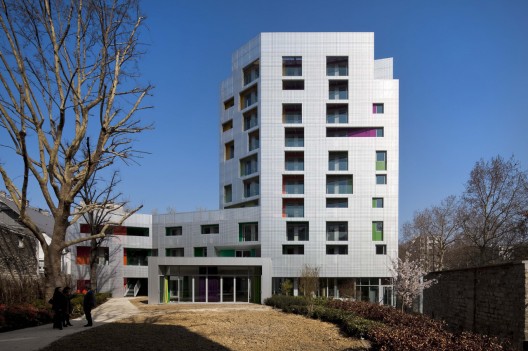
This project deals with the extension and the restructuration of a young workers residence, a 10-levels building made of a concrete structure with overhangs every 2.50m. The existing building was built in a brutal way in the 1970s on the Fondation Eugene Napoleon domain, a group of Heritage buildings.

1308148693-frederic-delangle-10-425x5001

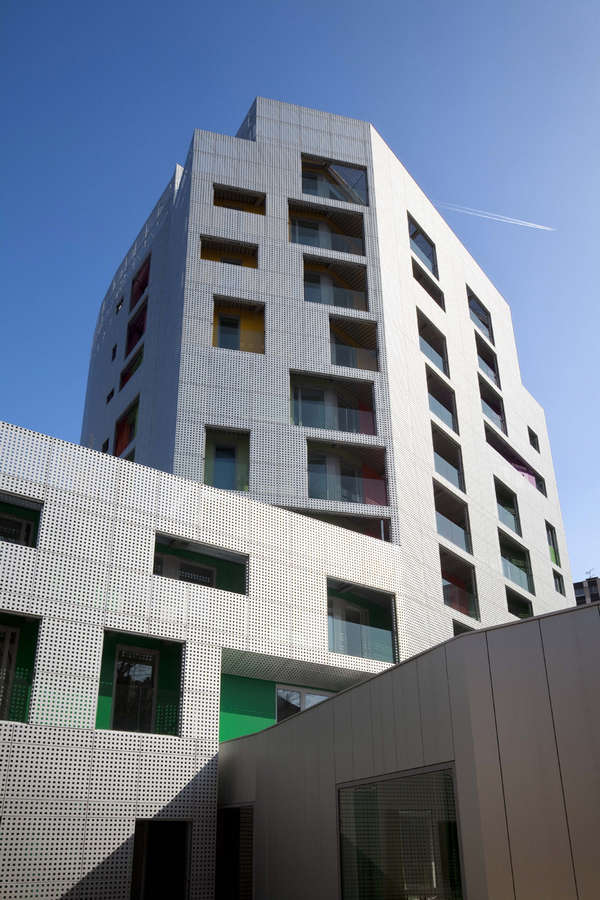
To go faster, allow freedom of interior organization and future flexibility, the extensions have been assembled using a metal frame.

1308148775-herve-abbadie-10-333x5001

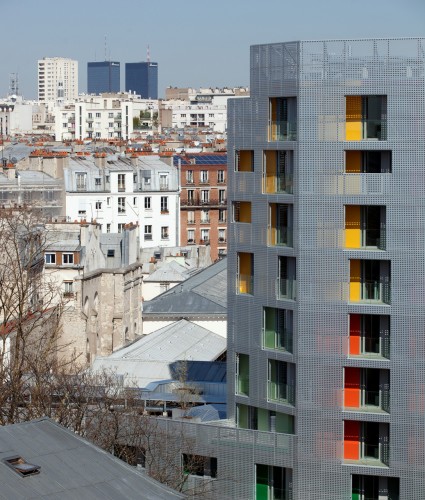
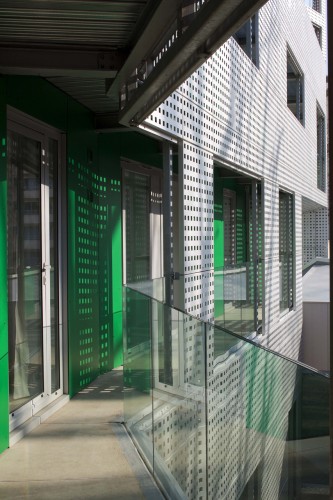
The anodized aluminium envelope draws up a new geometry, free of architectural styles, that encompasses the extensions and the existing buildings.

1310853600_754_333_5001

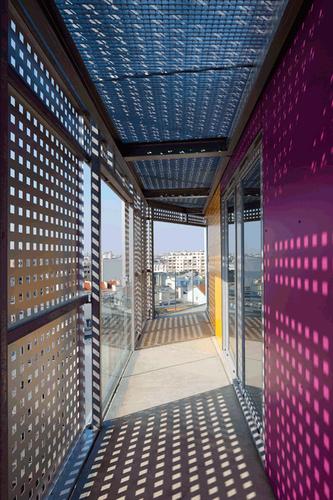
It reflects the light and is slit by openings onto the windows and the balconies/galleries of the garden. Final touch to the Fondation’s composition, the garden is connected to the Boulevard by openings in the outer wall, to the communal life spaces on the ground floor and to the galleries on the western façade.

1308148735-herve-abbadie-4-528x3511

The housing itself is the result of working on expanding minimum space, on series and repetitions. The metal structure allows shifting forward or backward the light frame partition walls in the flats to create two spaces, the “services” in the hall and the living space close to the window.

herve-abbadie-51

 (Fabiana Cambiaso - Università La Sapienza) Credits: suzelbrout.com Figures: ©  Hervé Abbadie; © Frédéric Delangle Young Workers Residence, Paris, France aasb_agence d'architecture suzelbrout / Suzel Brout, Leslie Mandalka Site: 3751 mq Completed: 2011 Materials: Modular panels of anodised aluminium with serial holes made with laser technology, Steel Applications: Envelope, Structure  

Materials

Kimano, decorated parquet becomes furniture

The parquet decorates itself and it becomes furniture. The Xilo 1934, specialized (also) in the field of wood floors, presented at Cersaie 2015 a product of great interest: the design floor Kimano. We talk about a decorated parquet, expression of a unique style that combines the elegance of wood product to the aesthetics of a classic finish. XILO_KIMANO4.jpg

This made in Italy product also has advantages, including ease of maintenance, as well as being more resistant to scratches and, in case of damage, the surface can be repaired. In addition, it is natural: no formaldehyde or toxic emissions, but only water paint with a greater protective layer. Kimono, available in multiple formats, is indicated for installations on radians and cooled; it is perfect for glued installation and floating.

XILO_KIMANO.jpg XILO_KIMANO2.jpg

And above all it gives rise to new locations. The flooring is no longer just finishes for interiors and exteriors, but it becomes subject to personalize our rooms and create geometric patterns or shapes that change the appearance. Kimano was created by the artist from Palermo Fiorella Bonanno. Daughter of art, with a love for decorations from a young age, Bonanno is passionately dedicated to the study and reproduction of typical Sicilian décor wood, keeping alive the artistic traditions of his homeland.  

Materials

A photocatalytic cement

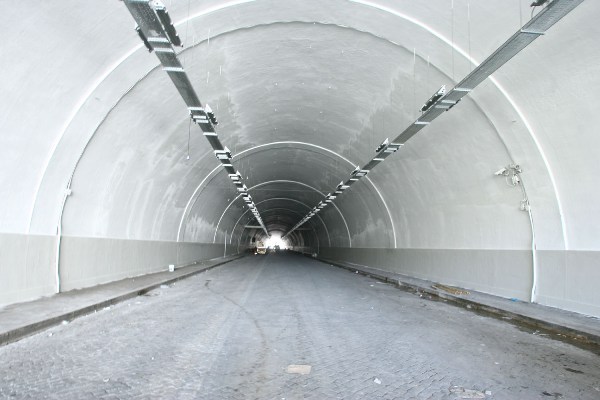
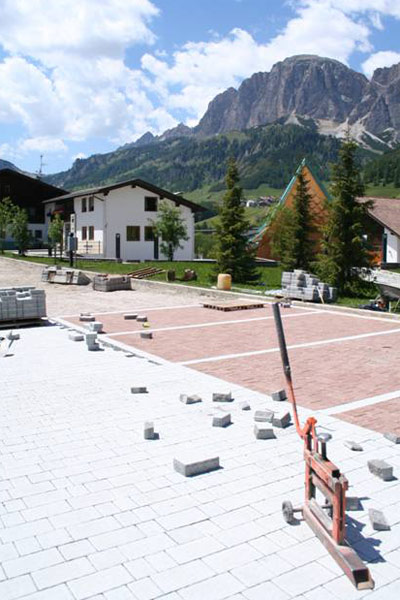
An environmentally friendly, high quality and innovative material that not only guarantees security, but also reduces pollutants in urban areas thanks to the photocatalytic action activated by sunlight. TunnelUmbertoIRoma

As smog, for years, has been ruining palaces, monuments and urban centers, a big space in construction and architecture was given to the research of materials able to maintain over time the aesthetic quality of the buildings. TX Active was successfully tested: this is the "smog eating" principle patented by Italcementi Group, a leading provider of building materials. TX Active is applied on the surface as it is the only portion that interacts with the atmosphere; the photocatalytic principle is not used in structural applications but only where it is possible to maintain modest thicknesses: from a few centimeters up to a few millimeters.

PiazzadelComunediCorvaraBZ

For its important properties it has been applied to many valuable architectural works whose beauty is preserved with the self-cleaning effect. Italcementi Group approaches the construction industry with the most advanced technologies developed from research with a strong commitment to quality and innovation.   www.italcementi.it

Materials

Luxury residence in concrete

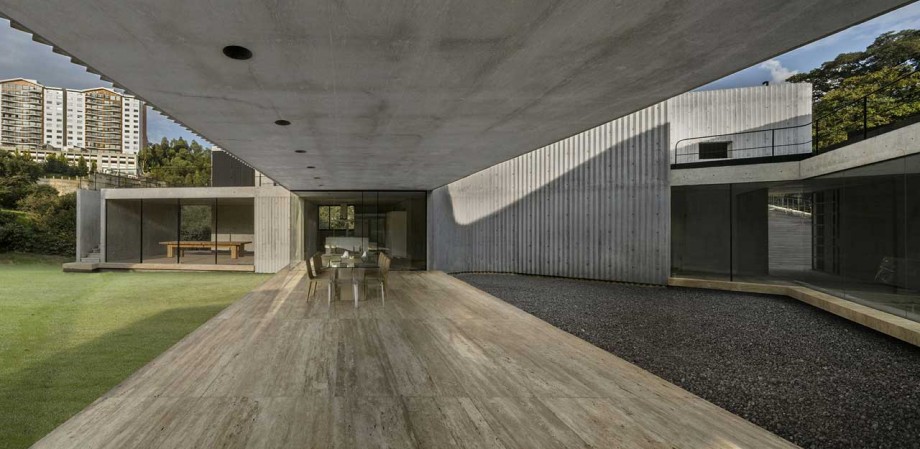
Choosing concrete as material for a luxury residence. The young Mexican architect Abraham Cherem (Cherem Arquitectos) recently completed the project of a residence on the outskirts of Mexico City, built for a well-known local football player. Cherem Arquitectos, House P, Bosque Real, Huixquilucan, MessicoThe project is based on the study of the views of the house and the movement of the light on the inside. The architect has two overlapped blocks of concrete, creating a complex set of rectangles and curved walls. The goal is to minimize the outskirts views of the metropolis, by focusing our gaze on the large patio. Cherem Arquitectos, House P, Bosque Real, Huixquilucan, MessicoThe 44 cm thick walls alternate with smooth walls in corrugated surfaces. Inside, the walls are conceived as concrete curtains, regulating spaces and the entry of light at different times of day. Cherem Arquitectos, House P, Messico, pianta del piano terraAbraham CheremThe use of concrete is inspired by the work of Brazilian architects Lina Bo Bardi and Oscar Niemayer
Materials

The Metaphone®, concert hall and urban music instrument

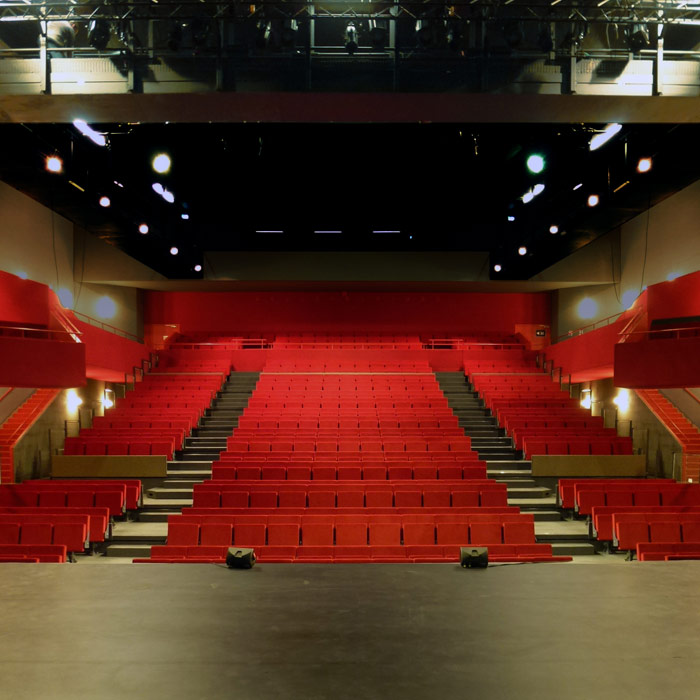
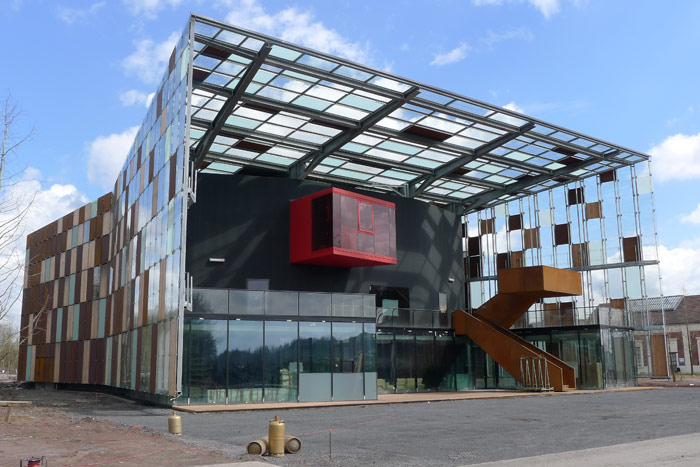
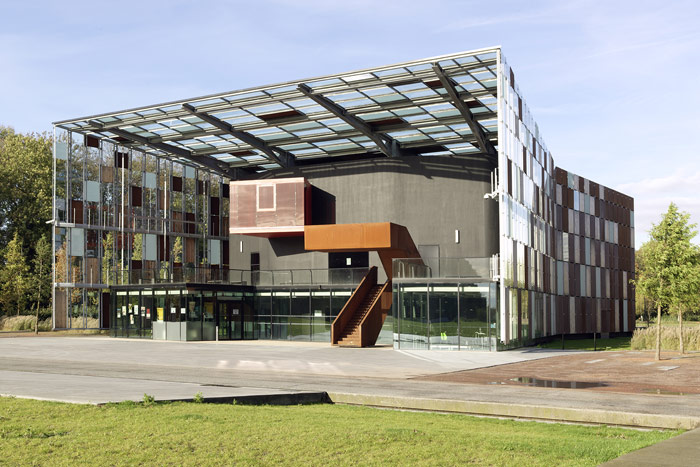
The Metaphone® is the contemporary keystone of the whole project, embodying the site’s new musical and acoustic role. An architecture of materials, sound and light, it is the emblematic space of 9 – 9bis: a building to be looked at and listened to, an immense instrument played by musicians who are alternately invisible or in the limelight. The musical flow of the site strikes its walls and makes them sing. And like music, it evolves in time, in the passing of time: it is transformed into harmonies of sound and colour, fluid, fleeting, but constantly renewed, which will become the spirit of the place. META-AMORIN

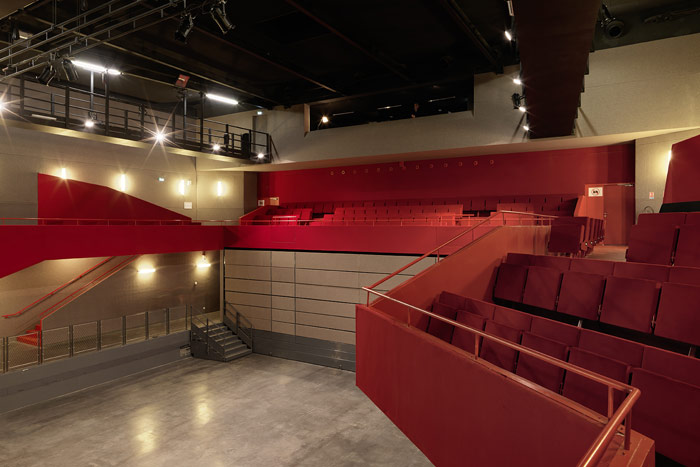
The Metaphone® is both concert hall and “urban musical instrument”, whose walls produce and diffuse sounds, in harmony with the play of light. The concert hall and its annexes (technical rooms and audience boxes) are contained within a volume of black concrete, itself wrapped in a light skin made of scales of different materials: ground glass, steel, wood... This scaly skin extends outwards and opens above the concourse, forming a great porch protecting the entrance and terrace. Between the concrete mass and the scaly skin, attached to a metallic structure, technical walkways are provided for installing and maintaining the sound and lighting equipment. On the roof, the lattice of scales extends into a sheet of integrated photovoltaic cells. The instrumental elements are made up of plates of different materials, whose acoustic properties have been calculated to produce musical sound. There are two principles of sound production: mechanical or electroacoustic, with vibrating bowls mounted on the plates to form loudspeaker membranes (this technique is commonly used in the car industry). These systems have been developed and tested by making a prototype of the musical facade, composed of 8 modules measuring 1.2 m, half fitted with an acoustic instrument, the other half with vibrating plates.

META-AMORIN

What can be composed with such an instrument? Obviously, it is not a tool for producing special effects. On the contrary, the aim is to give a totally and resolutely musical shape to a concert hall built on a site dedicated to music. Undoubtably unique. The principles of composition include factors relating to architectural space, materials and light. Factors relating to environment and use, to maintenance and cost... One can only imagine the variety of timbres that can be produced. In addition, the dimensions of the hall offer a playing area great enough for an orchestra bigger than Berlioz himself could ever have dreamed of. It is an exceptional space which will make it possible to invent musical forms commensurate with the architecture. Composers from all over the world will be invited to create works for this auditorium. This is how the originality and power of the project will be maintained. META-AMORIN

For the public, the Metaphone® is likely to be a “curiosity”. People will come to Oignies to see and hear it. It will serve as a secular bell, marking the hours, midday or sunset. It will signal the beginning of a concert or the interval, produce a peripheral sound space, discreet so as not to inconvenience the neighbours … It could also be used as an instrument in an orchestral composition, with the musicians playing beneath the porch. META-AMORIN

(Fabiana Cambiaso, Università La Sapienza) Credits: www.herault-arnod.fr Figures: © André Morin; © Marie Clérin   Concert Hall, Oignies (Pas-de-Calais), France Hérault Arnod Architectes Site: 1 980 m² Completed: 2013 Materials: Frosted Glass, Wood, Corten Steel Applications: Envelope  

Materials

Pottery or Corian?

15 November 2018

Pottery, Corian, Cristalplant or Cristalite: which one is the best one? Barbara del Curto gives an answer in an interview with designrepubblica.it. Choosing between ceramic and new materials is difficult. She explains: "They are both versatile, suitable for kitchen, bathroom and furnishings". And you can find unexpected innovation: "Pottery has a long history, but today with the help of technology it can be worked into an infinite number of textures, colors and thicknesses. It can also be combined with other materials and find application in public works, walls etc.". But what is the difference between them? They are all resistant to heat, scratches, shocks, stains. And they are inert, hygienic, easy to clean and maintain. "But the new materials have some advantages: they are less cold to the touch, they are made with thermoformable moulds, so they are more easily mouldable and they are resettable: if it becomes dirty, using sandpaper is enough. And if the top is broken, it can be repaired invisibly".

Marco Mignatti

Materials

Straw Bale Cafè: innovation made of straw

Straw Bale Cafe: wood, straw and innovation

This project comprises an extended 100 seat cafe, refurbished kitchen and cafe terrace. It is conceived as a learning aid in low-impact environmental design, featuring:

  • Prefabricated Construction: To minimise disruptive on-site works, the building structure was prefabricated in a nearby barn.
  • Demountable: The building is designed to be dismantled at end of 15 years and most components re-used / re-cycled.
  • Energy efficient: The building is highly insulated, naturally ventilated and naturally daylit.
  • On-site energy generation: The building generates up to 6kW from photovoltaic panels and wind turbine.
  • Local Materials: Cedar cladding and organic straw from the College estate. Wall plants from local nurseries.

We chose to pre-fabricate the building structure, in order to avoid the need for certain lengthy and disruptive on-site processes.

The Modcell load-bearing panel system was used. The panels were assembled in a ‘flying-factory’ in one of the College outbuildings by architecture students from Nottingham University and members of our practice. A key advantage of this modular form of construction is that the building can be easily dismantled at the end of its useful life and most components reused and/or recycled. This is important because the College has long-term plans for the redevelopment of the campus over the next 10-20 years.

Materials The choice of materials has sought to make the most of the College’s natural resources. The 60 organic straw bales used to insulate the building come from the College’s own farm. The western red cedar cladding and decking was forested from the college’s 150 acres of woodland. This was cut to size on-site, by College contractors, just a few hundred yards from the building. The green cladding was planted by College students with learning difficulties, using indigenous varieties sourced from local nurseries.

Sustainability Prefabricated. The building structure was prefabricated using the ModCell load-bearing panel system in order to minimise environmentally disruptive on-site works.

Renewable The building is constructed from renewable materials where possible, e.g: PEFC or FSC certified timber and straw (a by-product of the agricultural industry).

Local Materials The building is constructed using local materials where possible, including organic straw bales from the College farm, western red cedar from the College estate and wall plants from local nurseries.

Low-Waste Straw bales were cut to size in the College farm – trimmings were composted or used as animal bedding. The frame is made using offcuts from the timber industry. Cut waste was minimal, as each panel was precision cut from larger sheets using CNC equipment, but any waste was re-used the factory’s biomass boiler. Offcuts of aluminum and steel and were minimised by the design, but any offcuts were collected and recycled via the scrap industry.

Recyclable The building is designed to be dismantled at end of its 20 year design life and most of components re-used / re-cycled. On-site Energy Generation The building generates up to 6kW of green electricity from solar photovoltaic and wind power sources. A monitor displays power generation statistics to the building users.

Energy Efficient The building requires very little heating/cooling as the 450mm of straw bale insulation provides a u-value 3x better than current regulations require (0.14). The building is naturally ventilated and makes use of natural daylight where possible. All artificial lights are on motion and daylight sensors.

Carbon Sequestering Each 3m x 3.2m prefabricated load-bearing panel sequesters approximately 1400kg of atmospheric CO2.

Green Wall The green wall is planted with local varieties to enhance the biodiversity of the building. The ‘green’ cladding minimises the visual impact of the scheme, as well as reducing CO2 emissions through better temperature regulation and increased building insulation. It also reduces the amount of storm water run-off from the building.

Education The building is designed as a learning aid in low-impact environmental design, having relevance to many of its students through their curriculum. College and University students have been be involved in the design, construction and ongoing maintenance of the building. A permanent display panel within the cafe tells the story of its construction.

(F.C.)

Materials