Ceramic mortar becomes surfaces. Innovation and design

Ceramic fiber reinforced mortar covers the walls indoor and outdoor. 3D surface

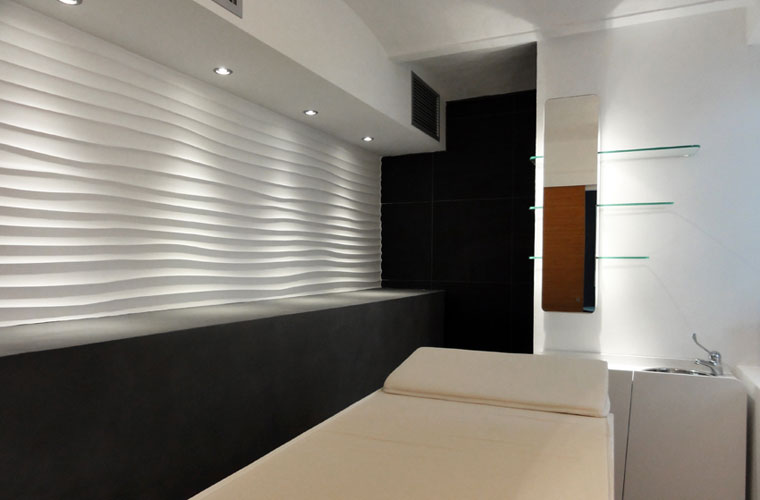
This is one of the news presented at Made Expo by the Florentine company 3D Surface: a new collection with a refined design, developed with the use of special fused material.

3D surface

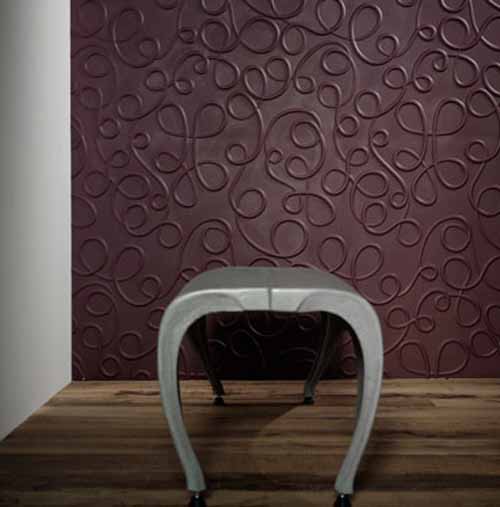
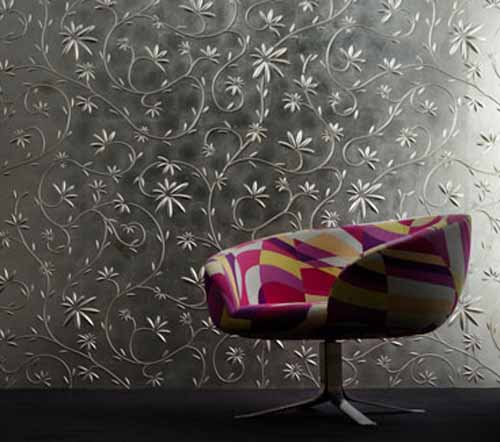
There are thirteen decorative textures with an organic and refined design, composed of elements that interact with each other. At the fair, inside the exhibition architecture workshop, touching the new "wall sculpture" became possible. The surfaces come alive, walls change their skin and transform.

3D surface

This is an innovation in the usual coating scenario. Architects, designers and planners have in their hands a versatile material that allows them to conceive new solutions, leveraging the tactile and sculptural quality of these textures.

3D surface

These materials also provide continuous solutions, surfaces are uninterrupted. It is an interesting change that combines innovation, research and design.   www.3dsurface.it

Materials

Dolomitenblick, my project with copper

Dolomitenblick - Ulla Hell architect presents his project in a residential area in the hilly landscape of the Dolomiti. And he explains why he chose copper as façade material. www.plasmastudio.com/
Materials

Straw Bale Cafè: innovation made of straw

Straw Bale Cafe: wood, straw and innovation

This project comprises an extended 100 seat cafe, refurbished kitchen and cafe terrace. It is conceived as a learning aid in low-impact environmental design, featuring:

  • Prefabricated Construction: To minimise disruptive on-site works, the building structure was prefabricated in a nearby barn.
  • Demountable: The building is designed to be dismantled at end of 15 years and most components re-used / re-cycled.
  • Energy efficient: The building is highly insulated, naturally ventilated and naturally daylit.
  • On-site energy generation: The building generates up to 6kW from photovoltaic panels and wind turbine.
  • Local Materials: Cedar cladding and organic straw from the College estate. Wall plants from local nurseries.

We chose to pre-fabricate the building structure, in order to avoid the need for certain lengthy and disruptive on-site processes.

The Modcell load-bearing panel system was used. The panels were assembled in a ‘flying-factory’ in one of the College outbuildings by architecture students from Nottingham University and members of our practice. A key advantage of this modular form of construction is that the building can be easily dismantled at the end of its useful life and most components reused and/or recycled. This is important because the College has long-term plans for the redevelopment of the campus over the next 10-20 years.

Materials The choice of materials has sought to make the most of the College’s natural resources. The 60 organic straw bales used to insulate the building come from the College’s own farm. The western red cedar cladding and decking was forested from the college’s 150 acres of woodland. This was cut to size on-site, by College contractors, just a few hundred yards from the building. The green cladding was planted by College students with learning difficulties, using indigenous varieties sourced from local nurseries.

Sustainability Prefabricated. The building structure was prefabricated using the ModCell load-bearing panel system in order to minimise environmentally disruptive on-site works.

Renewable The building is constructed from renewable materials where possible, e.g: PEFC or FSC certified timber and straw (a by-product of the agricultural industry).

Local Materials The building is constructed using local materials where possible, including organic straw bales from the College farm, western red cedar from the College estate and wall plants from local nurseries.

Low-Waste Straw bales were cut to size in the College farm – trimmings were composted or used as animal bedding. The frame is made using offcuts from the timber industry. Cut waste was minimal, as each panel was precision cut from larger sheets using CNC equipment, but any waste was re-used the factory’s biomass boiler. Offcuts of aluminum and steel and were minimised by the design, but any offcuts were collected and recycled via the scrap industry.

Recyclable The building is designed to be dismantled at end of its 20 year design life and most of components re-used / re-cycled. On-site Energy Generation The building generates up to 6kW of green electricity from solar photovoltaic and wind power sources. A monitor displays power generation statistics to the building users.

Energy Efficient The building requires very little heating/cooling as the 450mm of straw bale insulation provides a u-value 3x better than current regulations require (0.14). The building is naturally ventilated and makes use of natural daylight where possible. All artificial lights are on motion and daylight sensors.

Carbon Sequestering Each 3m x 3.2m prefabricated load-bearing panel sequesters approximately 1400kg of atmospheric CO2.

Green Wall The green wall is planted with local varieties to enhance the biodiversity of the building. The ‘green’ cladding minimises the visual impact of the scheme, as well as reducing CO2 emissions through better temperature regulation and increased building insulation. It also reduces the amount of storm water run-off from the building.

Education The building is designed as a learning aid in low-impact environmental design, having relevance to many of its students through their curriculum. College and University students have been be involved in the design, construction and ongoing maintenance of the building. A permanent display panel within the cafe tells the story of its construction.

(F.C.)

Materials

Liquid Wood

An excerpt of the final research course of nanotechnology and functional materials for design – Politecnico di Milano, by Sabina Veronica Fontanarosa, Silvia Maria Gauri, Elena Galvez, Anna De Mezzo Liquid wood is a biopolymer thermoplastic composite that is manufactured from substances derived from wood. A material that is still little known however as a valid substitute for thermoplastic polymers with high environmental impact. In our research we wanted to deepen knowledge about the liquid wood composition, classification, technical characteristics, physical and perceptual, investigating the various meanings of the name "liquid wood" and related materials. In a second part of the study we analyzed the current uses of this material, the products thus far and the companies that are experiencing, a key time to understand what is expected of this material and what will be its future.

eco pump

The material Liquid wood is a bioplastic composite obtained from three natural ingredients: lignin, cellulose and flax, hemp or other plants, adding natural additives. This material was developed by the German company TECNARO, in cooperation with the Fraunhofer Institute for Chemical Technology. The trade name with which the material is produced by TECNARO is ARBOFORM or ARBOBLEND: itself suggests the nature (from Latin arbor, that means tree). Liquid wood is characterized by composition, color and smell similar to wood, and it has mechanical and physical properties which are situated, as values, among those of wood, traditional composites and polymers; finally, it can be processed as a thermoplastic polymer, feature from which the name "liquid" comes. The definition of this material combines the concepts of biopolymer, composite and natural materials engineered wood. As biopolymer, it takes part of the "biobased polymer", i.e. polymers based on renewable raw materials; in this case it is retrieved from natural material, and is 100% biodegradable. The classification as composite comes from coexistence in material of a continuous phase, composed of lignin and cellulose, and dispersed, or vegetable fibers. As far as concerns the substances from which the material comes, these are the same that make up wood: lignin and cellulose, with the addition of flax or hemp fibers and natural additives. In fact any type of wood consists of three natural polymeric substances: cellulose (about 45%) lignin (approximately 23%) and hemicelluloses (about 30%). Cellulose and hemicellulose are the fibers, whereas lignin is the inter-fiber that holds them together. Cellulose is one of the most important polysaccharides, lignin is a heavy and complex organic polymer consisting mainly of phenolic compounds. Except of polisacccaridi, lignin is the most abundant organic polymer in the plant world. As the name implies, this is the substance that makes woody plants and that has the function of keeping together the more or less branched chains of hemicellulose, helping the Organization into fibrils. In this way it gives firmness and resistance to the plant. Lignin is also known as material as the encrusting fibers. To extract the cellulose, lignin is therefore first attacked and dissolved to separate the olocellulosa, from where the cellulose and hemicellulose is extracted then. ARBOFORM inherits some characteristics from wood, i.e. property of thermal and electrical insulation, acoustic properties, and, depending on the composition, color and smell. As a mixture with "unsorted" fibers, liquid wood is an isotropic material, instead of the natural wood.

Materials

ALPI research creates SILVER RAIL: wood and metal together, in praise of light

Wood, through metal, explores new design expressions that address the theme of the reflection of light: this is the approach behind Silver Rail, the latest proposal from ALPI, the first company in the world to industrialize the process of reconstituted wood, and now an unchallenged technological reference point in the wood sector. Silver Rail is the result of intensive R&D activity – a true characteristic of the company’s DNA – that has allowed ALPI to develop materials conceived to interact with light, confirming its role as a professional partner and its outstanding ability to interpret and foresee market trends with solutions that are increasingly sophisticated in both aesthetic and technological terms, capable of giving concrete form to any idea from its spheres of reference: large luxury brands, giants in the automotive and nautical sectors, prestigious furniture makers, and the fields of product design, interior architecture and contract. Decorative wooden surfaces crossed by metal lines that reflect light: Silver Rail is a material with a modern design - applicable to finished products or horizontal and vertical surfaces - combining the softness and warmth of wood with the glow and rigor of metal. An innovative offering, the result of sophisticated technology and the careful, tailor-made workmanship typical of ALPI; a synthesis of two apparently antithetical materials, conceived to respond to the emerging trend towards luminosity in interior decorating, in the year UNESCO has proclaimed as that of light and light-based technologies.   Silver Rail lends itself to infinite possibilities of personalization: from the choice of color and design from the vast range of ALPI woods to the indication of the number and the spaces between the metal lines, which can be governed by regular, precise geometric patterns or designed with more sinuous shapes. With proper lighting, the material offers intriguing luminous effects that add character to rooms and enhance the design of objects and furnishings. Silver Rail is available in the ALPIlignum and ALPIkord versions:   ALPIlignum This product is the company’s cornerstone: the true symbol of the ALPI universe, the finest expression of its R&D activities and the perfect blend of technological innovation and artisan know-how. A line of woods that offers unlimited aesthetic variety and personalization: reproducing the colors and grain of natural materials (over 120 types in the catalogue) or creating Design Wood with unusual chromatic effects, allowing for maximum creativity. ALPIlignum is a sliced wood that can be applied to any surface and produced in different thicknesses depending on the application. It is therefore an extremely versatile product, capable of responding to all project needs in functional and aesthetic terms. Its particular production process involves peeling logs (of Poplar, Lime Wood or Ayous), always of certified origin, to make sheets that are immersion dyed and "reassembled" by stacking the layers of dyed wood to make a “new log”. The absence of the typical defects of traditional wood, the uniformity and reproducibility of colors and sizes make it ideal for rapid implementation of single production runs or series. ALPIkord The line of prefinished woods treated with state-of-the-art products and varnishes to bring out the natural beauty of the entire ALPIlignum range, applied on a surface and then varnished. The result is a large wooden panel ready for application to any surface, to reduce the time needed for working, varnishing and installation. The practicality of ALPIkord finishes is joined by high levels of quality, unique design and customization, as well as the environmental certifications pertaining to ALPIlignum. By request, FSC certification, the most important international guarantee of its kind of the sustainable origin of our wood, is also available for ALPIkord. ALPI, wood&more: Italian roots for international excellence An absolute leader in the production of decorative surfaces in multilaminar wood, ALPI was the first company in the world to industrialize the manufacturing process for reconstituted wood, setting new qualitative standards. The perfect balance between manual skills and high technology make the firm unique. On the one hand, ALPI is pure innovation, ahead of the demands of the market; on the other, it represents painstaking craftsmanship. An example of excellence that thanks to the depth of its collections – applicable to finished products and horizontal or vertical surfaces – combined with the ability to design bespoke solutions, is an unchallenged technological reference point for the wood sector. A professional partner of leading luxury brands and major manufacturers of automobiles and yachts, as well as prestigious names in furniture, product design, interior architecture and 360° contract, ranging from hôtellerie to multi-apartment developments, retailing to offices to public spaces. What sets ALPI apart on the worldwide scene is its direct control of the entire process, from the log to the finished product, starting with forest management using chain-of-custody certification to guarantee the legal and sustainable sourcing of the wood and total product traceability. ALPI is therefore a guarantee of an eco-responsible, versatile design product, made possible by major investments in R&D, raw materials of the highest quality, avant-garde technology and the finest tailor-made craftsmanship. Other important features of the firm are its vast range of offerings and great ability to respond to the specific requirements of a highly diversified client base, also through the design and development of custom lines and one-off collections. Today ALPI – helmed by Vittorio Alpi, the founder’s grandson – has industrial facilities of 180,000 sq. meters (52,000 indoors) in Italy, and 346,500 sq. meters (over 67,000 indoors) in Africa, for a production capacity of over 30 million square meters per year, with capillary distribution networks in over 60 countries. The firm stands out for reliability and solidity, based on sales growth that surpassed the level of 130 million euros in 2014.     www.alpi.it


Materials

Carbon fiber and robots. A Pavilion inspired by a beetle

The Institute for Computing Design (ICD) and the Institute of Building Structures and Structural Design (ITKE) at the University of Stuttgart have designed a Pavilion visually and physically reminiscent of an insect, or rather a beetle. The working group is not new to these recent projects: in fact another hall has been recently designed, and it is based on the exoskeleton of a lobster; its structure is designed and built on the model of the skeleton of a sea urchin.   The project is based on robotic development of double modules structures composed of layers of carbon fiber: in this way the entire architecture remains minimal and lightweight, allowing a high degree of freedom. It covers an area of 50 square meters, but weighs only 593 kg. Beetle-Shells-Structure-7-495x350The team of researchers and students have used high resolution 3D models of various beetle shells – known as elytra – to conduct an analysis of the complex internal structures, working closely with biologists and paleontologists of the University of Tuebingen. Beetle-Shells-Structure-6-495x350These structures were converted then into a set of design principles, made with glass and carbon fiber reinforced polymer to give the hall an optimal strength-to-weight ratio.   "The project presents a new approach to composite fiber structures in architecture", explained researcher and member of the ICD team Marshall Prado.
Materials

A photocatalytic cement

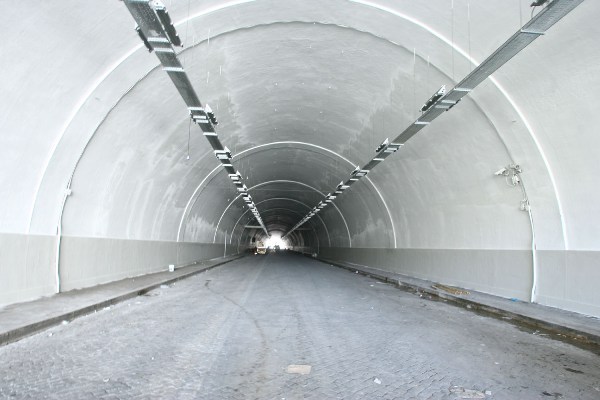
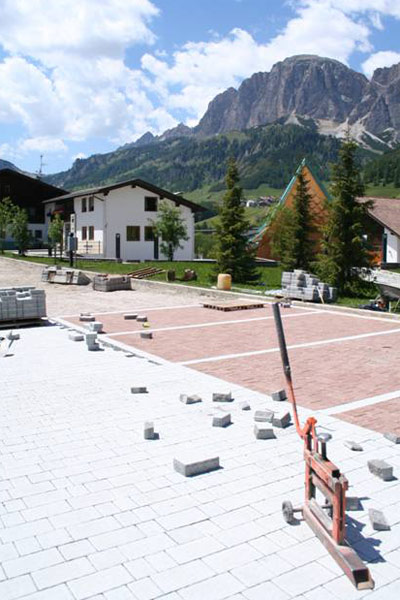
An environmentally friendly, high quality and innovative material that not only guarantees security, but also reduces pollutants in urban areas thanks to the photocatalytic action activated by sunlight. TunnelUmbertoIRoma

As smog, for years, has been ruining palaces, monuments and urban centers, a big space in construction and architecture was given to the research of materials able to maintain over time the aesthetic quality of the buildings. TX Active was successfully tested: this is the "smog eating" principle patented by Italcementi Group, a leading provider of building materials. TX Active is applied on the surface as it is the only portion that interacts with the atmosphere; the photocatalytic principle is not used in structural applications but only where it is possible to maintain modest thicknesses: from a few centimeters up to a few millimeters.

PiazzadelComunediCorvaraBZ

For its important properties it has been applied to many valuable architectural works whose beauty is preserved with the self-cleaning effect. Italcementi Group approaches the construction industry with the most advanced technologies developed from research with a strong commitment to quality and innovation.   www.italcementi.it

Materials

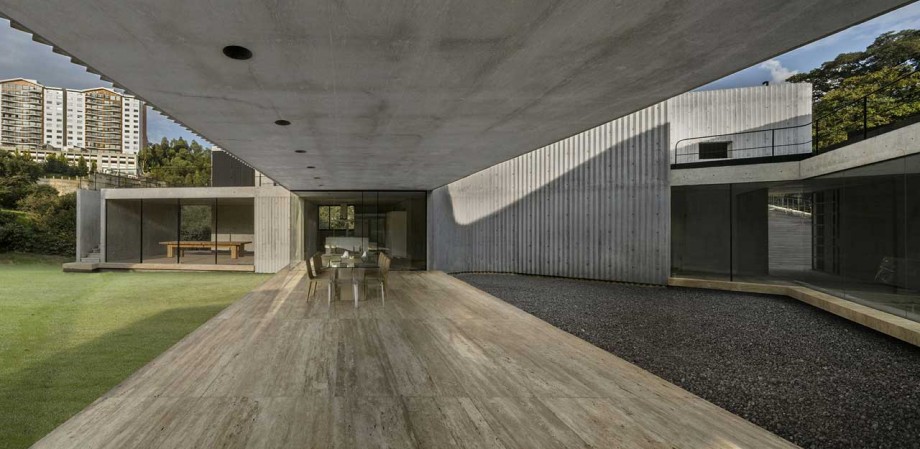
Luxury residence in concrete

Choosing concrete as material for a luxury residence. The young Mexican architect Abraham Cherem (Cherem Arquitectos) recently completed the project of a residence on the outskirts of Mexico City, built for a well-known local football player. Cherem Arquitectos, House P, Bosque Real, Huixquilucan, MessicoThe project is based on the study of the views of the house and the movement of the light on the inside. The architect has two overlapped blocks of concrete, creating a complex set of rectangles and curved walls. The goal is to minimize the outskirts views of the metropolis, by focusing our gaze on the large patio. Cherem Arquitectos, House P, Bosque Real, Huixquilucan, MessicoThe 44 cm thick walls alternate with smooth walls in corrugated surfaces. Inside, the walls are conceived as concrete curtains, regulating spaces and the entry of light at different times of day. Cherem Arquitectos, House P, Messico, pianta del piano terraAbraham CheremThe use of concrete is inspired by the work of Brazilian architects Lina Bo Bardi and Oscar Niemayer
Materials

Zintek®: zinc-titanium's steel mesh

19 October 2018

The Psenner distillery is a space that combines innovative design and tasting, and the first European project made with zinc-steel mesh titanium by Zintek®. One of the most famous distillery in South Tyrol, and established itself at the international level, Psenner is over 60 years grappa and distillates' synonymous. The company want to communicate its own identity based on transparency and visibility, this inspired the architects Freissinger and Elzmbaumer, who have built the project: the image of manufacturing processes move from inside to outside. The skin envelope comes from the three basic stages of Psenner production - distillation, evaporation and condensation - occurring in copper stills and tubes. These produce tube shapes that characterizes the showroom, and Onyx backlit display changes color creating a different atmospheres. And here the "bubbles" of steam come, as round shapes in the steel's zintek® mesh which is the production's shed covering. The sheet metal, chosen for its texture, was deliberately mounted to reverse, with openings upward to maximise the nighttime lighting, through white light filtered by satin glass, which lit up from within the walls of the building. An effect of great suggestion possible by the workmanship of the slabs and the quality of the workers who have made the work, the Schmidt AS Bolzano. Zintek ®, is therefore ideal for innovative project due to its excellent processability and able to blend perfectly with other materials used, first of all, the total white glass that reduces the difference between internal and external. The Psenner's new headquarters is today a point of reference for the world of wine (it will be promotion site for events and educational and informative activities) as well as industrial design. (Fabiana Cambiaso Università La Sapienza Roma).

Carlo Bardelli

Materials

Representativity and internationality: the success of Cersaie

At the end of the 33rd edition, Cersaie is confirmed as a focal point for global business development for bathroom products (but not only) and an important meeting point for international trade. A lot of foreign visitors (coming from more than 150 different nations) joined it. The numbers speak for themselves: if the exhibitors are less than last edition, 872 against 945 of 2014 (but this year there is a new foreign presence, Sweden), the number of visitors grows. The new edition, in fact, recorded a total attendance of 101,809 presences, with an increase of 0.8% compared to 100,985 visitors last year. The Italian presence remains stable, while the foreign one is growing: there has been an increase in 1632 participants compared to 2014, for a total of 48231 visitors. More Italian journalists than last year(+27.4%), due to the international press conference organized for the first time at the Palazzo Ducale of Sassuolo. High is the number of foreign journastists, too (257 partecipants). A success under the banner of internationalism. Cersaie salone prodottiAnother keyword is "representativity": we remind the high presence of exhibitors of other areas, especially wood, marble and natural stones. Cersaie salone arredobagnoCersaie is a milestone in architecture and interior design. The Lectio Magistralis held by Glenn Murcutt, Pritzker Award seventh consecutive at Cersaie, had a great success, as well as the installation “Day Off” by Diego Grandi and “Cers Styleexhibition by Angelo Dall'Aglio and Daniele Vercelli. The “works in progress” and “La Città della Posa” (the place dedicated to the training of young talent and to the presentation of different techniques) meetings were very popular. Many consumers have joined “Cersaie designs your home”, especially with the presence of Paola Marella, also godmother of the event #selfeet. It has been a positive debut for Bologna Design Week that has seen a steady influx of people and that organized cultural events in the evening in prestigious locations in the city.
Materials