Fibra di carbonio e robot. Il padiglione "coleottero"

02 October 2018

L'Istituto per Design Informatico (ICD) e l'Istituto di Strutture edilizie e Progettazione Strutturale (ITKE) dell’Università di Stoccarda hanno realizzato un padiglione che ricorda visivamente e materialmente un insetto, o meglio un coleottero. Il gruppo di lavoro non è certo nuovo a questi progetti: recente è infatti un altro padiglione basato sull'esoscheletro di un'aragosta e una struttura progettata e costruita invece sul modello dello scheletro di un riccio di mare. Il progetto è basato sullo sviluppo robotizzato per moduli delle doppie strutture composte da strati di fibra di carbonio: in questo modo l’intera architettura rimane minima e leggera, permettendo un elevato grado di libertà geometrica. Si estende su una superficie di 50 metri quadrati, ma pesa solo 593 chilogrammi.

Beetle-Shells-Structure-7-495x350

Il team di ricercatori e studenti ha utilizzato modelli 3D ad alta risoluzione di vari gusci di scarabeo - noti come elitre – per condurre un'analisi delle strutture interne complesse, lavorando a stretto contatto con biologi e paleontologi dell'Università di Tuebingen.

Beetle-Shells-Structure-6-495x350

Queste strutture sono state poi convertite in una serie di principi di progettazione, realizzati con vetro e fibra di carbonio polimeri rinforzati per dare il padiglione un rapporto resistenza-peso ottimale. "Il progetto presenta un nuovo approccio alle strutture in fibra composita in architettura", ha spiegato ICD ricercatore e membro del team Marshall Prado.  

Edoardo Croci

Materials

Kimano, decorated parquet becomes furniture

The parquet decorates itself and it becomes furniture. The Xilo 1934, specialized (also) in the field of wood floors, presented at Cersaie 2015 a product of great interest: the design floor Kimano. We talk about a decorated parquet, expression of a unique style that combines the elegance of wood product to the aesthetics of a classic finish. XILO_KIMANO4.jpg

This made in Italy product also has advantages, including ease of maintenance, as well as being more resistant to scratches and, in case of damage, the surface can be repaired. In addition, it is natural: no formaldehyde or toxic emissions, but only water paint with a greater protective layer. Kimono, available in multiple formats, is indicated for installations on radians and cooled; it is perfect for glued installation and floating.

XILO_KIMANO.jpg XILO_KIMANO2.jpg

And above all it gives rise to new locations. The flooring is no longer just finishes for interiors and exteriors, but it becomes subject to personalize our rooms and create geometric patterns or shapes that change the appearance. Kimano was created by the artist from Palermo Fiorella Bonanno. Daughter of art, with a love for decorations from a young age, Bonanno is passionately dedicated to the study and reproduction of typical Sicilian décor wood, keeping alive the artistic traditions of his homeland.  

Materials

Wood and Poplar. Wood Pavilion at Made Expo

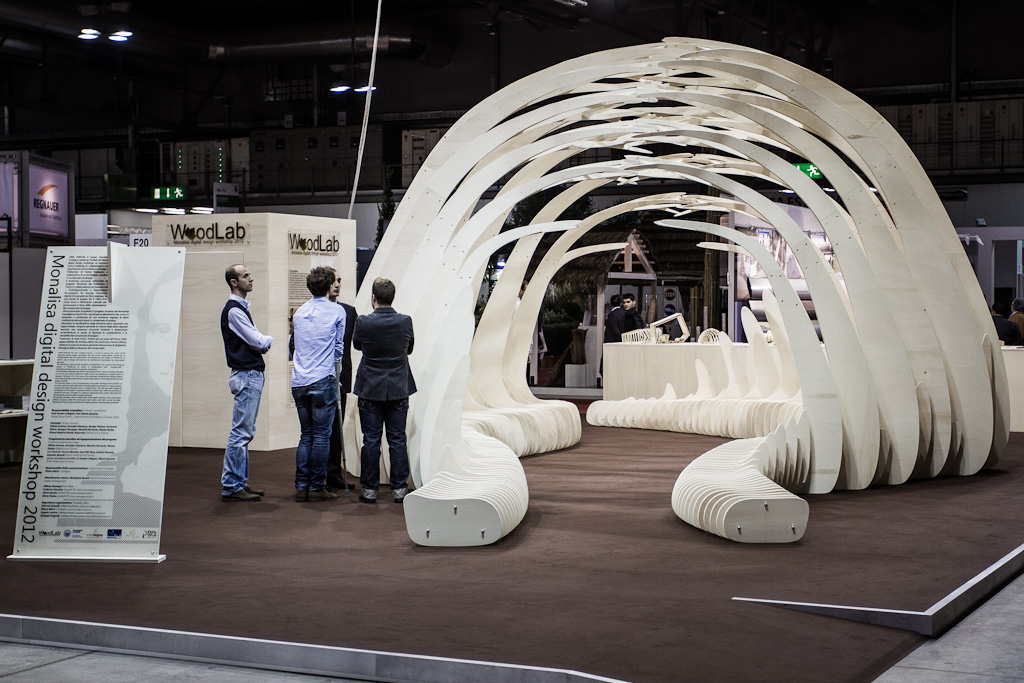
Pop.for.Pav is the winning project of MonaLisa Digital Workshop at Politecnico of Turin. A research aimed at creating an architecture aimed at enhancement of poplar plywood: nature becomes architecture. Designed by nine students, MonaLisa Pavillion is a forest structure characterized by a regular trees scan consisting of elements in poplar plywood floors. The project was created with the intent to recreate the natural environment of the nursery. monalisa wood pavilionIn the initial phase, project’s development goes on in a two-dimensional way, because it represents initial growth of the stem of the tree. As it progresses, however, the elements are also developed in three dimensions through curved items, so they can give shape to the hair. These were generated through a branching story elements and are arranged in an ascending sequence that determines an architecture capable of illustrating the features and versatility of the material with which it was achieved. monalisa wood pavilion

A natural, durable and flexible material. The tour invites users to explore a space defined by twenty-two trees whose canopies enact the voltage generated on poplar veneer process at the origin of plywood production. The suggestion to penetrate between the branches of a Poplar Grove is evoked by the changing interaction between the material, users movement, light, sound and shadows that filter from the housing. monalisa wood pavilionThe MonaLisa Pavillion was presented at Made Expo. The initiative was promoted by the Department of architecture and Design at the Politecnico of Turin and by technical Committee PioppOk of Conlegno, in collaboration with Assopannelli-Federlegno-Arredo and Pro-Populus. International educational experiences of the AA School in London, of the University of Stuttgart, Aalto University School of Arts and Columbia University have been important.   Credits Roberto Cortese www.woodlab.polito.it www.conlegno.eu Credits by WoodLab Politecnico Torin

Materials

ALPI research creates SILVER RAIL: wood and metal together, in praise of light

Wood, through metal, explores new design expressions that address the theme of the reflection of light: this is the approach behind Silver Rail, the latest proposal from ALPI, the first company in the world to industrialize the process of reconstituted wood, and now an unchallenged technological reference point in the wood sector. Silver Rail is the result of intensive R&D activity – a true characteristic of the company’s DNA – that has allowed ALPI to develop materials conceived to interact with light, confirming its role as a professional partner and its outstanding ability to interpret and foresee market trends with solutions that are increasingly sophisticated in both aesthetic and technological terms, capable of giving concrete form to any idea from its spheres of reference: large luxury brands, giants in the automotive and nautical sectors, prestigious furniture makers, and the fields of product design, interior architecture and contract. Decorative wooden surfaces crossed by metal lines that reflect light: Silver Rail is a material with a modern design - applicable to finished products or horizontal and vertical surfaces - combining the softness and warmth of wood with the glow and rigor of metal. An innovative offering, the result of sophisticated technology and the careful, tailor-made workmanship typical of ALPI; a synthesis of two apparently antithetical materials, conceived to respond to the emerging trend towards luminosity in interior decorating, in the year UNESCO has proclaimed as that of light and light-based technologies.   Silver Rail lends itself to infinite possibilities of personalization: from the choice of color and design from the vast range of ALPI woods to the indication of the number and the spaces between the metal lines, which can be governed by regular, precise geometric patterns or designed with more sinuous shapes. With proper lighting, the material offers intriguing luminous effects that add character to rooms and enhance the design of objects and furnishings. Silver Rail is available in the ALPIlignum and ALPIkord versions:   ALPIlignum This product is the company’s cornerstone: the true symbol of the ALPI universe, the finest expression of its R&D activities and the perfect blend of technological innovation and artisan know-how. A line of woods that offers unlimited aesthetic variety and personalization: reproducing the colors and grain of natural materials (over 120 types in the catalogue) or creating Design Wood with unusual chromatic effects, allowing for maximum creativity. ALPIlignum is a sliced wood that can be applied to any surface and produced in different thicknesses depending on the application. It is therefore an extremely versatile product, capable of responding to all project needs in functional and aesthetic terms. Its particular production process involves peeling logs (of Poplar, Lime Wood or Ayous), always of certified origin, to make sheets that are immersion dyed and "reassembled" by stacking the layers of dyed wood to make a “new log”. The absence of the typical defects of traditional wood, the uniformity and reproducibility of colors and sizes make it ideal for rapid implementation of single production runs or series. ALPIkord The line of prefinished woods treated with state-of-the-art products and varnishes to bring out the natural beauty of the entire ALPIlignum range, applied on a surface and then varnished. The result is a large wooden panel ready for application to any surface, to reduce the time needed for working, varnishing and installation. The practicality of ALPIkord finishes is joined by high levels of quality, unique design and customization, as well as the environmental certifications pertaining to ALPIlignum. By request, FSC certification, the most important international guarantee of its kind of the sustainable origin of our wood, is also available for ALPIkord. ALPI, wood&more: Italian roots for international excellence An absolute leader in the production of decorative surfaces in multilaminar wood, ALPI was the first company in the world to industrialize the manufacturing process for reconstituted wood, setting new qualitative standards. The perfect balance between manual skills and high technology make the firm unique. On the one hand, ALPI is pure innovation, ahead of the demands of the market; on the other, it represents painstaking craftsmanship. An example of excellence that thanks to the depth of its collections – applicable to finished products and horizontal or vertical surfaces – combined with the ability to design bespoke solutions, is an unchallenged technological reference point for the wood sector. A professional partner of leading luxury brands and major manufacturers of automobiles and yachts, as well as prestigious names in furniture, product design, interior architecture and 360° contract, ranging from hôtellerie to multi-apartment developments, retailing to offices to public spaces. What sets ALPI apart on the worldwide scene is its direct control of the entire process, from the log to the finished product, starting with forest management using chain-of-custody certification to guarantee the legal and sustainable sourcing of the wood and total product traceability. ALPI is therefore a guarantee of an eco-responsible, versatile design product, made possible by major investments in R&D, raw materials of the highest quality, avant-garde technology and the finest tailor-made craftsmanship. Other important features of the firm are its vast range of offerings and great ability to respond to the specific requirements of a highly diversified client base, also through the design and development of custom lines and one-off collections. Today ALPI – helmed by Vittorio Alpi, the founder’s grandson – has industrial facilities of 180,000 sq. meters (52,000 indoors) in Italy, and 346,500 sq. meters (over 67,000 indoors) in Africa, for a production capacity of over 30 million square meters per year, with capillary distribution networks in over 60 countries. The firm stands out for reliability and solidity, based on sales growth that surpassed the level of 130 million euros in 2014.     www.alpi.it


Materials

Straw Bale Cafè: innovation made of straw

Straw Bale Cafe: wood, straw and innovation

This project comprises an extended 100 seat cafe, refurbished kitchen and cafe terrace. It is conceived as a learning aid in low-impact environmental design, featuring:

  • Prefabricated Construction: To minimise disruptive on-site works, the building structure was prefabricated in a nearby barn.
  • Demountable: The building is designed to be dismantled at end of 15 years and most components re-used / re-cycled.
  • Energy efficient: The building is highly insulated, naturally ventilated and naturally daylit.
  • On-site energy generation: The building generates up to 6kW from photovoltaic panels and wind turbine.
  • Local Materials: Cedar cladding and organic straw from the College estate. Wall plants from local nurseries.

We chose to pre-fabricate the building structure, in order to avoid the need for certain lengthy and disruptive on-site processes.

The Modcell load-bearing panel system was used. The panels were assembled in a ‘flying-factory’ in one of the College outbuildings by architecture students from Nottingham University and members of our practice. A key advantage of this modular form of construction is that the building can be easily dismantled at the end of its useful life and most components reused and/or recycled. This is important because the College has long-term plans for the redevelopment of the campus over the next 10-20 years.

Materials The choice of materials has sought to make the most of the College’s natural resources. The 60 organic straw bales used to insulate the building come from the College’s own farm. The western red cedar cladding and decking was forested from the college’s 150 acres of woodland. This was cut to size on-site, by College contractors, just a few hundred yards from the building. The green cladding was planted by College students with learning difficulties, using indigenous varieties sourced from local nurseries.

Sustainability Prefabricated. The building structure was prefabricated using the ModCell load-bearing panel system in order to minimise environmentally disruptive on-site works.

Renewable The building is constructed from renewable materials where possible, e.g: PEFC or FSC certified timber and straw (a by-product of the agricultural industry).

Local Materials The building is constructed using local materials where possible, including organic straw bales from the College farm, western red cedar from the College estate and wall plants from local nurseries.

Low-Waste Straw bales were cut to size in the College farm – trimmings were composted or used as animal bedding. The frame is made using offcuts from the timber industry. Cut waste was minimal, as each panel was precision cut from larger sheets using CNC equipment, but any waste was re-used the factory’s biomass boiler. Offcuts of aluminum and steel and were minimised by the design, but any offcuts were collected and recycled via the scrap industry.

Recyclable The building is designed to be dismantled at end of its 20 year design life and most of components re-used / re-cycled. On-site Energy Generation The building generates up to 6kW of green electricity from solar photovoltaic and wind power sources. A monitor displays power generation statistics to the building users.

Energy Efficient The building requires very little heating/cooling as the 450mm of straw bale insulation provides a u-value 3x better than current regulations require (0.14). The building is naturally ventilated and makes use of natural daylight where possible. All artificial lights are on motion and daylight sensors.

Carbon Sequestering Each 3m x 3.2m prefabricated load-bearing panel sequesters approximately 1400kg of atmospheric CO2.

Green Wall The green wall is planted with local varieties to enhance the biodiversity of the building. The ‘green’ cladding minimises the visual impact of the scheme, as well as reducing CO2 emissions through better temperature regulation and increased building insulation. It also reduces the amount of storm water run-off from the building.

Education The building is designed as a learning aid in low-impact environmental design, having relevance to many of its students through their curriculum. College and University students have been be involved in the design, construction and ongoing maintenance of the building. A permanent display panel within the cafe tells the story of its construction.

(F.C.)

Materials

Greenbiz, innovative material for vertical gardens, and not only

05 October 2018

Looking for a new balance between the natural environment and the built one, creative and constructive process of housing is looking for new concepts and objectives.

Greenbiz

The architect Marco Piva presented at Made the installation "Space for Life" that addresses the issues of small-scale residences, their possible aggregations in more and more complex structures.

Greenbiz

Constructive solutions are made in relation to the highest energy standards. The manufacturing technology is that of wood, renewable natural material; energy performances are in "class A"; renewable energies are used and the structure is earthquake-proof and fire resistant.

Greenbiz Greenbiz

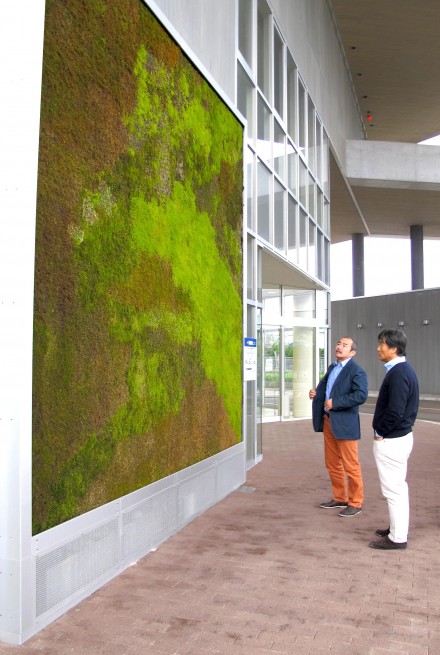
The building materials are sustainable and high performance. The vertical walls are made with the innovative Greenbiz. Born in Japan, result of research and studies, it is a unique and worldwide patented material, result of a virtuous cycle of production. Cooking at very high temperatures, above 1000° c, makes the matter be like ceramics, so it is inert, fireproof and ultra-micro porous and lightweight.

Greenbiz

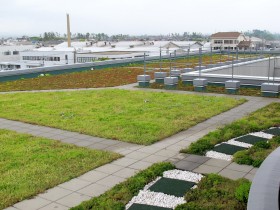
The characteristics of absorption and thermal insulation combined with the ability to absorb water and hold it for 50% of its volume makes it the best possible material for industrial roofing and terraces with hanging gardens. Used as a coating, it works as a coat and it allows the creation of vertical green.   www.greenbizitalia.it

Edoardo Croci

Materials

Liquid Wood

An excerpt of the final research course of nanotechnology and functional materials for design – Politecnico di Milano, by Sabina Veronica Fontanarosa, Silvia Maria Gauri, Elena Galvez, Anna De Mezzo Liquid wood is a biopolymer thermoplastic composite that is manufactured from substances derived from wood. A material that is still little known however as a valid substitute for thermoplastic polymers with high environmental impact. In our research we wanted to deepen knowledge about the liquid wood composition, classification, technical characteristics, physical and perceptual, investigating the various meanings of the name "liquid wood" and related materials. In a second part of the study we analyzed the current uses of this material, the products thus far and the companies that are experiencing, a key time to understand what is expected of this material and what will be its future.

eco pump

The material Liquid wood is a bioplastic composite obtained from three natural ingredients: lignin, cellulose and flax, hemp or other plants, adding natural additives. This material was developed by the German company TECNARO, in cooperation with the Fraunhofer Institute for Chemical Technology. The trade name with which the material is produced by TECNARO is ARBOFORM or ARBOBLEND: itself suggests the nature (from Latin arbor, that means tree). Liquid wood is characterized by composition, color and smell similar to wood, and it has mechanical and physical properties which are situated, as values, among those of wood, traditional composites and polymers; finally, it can be processed as a thermoplastic polymer, feature from which the name "liquid" comes. The definition of this material combines the concepts of biopolymer, composite and natural materials engineered wood. As biopolymer, it takes part of the "biobased polymer", i.e. polymers based on renewable raw materials; in this case it is retrieved from natural material, and is 100% biodegradable. The classification as composite comes from coexistence in material of a continuous phase, composed of lignin and cellulose, and dispersed, or vegetable fibers. As far as concerns the substances from which the material comes, these are the same that make up wood: lignin and cellulose, with the addition of flax or hemp fibers and natural additives. In fact any type of wood consists of three natural polymeric substances: cellulose (about 45%) lignin (approximately 23%) and hemicelluloses (about 30%). Cellulose and hemicellulose are the fibers, whereas lignin is the inter-fiber that holds them together. Cellulose is one of the most important polysaccharides, lignin is a heavy and complex organic polymer consisting mainly of phenolic compounds. Except of polisacccaridi, lignin is the most abundant organic polymer in the plant world. As the name implies, this is the substance that makes woody plants and that has the function of keeping together the more or less branched chains of hemicellulose, helping the Organization into fibrils. In this way it gives firmness and resistance to the plant. Lignin is also known as material as the encrusting fibers. To extract the cellulose, lignin is therefore first attacked and dissolved to separate the olocellulosa, from where the cellulose and hemicellulose is extracted then. ARBOFORM inherits some characteristics from wood, i.e. property of thermal and electrical insulation, acoustic properties, and, depending on the composition, color and smell. As a mixture with "unsorted" fibers, liquid wood is an isotropic material, instead of the natural wood.

Materials

Sustainable Smart Insulation. Development of insulating panels for building waste paper and pcm

An excerpt of master thesis in Design & Engineering, academic year 2010/2011 by Marta Musitelli School of Design, Politecnico di Milano Speaker: Barbara Prof.ssa Del Curto Co-rapporteur: Prof.ssa MariaPia Pedeferri Sustainable Smart Insulation is the thesis of the research conducted by Marta Musitelli at Politecnico di Milano. The project aims at the development of sustainable and innovative insulating panels, achievable through the use of two components: the cellulose, obtained from recycling waste paper, and Phase Change Materials (or PCMs), substances capable of accumulating and releasing heat on a scheduled basis. Through the mixing of two substances during processing of recovered paper, it was possible to obtain a composite material with an entirely new set of features, which combine the thermal properties of the two components. In the construction field, the PCM is used and studied for several years to improve the capabilities of heat insulation of the walls. Cellulose fibers are used as ecological insulating material. The aim of the research is to get an array of cellulose insulation enriched by thermal properties of PCM and carry out studies and tests to verify its suitability in the context of use. Several ideas for optimizing material properties, such as lightness, mechanical resistance, fire resistance, resistance to water absorption and environmental sustainability, were proposed and tested . The presence of air zones within the structure of a material reduces the density and at the same time improve the insulating properties. In order to achieve a more efficient and lightweight Panel several techniques of inclusion of air inside the new material in waste paper and PCM have been tested, such as:
  1. Lyophilization process
  2. Proving process
  3. Distribution of flakes
  4. Shape modeling
An effective method to get air pockets within a structure is lyophilization. A second method is to use leavening agents such as baking soda, able to decompose at high temperatures and to create carbon dioxide particles inside the wet pulp, which during drying in stove increase in volume due to the boiling water. The addition of sodium bicarbonate in various quantities gives different results: the Panel made with 30% of baking shows a significant increase compared to the panel thickness without additives; the Panel with 50% of baking shows a thickness increase further compared with the previous coming to be about double the Panel without additives. A third method is to get a get a lightweight structure through the layering of cellulose flakes obtained by grinding. This method allows you to obtain lightness thanks to the air that is trapped between disordered fibers, but it is not suitable for use in the construction field because it is not workable and mechanically resistant.
Materials

Walks of Design

15 December 2018

New B&B Italia Designs 2018
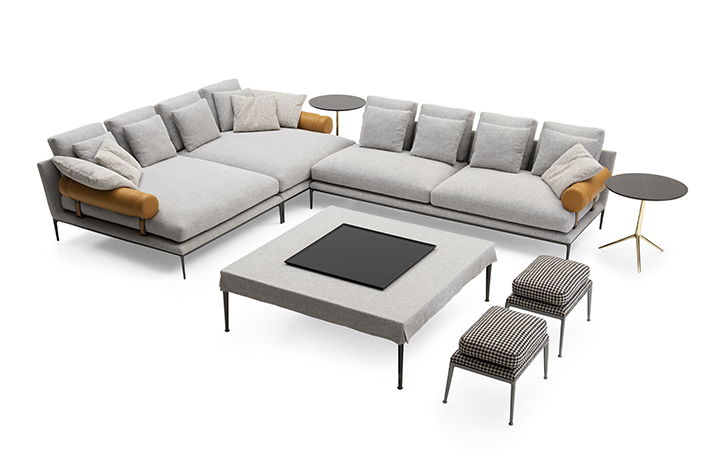
 

atoll


B&B ATOLL
design by Antonio Citterio

«B&B Atoll is a versatile collection that reinterprets traditional elements, like the bolster, associating them with a sleek, refined structure that fits smoothly into the contemporary language. It is versatile because it can be used in a wide range of settings, from the most formal, when partnered with the armchairs, to informal situations, thanks to the possibility of creating an L-shaped configuration with the daybed as end element.»


                                                                                                                                                                                                                  Antonio Citterio


Named after the coral formation B&B Atoll, the new modular seating system by Antonio Citterio, is a refined expression of a balanced aesthetic form and a decisive contemporary style that is also extremely elegant. The system is built on three basic platforms - 190 cm and 240 cm, both with 90 cm depth, and 130 cm with 140 cm deep - that are complemented by armrest and backrest elements to form various types of seats: sofas, dormeuses, corner-end modules, single or modular elements with chaise longue and pouf. The frames have light, slender lines and are applied on high die-cast supports with metal profile emphasising the line between the structure and upholstery. Two finishes are available, pewter and black chrome. The pieces are given even more character by a supporting element to be placed wherever desired, a bolster in two sizes - 65 and 90 cm - attached by leather straps to a die-cast structure. This accessory can be inserted between the seat cushion and the base structure to provide an additional support or become an armrest or backrest at will. B&B Atoll is a dynamic project with a constantly fresh ability to adapt to different compositions and create different seating types, from informal relax versions to most formal, also made possible by the use of complementary back cushions.
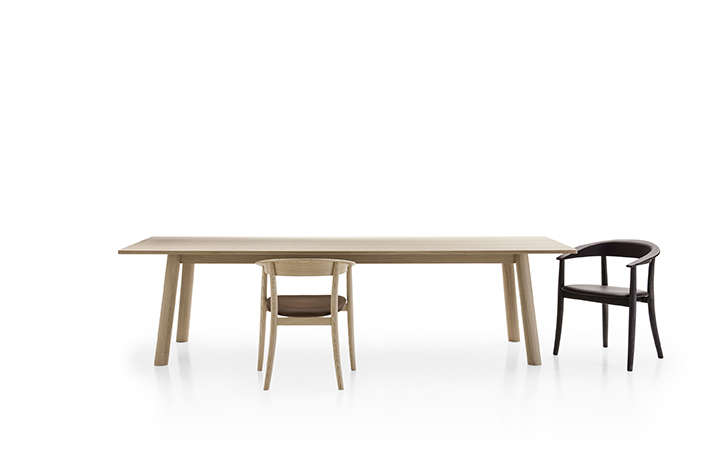
bull


BULL
design by Naoto Fukasawa

«As its name expresses, Bull is a table with 4 toned legs that stand firm on the ground. I designed this very firm looking table together with an elegant chair as a pair. Together they look if they were truly “The Beauty and the Beast”. The beast, after all, is a great looking table.»


                                                                                                                                                                                                               Naoto Fukasawa


The aim of Naoto Fukasawa’s Bull table is to communicate the immediate impression of a very solid yet extremely refined object. A stylistic formula that forms part of the designer’s distinctive language and which, in the case of Bull, uses a subtle structural tension among the elements: the legs with an ample round section, which although slightly inclined seem to be solidly “planted in the ground”, and in contrast a slim top that seems simply to be resting lightly on the frame. Available in two sizes - 240 and 280 cm - Bull can be entirely in oak in light, grey, black and smoked versions, or with an oak structure and top in black Marquinia or white Carrara statuarietto marble, both with matt finish.
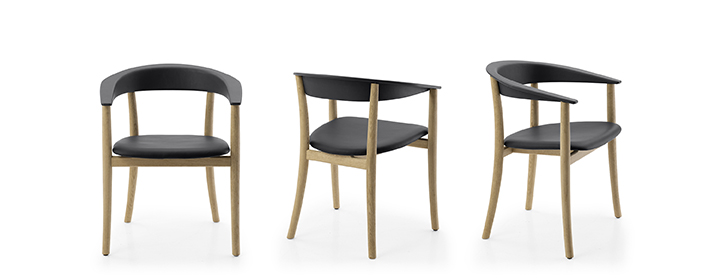
belle


BELLE
design by Naoto Fukasawa

«The character of this elegant chair is expressed by the back support and the armrests, and highlighted by the obtuse angle line around the elbow area. All four legs are slightly curved outwards at the bottom to give a classic feel as well. The chair is named “Belle” after the story of “The Beauty and the Beast”.»


                                                                                                                                                                                                               Naoto Fukasawa


With a clever play of literary and stylistic references, the Belle chair is the delicate, feminine counterpart to the Bull table. With rounded lines and padded seat with leather upholstery, it reinterprets the detail of the rounded section of the table legs, and as it develops downwards adds a small element of curvature that creates a graceful touch. Towards the top, the legs join the chair back with elegant, elbow-shaped arms. Two solutions are offered for the backrest, oak wood in the same finishes as available for the frame - light, grey, black and smoked - or leather upholstery matching the seat, obtained thanks to a special manufacturing technology.
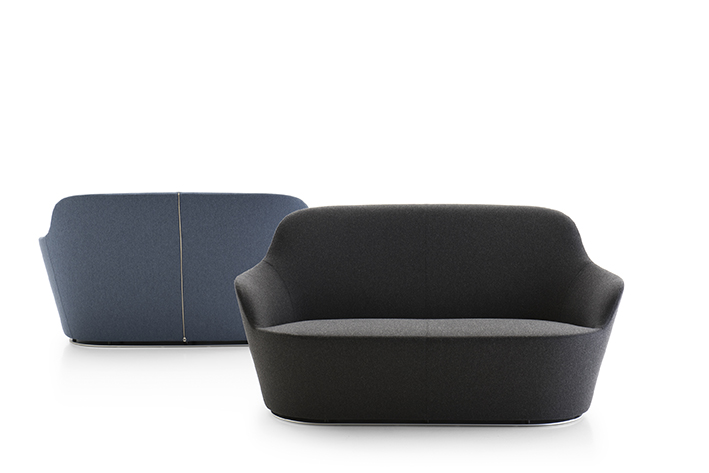
harbor


HARBOR
design by Naoto Fukasawa

“When I was working on the Papilio family project, I realized that the iconic strength of B&B Italia is in working with polyurethane foam as a mass. Hence the idea for this design to sculpt a form out of this material as if I was making a sculpture out of Carrara marble blocks. It is true to me that B&B Italia is a brand that creates sculptures in polyurethane. The name Harbor comes from a feeling of having a place to come back to. I also wanted this seat to have a feeling of wrapping around our body”.


                                                                                                                                                                                                               Naoto Fukasawa


The Harbor series of armchairs and pouf, presented with success in 2017, is enhanced by a new, equally contemporary and sinuous sofa. A range extention in the sign of design continuity, result of Fukasawa’s research into seating in the shape of upside-down truncated cone. The sofa reflects in particular the architectural, ergonomic shape of the conversation armchair, compounding its welcoming appeal by hosting two people. In fabric or leather, it has a visible metal zip on the rear of the backrest that acts as a decorative element and also allows the cover to be removed.
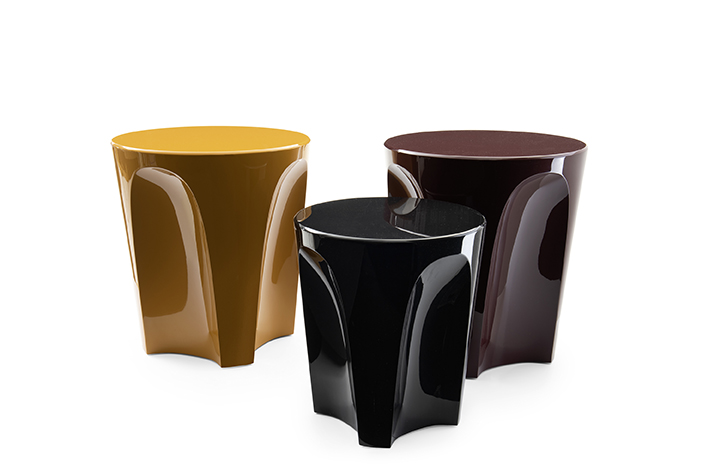
colosseo


COLOSSEO
design by Naoto Fukasawa

«Like the Harbor armchairs that are carved out from an upside down conical mass, these small tables were originally made by the same process. However they looked rather too solid and heavy so I shaved off some of the mass, then its arches resembled the Roman arches of Colosseum.»


                                                                                                                                                                                                               Naoto Fukasawa


Colosseo fits smoothly into the highly successful product category of accessories, furnishing elements that change function according to occasion and need, and for Colosseo this means transforming from coffee table to pouf. When designing this new product, Fukasawa arrived at the shape he was searching for by considering a solid in the form of an upside-down truncated cone, lightened by arch-shaped grooves that define the surface, creating an assonance with the structure of the famous Roman arena it is named after. Made of hard polyurethane painted in sixteen glossy colours, Colosseo is available in two sizes: 40 cm diameter x 45 cm height and 50 cm diameter x 55 cm height.
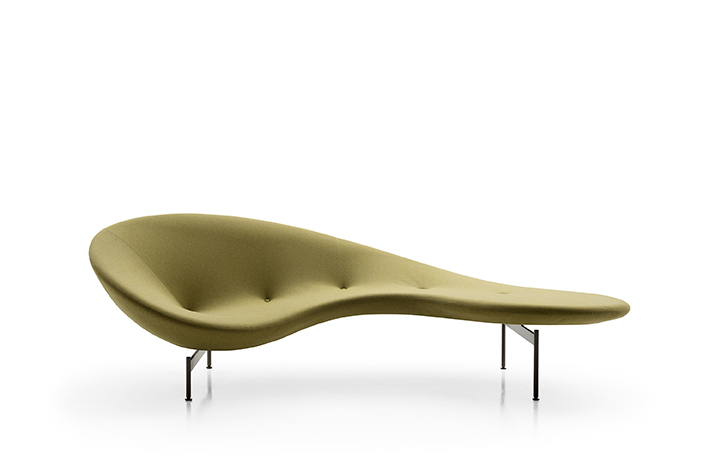
eda-mame


EDA-MAME
design by Piero Lissoni

«It’s as if it were a surface, a Möbius strip. Eda-Mame is strangely full of curves, it welcomes you and, if you want, it lets you drink an aperitif, almost as if it were an upholstered table


                                                                                                                                                                                                                      Piero Lissoni


Shaped by an organic development inspired by the form of a soy bean, the typical ingredient in Oriental cuisine, Eda-Mame is a furnishing element with a strong impact created by a sculptural design that can give great incisiveness to a space. A single object that is a fusion of three types of seating - high-back chair, easy chair and pouf. Its threefold nature lends Eda-Mame extreme versatility in both residential and public settings, and can also highlight areas for co-working, passage and short stays, like hotel lobbies. Made of moulded foam, Eda-Mame is upholstered in a stretch fabric with a light stitching. The support base is made of crosspieces with rounded steel feet connected to each other by a bar, all in pewter painted finish.
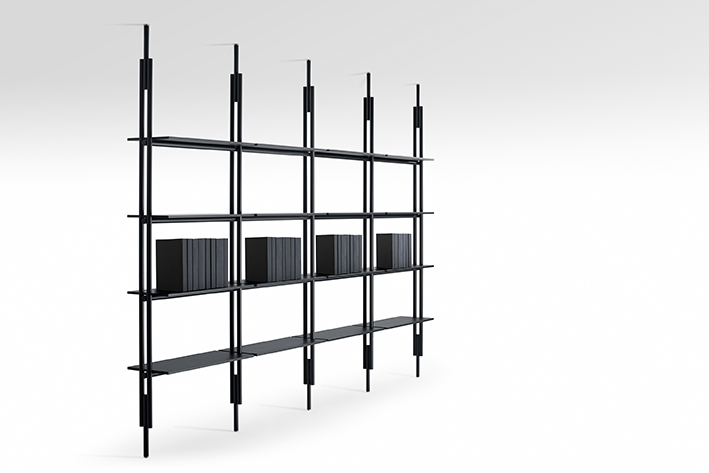
Jack


JACK
design by Michael Anastassiades

«This bookcase system started as a stacking exercise of an assembly of rods of the same diameter. The selected design is a reduced configuration, providing the optimum structure and modularity to address a diverse range of interior spaces. The technical solutions are discreet, allowing for arrangements that feel specifically fitted to a particular room. Its discipline lies in the structural rules used to build from one form to the next, assembling to make a cohesive composition.»


                                                                                                                                                                                                     Michael Anastassiades


Jack is the result of the first collaboration between B&B Italia and Michael Anastassiades. Known for his skills in working with light, the Cypriot designer has designed a modular bookcase system with a striking degree of technological perfection. In its search for the creation of an innovative language, this design challenge revisits and modernises a design classic, the 1950’s room centre bookcase, transforming it into a complement with a clean, essential yet architectural structure. The genius of the piece lies in concealing the engineered supports, including those holding up the laminated shelves, inside the vertical elements with a rounded section made of extruded aluminium and integrated by an exclusive, totally-invisible, floor-ceiling telescopic adjustment system. The system is available in 14 heights, ranging from 219 to 323 cm and taking in all measurements in-between, while the shelves are in two lengths, 75 and 90 cm, both 30 cm deep. Two are the finishes provided for the vertical elements and shelves for single-colour solutions, chalk white and black, both matt.
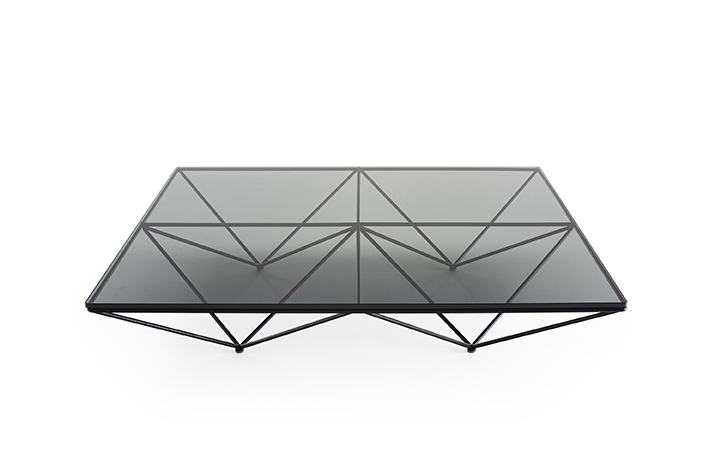
Alanda


ALANDA ’18
design by Paolo Piva

The Alanda coffee table, an iconic piece that ushered in the 1980s, is now revisited in homage to Paolo Piva, the great architect and designer who passed away last year. A highly successful classic and sought-after vintage furnishing complements, Alanda is one of the most typical design objects of a period with a wealth of strong, daring stylistic signs, often in a dialogue with architecture, reproducing its most attractive, characteristic elements in miniature. The Alanda’s structure, serving as both pedestal and support, recalls a group of upturned pyramids, a geodetic frame that has always characterized it as if it was a magical object, entrapping and amplifying cosmic energy. Alanda ‘18 is offered in two sizes - 120 x 120 cm
and 120 x 180 cm - with structure in glossy black painted steel and top in extralight or smoked glass.


New Maxalto Designs 2018
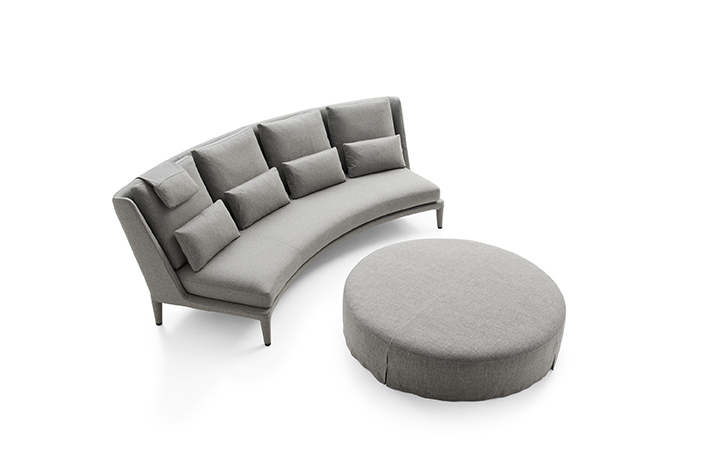
 

Nidus


NIDUS
design by Antonio Citterio

«Nidus is a curved sofa with no arms for formal use as a conversation seat. I felt that this type of product was lacking in my interior design projects, intended for large interiors where there is the need to create lounges with different groups of seating. It’s part of the experimentation in creating high-backed sofas, which provide a degree of comfort to seating designed for socialising.»


                                                                                                                                                                                                                  Antonio Citterio


The Nidus collection of upholstered furniture was inspired by the precise need to create a series of formal proposals with a relaxed feel, for moments of socialising and conversation in a harmonious, relaxed setting. Antonio Citterio has achieved this objective by paying great attention to structural details like the embracing shape of the curved sofas, available in two sizes. Together with the absence of arms and the high back, this solution makes it possible to bring people together in a fresh, relaxed and unusual way. This extrovert approach is also embodied by the armchairs, offered in three versions, only one of which with arms, intended as items to be arranged freely. All the Nidus pieces can be complemented by a comfy removable headrest, and have feet upholstered in the same fabric or leather as the seats, with the addition of a small metal detail at the base that is decorative and also guarantees protection against impacts.
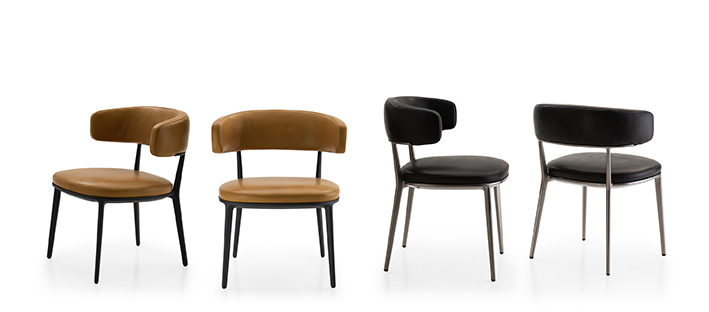
Caratos


CARATOS
design by Antonio Citterio

«After 25 years of presenting products that use artisanal materials and processes, I felt the need to offer a “moulded” piece, a chair with a fusion structure, thanks to a significant industrial investment by the company. At the same time, I wanted it be part of the Maxalto collection. Caratos is absolutely contemporary, but recalls some twentieth century objects, echoing the idea of bronze, through a “full” opaque finishing that absorbs light,
and the great quality of the leather upholstery, giving it a “saddlery” look.»


                                                                                                                                                                                                                  Antonio Citterio


Chairs in two versions, armchairs, poufs and coffee tables are the new proposals that extend the Caratos series launched last year. These new items both reflect and strengthen the original designs’ essential features while softening them by introducing embracing shapes. The light die-cast graphite or amber painted aluminium structure is retained, while padded backrests contribute to the formation of the armrests, creating seating with no postural restrictions at all, encouraging conversation and relations between neighbours. The poufs and coffee tables echo the design of the frames and are ideal complements to the seats to create conversation areas and social settings.


New B&B Italia Outdoor Collection 2018


Bay


BAY
design by Doshi Levien

Bay is a collection of sculptural and monolithic yet visually light outdoor seats comprising of a sofa in two sizes, an armchair and a high-backed armchair. Their enveloping volumes are marked by a double polypropylene fibre interlacing that creates “air pockets”, granting transparency and lightness to the furniture. The frame accommodates padded solid seats and soft cushions for added comfort. The colours combinations are extremely refined, with tortora and anthracite for the interlacing, paired with elegant block colour and patterned fabrics for the seats and cushions.
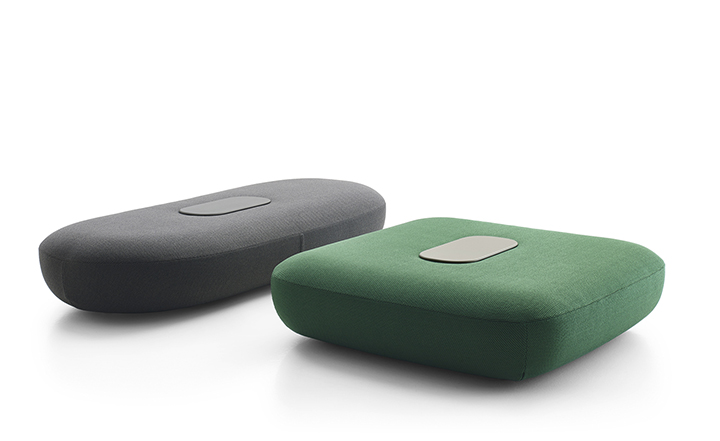
Tabour


TABOUR OUTDOOR
design by Doshi Levien

Tabour, the collection of indoor ottomans introduced in 2016, now features a new outdoor version. Oblong oval and square in shape, they resemble primeval marine creatures or large unicellular animals, associating the sensuality of the organic shapes with highly technological materials. The fabric is stretched over the padded frame by a sort of oversized “button” that serves as a tray, painted white, tortora or anthracite.
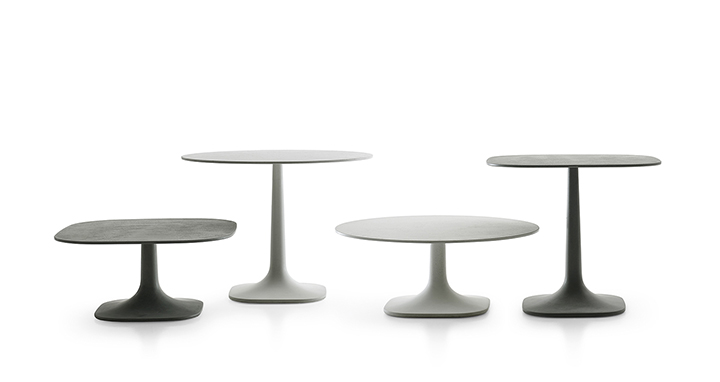
Fiore


FIORE
design by Naoto Fukasawa

Fiore is a new series of outdoor tables, round and square available in two heights, in white or greige cement. “Many years ago, I called my chairs “Papilio” because their silhouettes reminded me of butterflies,” says Naoto Fukasawa. “Now I have called my latest project “Fiore”, meaning flower in Italian, because the Papilio chairs sit around these tables like butterflies flying around a flower. The combination of a Fiore table with the Papilio chairs creates a pleasant outdoor environment for a coffee or a quick meal.” An outdoor solution that offers utmost flexibility, suitable both in residential and public settings.
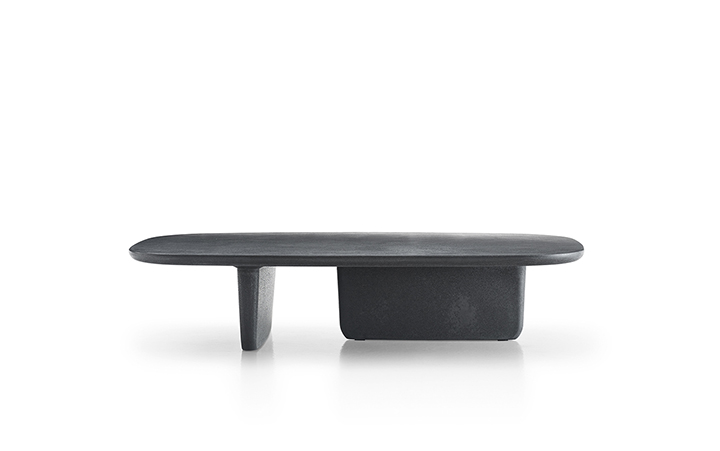
Tobi-Ishi


TOBI-ISHI OUTDOOR
design by Barber & Osgerby

The iconic Tobi-Ishi table - whose inspiration from the East is clear even in the name, which refers to the ornamental stones used in traditional Japanese gardens - is now presented in a low, cement version that emphasizes its sculptural, textural aspect. Available in two finishes: grey and anthracite.

Edoardo Croci

Materials

Smart is green. PCM, Phase Change Materials

06 March 2019

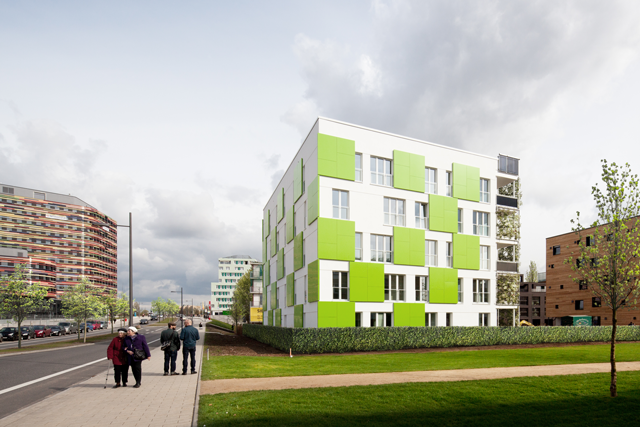
An “energy-smart façade” that generates and stores energy throughout the year makes this house, designed by zillerplus Architekten und Stadtplaner München, an “efficient house plus” – a building that is capable of generating more energy than its residents use. This is made possible by techniques such as the use of particularly clever phase-change materials (PCMs), which are also used in “pocket warmers”.

Smart is green

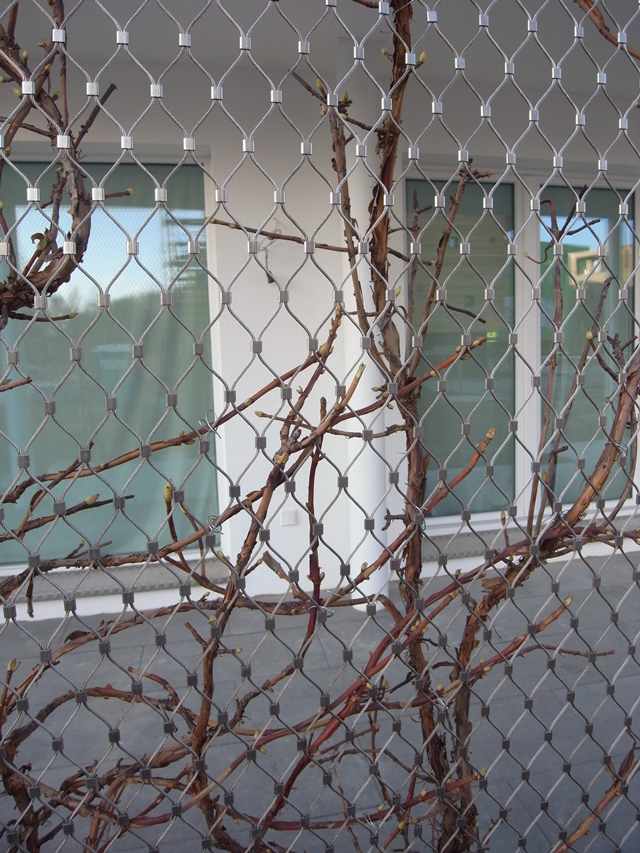
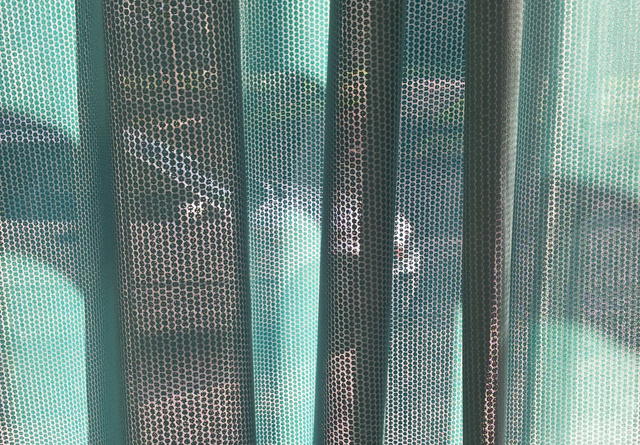
One Façade, Three Layers: all the Better for the Climate   The outer shell of the Smart is Green building is made up of layers including a vertical garden façade that acts as a heat shield during summer, along with insulating glazing, which protects from both heat and cold, and a PCM “curtain”. PCMs are in a constant aggregate state between solid and liquid. Like “pocket warmers”, which absorb heat when immersed in hot water and can be used to warm freezing hands when it is cold, these materials can absorb the warmth from the sun’s energy and release it later. Excess heat is thus removed from the area during the day, preventing the apartments from overheating. This stored heat is then released during the cooler hours of the night. Smart is green

Peak temperatures during both summer and winter can thus be intercepted and balanced out, resulting in a very pleasant interior climate. PCMs are also used for the building’s central heating storage facility, with a volume that is only half that of a conventional storage tank. The surplus heat from the solar thermal facility is stored here and maintained at the right temperature for under-floor heating. If there is a significant excess of solar energy, it is fed into the Wilhelmsburg local Energy Network.

Smart is green

In return, this ensures a sustainable heat supply, especially in long periods of cold weather. Both the exterior cladding and the roof are mounted with photovoltaic surfaces that transform energy from sunlight into electrical energy, and solar thermal surfaces, which convert solar power into heat energy. The façade and roof therefore play an active role in the building’s ingenious engineering concept, using innovative forms of technology to generate energy that can be consumed within the house itself. Moreover, such technologies are integrated into the very architectural concept behind the building.   Tomorrow’s Properties Will Help their Residents to Get Around   Like all of the concepts behind the Smart Material Houses, the façade with its clever materials is not the only innovative element – the integrated concept for the whole project is also groundbreaking. In Smart is Green this can be seen in the ground plan and the way in which it can be accessed, with various entrances to the individual apartments via stairs or lifts. The house is laid out so that the apartments can be configured or modified in a versatile way, allowing them to be partitioned or extended in order to meet the needs and changing living arrangements of their inhabitants. The attractiveness of “green living” is also embodied by the spacious terraces on each landing, each containing a small garden, between the planted and glazed areas on the southern side of the building.   The Technical Innovation Doesn’t Stop with the Building   Just in front of the green façade are facilities for providing green energy for getting around in the future, in the form of a fast charging station for electric cars. Surplus energy can be offloaded onto vehicles, which act as energy storage devices and can thus make an important contribution to the energy design of the building. E-cars also form a natural part of the mobility concept, as a car-sharing system is planned for the residents. All of this will make car-sharing among neighbours an attractive alternative to owning private vehicles. Extra charging devices for electric bicycles and scooters can also be installed in combi-boxes on the ground floor upon request. (Fabiana Cambiaso - Università La Sapienza) www.zillerplus.de   Smart Green, Zillerplus Architekten Prototype IBA 2013 Hamburg Completed: 2013 Site: Hamburg, Germany Materials: Phase change Materials (PCM), Steel, Concrete Applications: Curtains, Solar Shading Figures: © Zillerplus Architekten.

Marco Mignatti  

Materials