ZIP

15th October 2019

design by Meneghello Paolelli Associati

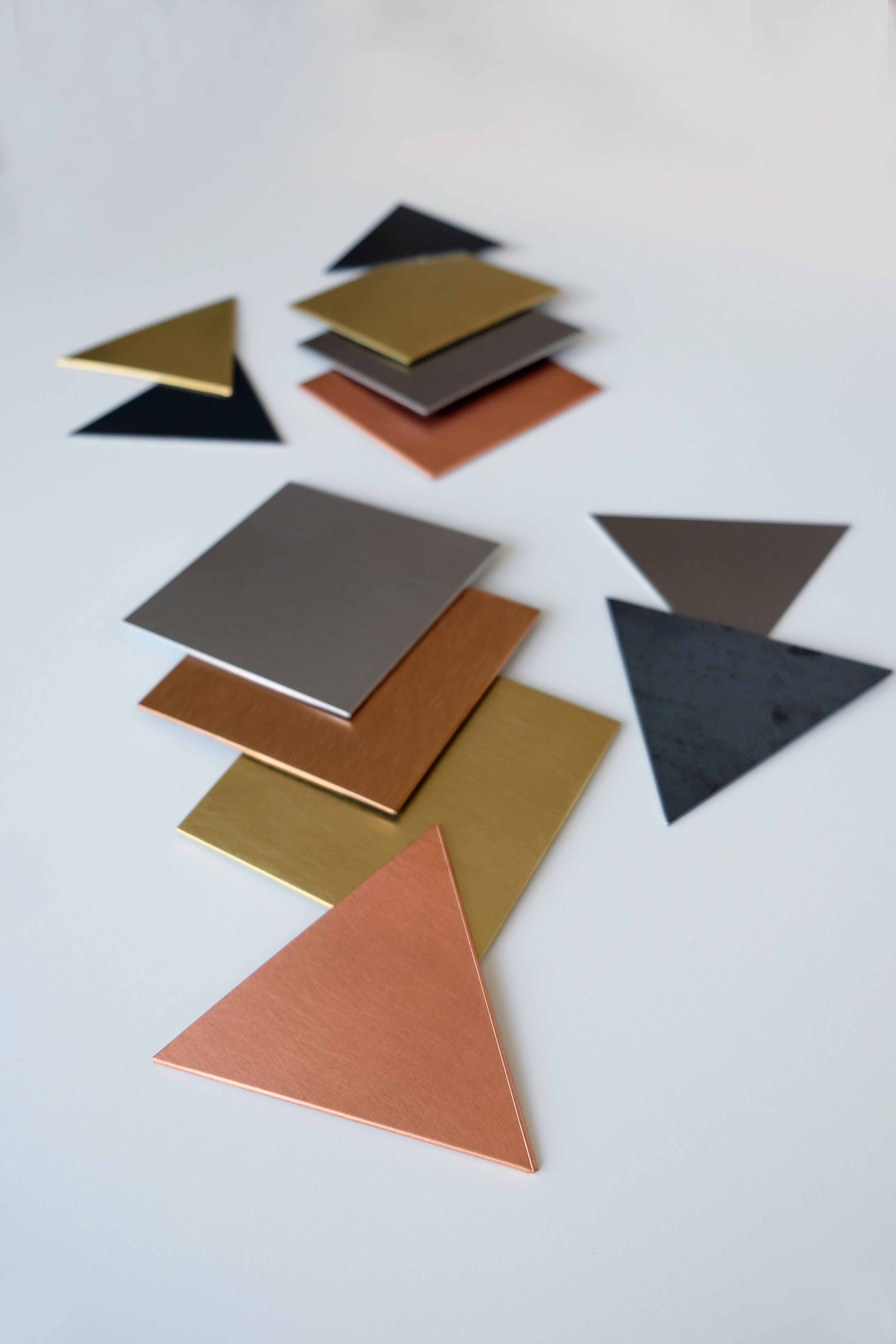
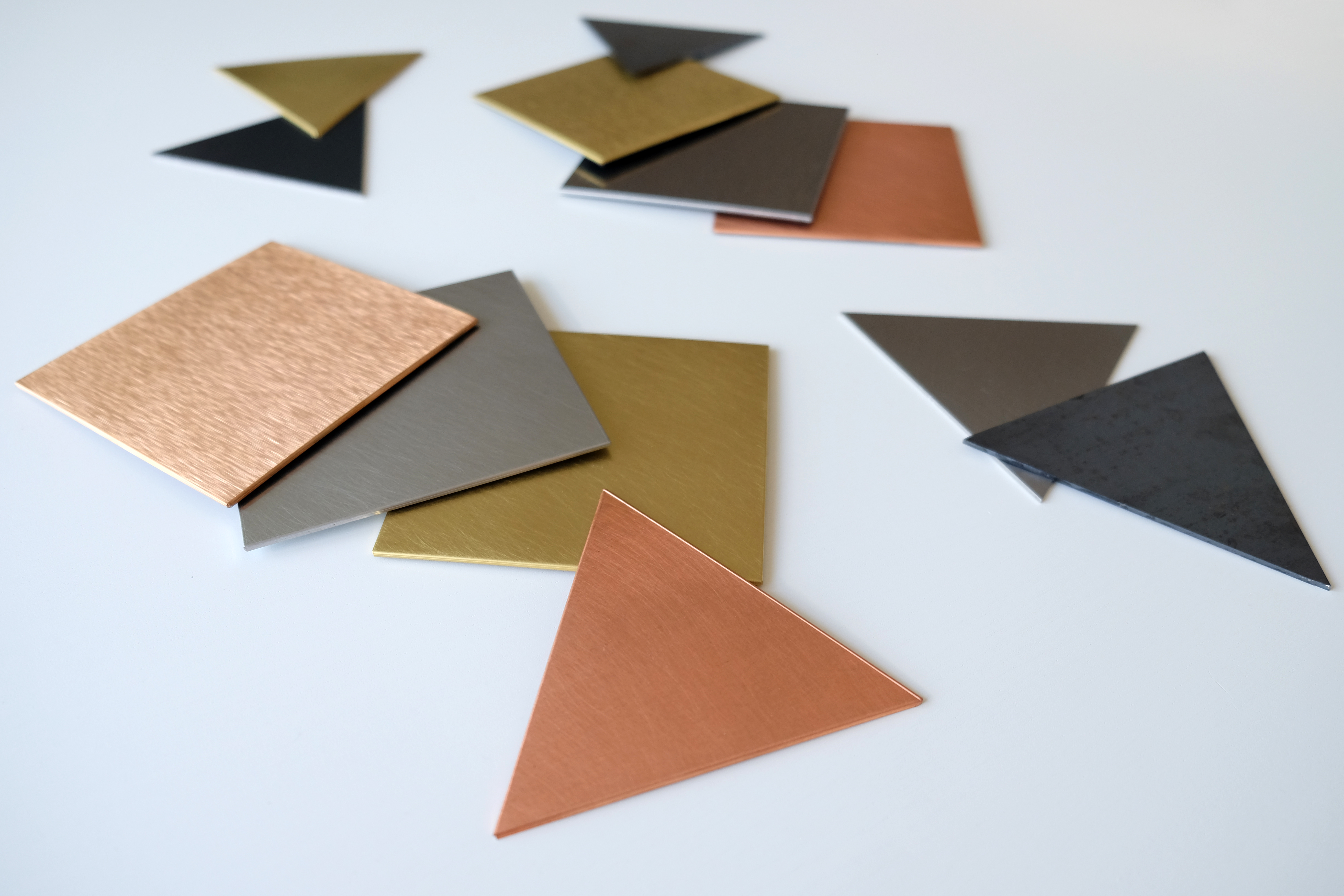
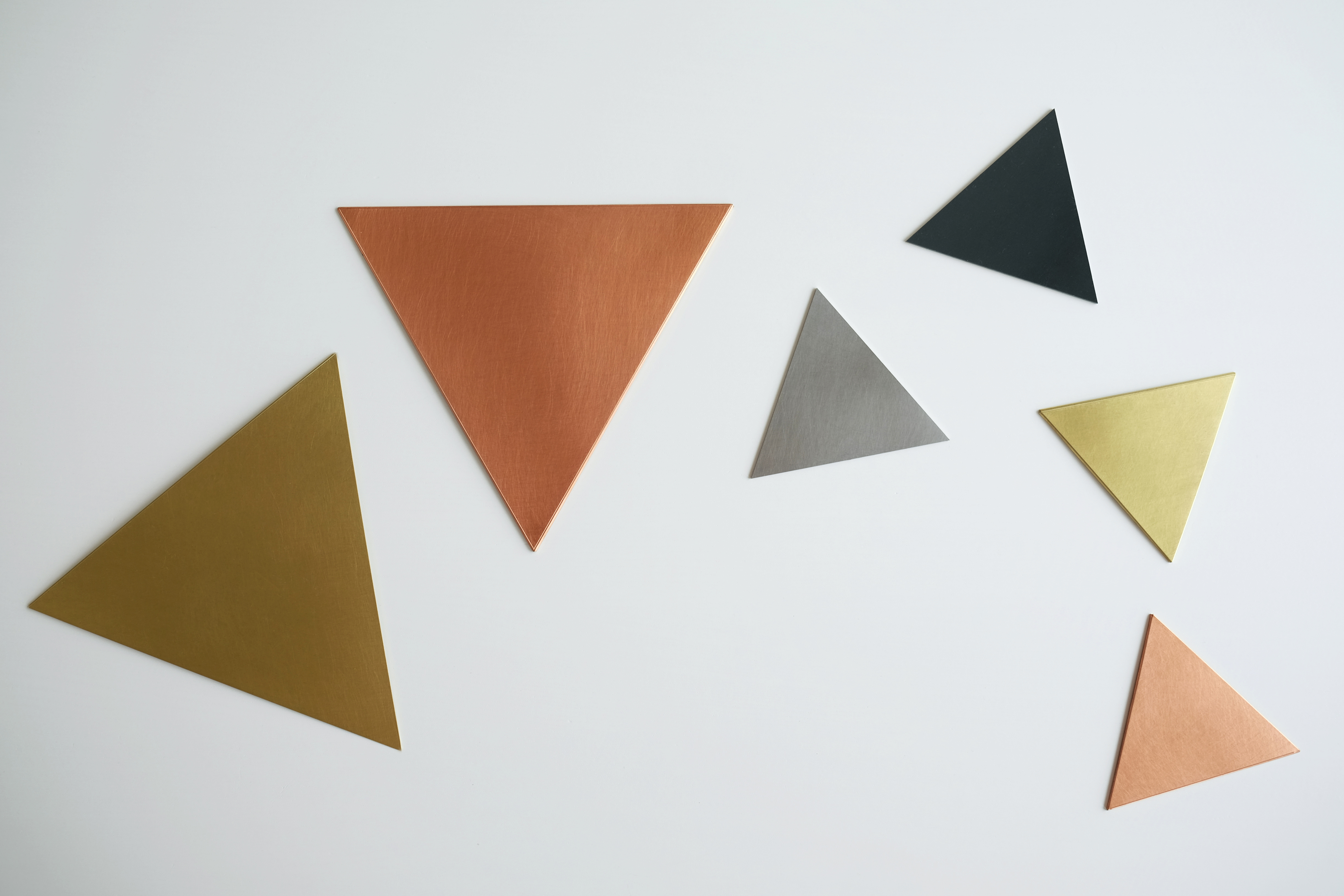
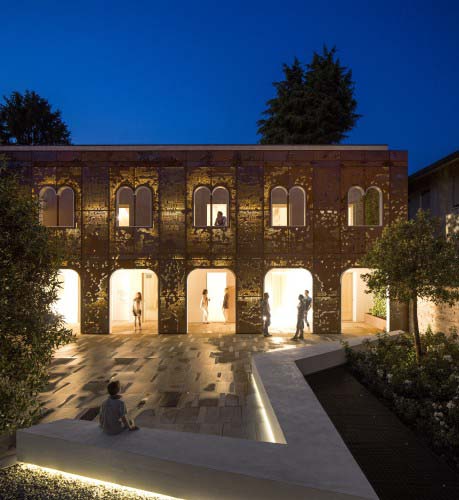
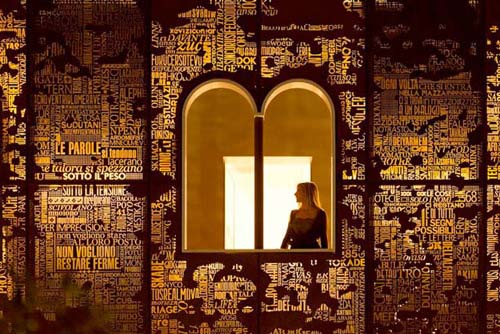
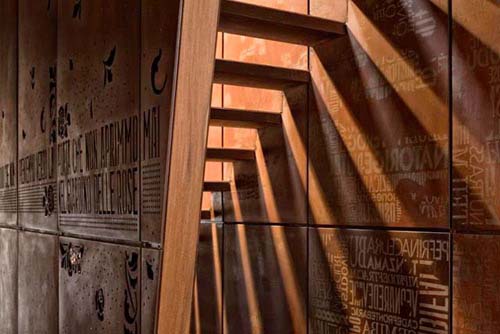
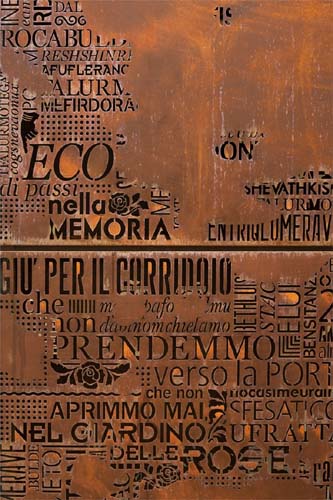
Collection of rectified glazed porcelain tiles, for both floor and wall covering. Tiles are available with plain borders and with moulded edges, in the format 60x60 cm and 60x120 cm. Both versions present three different colors: ivory white, anthracite black and terracotta. Thanks to the shaping, obtained on the edges of the tile, Zip expands the decorative system incorporating the joint, making it a creative element as well as joining tiles. The colored and shaped joint becomes a graphic sign, thus creating a continuous surface. Zip is zipper, in all respects. The elegance of the colors, the simplicity of its design, the matt finish and the uniform texture enhance the decorative role of the joint, essential component of the design of this collection. Moreover, the perfect modularity facilitates the laying and creation of personal and inventive compositional schemes, ideal both in residential and extra-residential environments. The graphic signs of Zip become a style imprint, icon of a new way of interpreting ceramics.

ZIP_01

ZIP_02


ZIP_03ZIP_04

Ceramica Bardelli
Via G. Pascoli 4/6
20010 Vittuone (MI)
Email: [email protected]
Press Office
Sabrina Giacchetti Studio
Email: [email protected]

Carlo Bardelli

Partners news

POLIGONI, la collezione che riprende in chiave moderna l’arte palladiana.

27 febbraio 2020

POLIGONI, la collezione che riprende in chiave moderna l’arte palladiana.

 Design: FM Studio

La trama creata dalle tessere del mosaico si interseca con quella della fuga in una rete senza soluzione di continuità.
In POLIGONI la modularità della texture trasforma il concetto tradizionale e antico dell’arte palladiana, definito dall’irregolarità della forma. I tozzetti, uno differente dall’altro, si muovono e si accostano occupando in modo tutt’altro che casuale il proprio posto nella matrice. 

Lo stesso disegno si presenta in 3 diverse scale: dalla maggiore per enfatizzare l’ordito creato dai poligoni o dalla fuga fino alla dimensione minore, dove i tozzetti diventano quasi tessere creando un effetto materico originale anche in spazi limitati. Ogni modulo risponde ad un’ampia gamma di gusti stilistici e di soluzioni di rivestimento sia interno che esterno.

La collezione è caratterizzata dal materiale, la pietra, che carico di simboli e di tradizione, è forte e capace di dare nuova vita all’ambiente grazie al lavoro e all’immaginazione dell’uomo.
Nella versione total back in Nero Marquina viene esaltata l’eleganza del motivo, rendendolo discreto ma allo stesso tempo di impatto grazie alle fughe chiare che creano contrasto.

Nero Marquina - Poligoni Friul Mosaic
Nero Marquina


Friul Mosaic, simbolo per eccellenza di artigianalità, unicità e arte nel mondo del mosaico, con il catalogo Design che include POLIGONI, ha voluto armonizzare tra loro forme e materiali per creare una serie di superfici che interpretano in chiave moderna e innovativa qualsiasi spazio d’architettura. La tesserina classica lascia spazio a figure di ogni tipo: listelli, poligoni irregolari, casette, losanghe, trapezi, tutti ottenuti con una lavorazione prevalentemente manuale.
Tutto ciò è reso possibile dagli artisti Friul Mosaic che all’interno del laboratorio dell’azienda, tuttora tagliano le tessere a mano servendosi della martellina, e realizzano così forme e mosaici dalla precisione sartoriale destinati a durare nel tempo. 

Friul Mosaic ha firmato tra gli altri, la boutique Dolce & Gabbana a Venezia, il Caffè Contarena a Udine, il Grand Hotel Des Iles de Borromée; ma l’intervento più impegnativo riguarda il Santuario Nacional Nossa Senhora da Conceiçao Aparecida, a San Paolo del Brasile, un cantiere di oltre 2000 mq di superficie.
 

Bagno - Poligoni Friul Mosaic
Bagno 
Bagno - Poligoni
Bagno


ULTERIORI IMMAGINI E COMUNICATI STAMPA POSSONO ESSERE RICHIESTI A [email protected]

Azienda: Friulmosaic
Vias S. Giacomo, 42
33096 San Martino al Tagliamento PN Italia
tel. +39 0434899217
www.friulmosaic.com


Press Office: tac comunic@azione
tel. +39 0248517618
tel. +39 0185351616
[email protected]
www.taconline.it
twitter.com/tacomunicazione
facebook/tacomunicazione


Marco Mignatti

ArboSkin: bioplastica riciclabile per facciate innovative

15 Ottobre 2018

L'università di Stoccarda ITKE Institute, Dipartimento di Strutture e Costruzioni della Facoltà di Architettura, nell'ambito del Research Proiect Bioplastic Facade, ha progettato e costruito il nuovo padiglione ArboSkin: è composto di 388 piramidi di bioplastica, materiale totalmente biodegradabile o riciclabile derivante da materie prime vegetali rinnovabili annualmente, come l'amido di mais o la farina.

ArboSkin  

L'intero padiglione è realizzato con elementi di facciata in 3D e dimostra le potenzialità estetiche e strutturali delle bioplastiche. Ha vinto recentemente un premio in uno dei più importanti concorsi tedeschi sulle idee innovative.ArboSkin  

La bioplastica è un materiale estremamente malleabile, ma con buone prestazioni strutturali, particolarmente adatto nello sviluppo di facciate complesse e con motivi in rilievo. Allo stesso tempo consente di rispondere alla crescente domanda di materiali da costruzione provenienti da risorse efficienti e sostenibili, limitando l'utilizzo di derivati da combustibili fossili. ArboSkin

Il progetto della struttura a guscio è basato su una rete di forme triangolati in pezzi tetraedrici di dimensioni diverse. La doppia pelle curva è fatta con piramidi di bioplastica di 3.5 mm di spessore che vengono assemblate meccanicamente per creare la superficie di forma libera. La forma complessa a doppia curvatura portante è realizzata collegando tra loro i tetraedri con anelli di rinforzo e travicelliI fogli di bioplastica possono essere modellati e adattati liberamente per soddisfare qualsiasi esigenza estetica dell'edificio.

ArboSkin

I fogli di bioplastica sono stati plasmati e termoformati ad alta temperatura consentendo di coniugare una elevata adattabilità ai disegni più complessi e i rifiuti prodotti durante la fresatura sono stati recuperati, ricostituiti e riutilizzati per creare altri elementi di facciata tridimensionali. I granuli di bioplastica sono estrusi in lastre, che a loro volta sono ulteriormente elaborate in base alle singole esigenze per ottenere superfici e strutture anche di notevole complessità. I prodotti semilavorati sono utilizzabili sia per rivestimenti esterni sia per rivestimenti interni. A fine vita il materiale può essere riutilizzato o smaltito tramite compostaggio. ArboSkin

Finora le bioplastiche erano state utilizzate solo per il confezionamento ma questo padiglione dimostra che il materiale può essere promosso ad alternativa verde al cemento, la cui produzione rappresenta l'otto per cento delle emissioni globali di anidride carbonica. (Fabiana Cambiaso Università La Sapienza) www.itke.uni-stuttgart.de ©ITKE; ©Roland Halbe.

Carlo Bardelli        

Facades

The “Building that Grows” in Montpellier

20 February 2019

It's called the Building that Grows, and it could be compared to a dream, a wish that comes true. It's something different, which we are not accustomed to, it is extremely material but at the same time loaded with symbolic meanings. building that growsWe are in Montpellier, southern France. The Edouard François’ Maison thinks and designs this building for houses that will become part of the collections of the Pompidou Centre. The Maison architecture reflects the trends of contemporary society: sustainable development, the use of local materials as well as the conservation and valorisation of the existing buildings. These are all recurring themes in the work of the French firm that continues to investigate new forms of sustainability, new "green" habitat.

SLIDE building that grows

In this case, the choice was towards the use of stones as wall claddings and to design balconies or small wooden terraces that sprout from the sides of the building by discontinuing the linearity. The study of the balconies was a key part of the project: we are the "balcony-gardens" to dine outdoors and to accommodate many friends; the "balconies-cabins" that remain perched in the trees for more intimate gatherings, then the "balconies-towers" that, as little medieval towers, allow you to explore your surroundings, the foliage of the tree tops, in which the building is well integrated. Finally, there are the "balcony-terraces" entirely dedicated to reflection and contemplation to live in perfect harmony with nature while staying in town. building that growsThe name of the building, however, is tied to the outside walls. As a living skin, a real intervention of manipulation was built by François Maison. With the idea that it would grow and sprout, that the building would slowly change its appearance according to the laws of nature, sacks of potting soil, stones and small plants were combined with iron cables as support. Some climbers have watered with compost and planted along the surface, until the installation of an automatic sprinkler system on the façade. Just like a small eco-system, the Building that Grows continues to change and to change depending on the form you create, mosses and plants that grow and then die, creating a constantly evolving composition. building that grows www.edouardfrancois.com 

Carlo Bardelli

Green building

WAC Expansion: a metal crystal

12 January 2019

For the Walker Art Center Expansion, the client – represented by Director Kathy Halbreich and Chief Curator Richard Flood – did not aim simply to increase the exhibition area, like so many other museums did in the nineties, but primarily to give the public more room, more room for urban living inspired by the variety and richness of contemporary art. Walker Art Center

The Walker Art Center (WAC), as one of the most progressive poles for the transmission of contemporary art, is indeed a "center" and not just a "museum." Its name is an agenda, which is why plans for expansion also include more leeway for electronic media and the performing arts. The intention of the museum and the trustees to enhance urban life at the WAC is especially meaningful and necessary because there is essentially no street life in Minneapolis, due not only to the city's climate but also to the Skyway system of elevated pedestrian walkways.

Walker Art Center

Initial planning therefore targeted a repositioning of the WAC in relation to existing urban infrastructures. The demolition of the Guthrie Theater will make room for a larger Sculpture Garden, the main entrance will be moved around Vineland Place (back) to Hennepin Avenue, and a second tower will complement the existing tower by Edward Barnes, while also establishing a visual link with the downtown skyline as well as the church spires along Hennepin Avenue. Walker Art Center

This second tower is essential not only as an urban landmark; it also expresses the increased importance of the performing arts in the WAC program. Inside the tower there will be a theater encased in a balcony-like, three-story zone for the audience, somewhat like a down-sized version of the Scala in Milan or the open-air Globe theater of Shakespeare's day. This audience zone can also be used as an exhibition area for all kinds of art installations. Pictorial and performing arts can be interwoven here in entirely unexpected and innovative ways. The architecture thus fosters an intensification of the various activities with a view to the targeted urbanism of the new WAC. In contrast to the solid brick of the existing building, the walls are completely glazed, which will allow direct eye contact between the busy thoroughfare of Hennepin Avenue, the new interior of the WAC, and the new enlarged Sculpture Garden. This glazed street level running parallel to the slightly angled street will function like a "Town Square" open to everyone as a meeting point, a place to exchange information and news or to have a cup of coffee. People can also circulate here without going to an exhibition or attending an event. The new exhibitions spaces will be freely arranged within this glazed public area so that the "Town Square" will include cozier spaces, like side streets or alley ways. Walker Art Center

This loose arrangement of galleries is a necessary modification of and addition to the rigid shape of the existing brick tower, which looks today like a pragmatic version of Wright's Guggenheim Museum. Edward Barnes' gallery concept along with his choice of materials, especially the terrazzo floors, have clearly stood the test of time and ensured remarkable curatorial freedom. On looking at the new WAC from outside, one is immediately struck by the huge, irregular windows. They look accidental but are homologous forms, showing a kinship in value and structure, somewhat like the shapes of a silhouette cutting. The papery appearance of the façade – also resembling a silhouette – consists of panels, which can simply be folded up along the slanted edges of the openings. Fragile and papery cladding will also be used for the inside of the theater, with its stud-wall construction so typical of US-American buildings that it is the inevitable fate of every architect. (Fabiana Cambiaso, Università La Sapienza) Credits: www.herzogdemeuron.com Figures: © Herzog & de Meuron; © Cameron Wittig.

Marco Mignatti

Architecture

Second skin made of cement. The suggestions of fibreC

02 April 2019

Launched in 2004 by the Austrian company Rieder, fibreC (from the English "glassfiber" and "concrete") is a concrete reinforced with glassfiber applicable outdoors and indoors. The deprivation of the iron core inside of plates allows a very thin but highly durable production: sheets of 8-13 mm, very light but very strong.

Messestand Gasser Swissbau '12 Basel, L3P ArchitektenRegensberg, Fertigstellung 2012

Sandblasted or brushed surfaces are colored with the addition of iron oxide and natural additives: this provides varying surfaces for appearance and colors. FibreC is very durable, thin and pliable and it can therefore be used in flat slabs, and shaped in a particular way. Thanks to the unique feature of mouldability of these concrete and glassfiber panels and to the production system, this so thin material can find extraordinary possibilities of application. 

Messestand Gasser Swissbau '12 Basel, L3P ArchitektenRegensberg, Fertigstellung 2012

Messestand Gasser Swissbau '12 Basel, L3P ArchitektenRegensberg, Fertigstellung 2012[/caption] The architecture is the interplay of contrasting elements and the result of imaginative ideas that come from the continuous updating of materials, colors and texture of surfaces. The panels and the new elements in fibreC encourage the evolution of these ideas with innovative material suitable for all types of solutions. Similar to a skin of concrete, fibreC façade panels offer new solutions. 

Messestand Gasser Swissbau '12 Basel, L3P ArchitektenRegensberg, Fertigstellung 2012

Concrete skin coatings give the buildings a more modern aspect, both visually and in terms of innovation, as if they were covered by a second skin. FibreC is a material which allows a wide range of application and creating a wide variety of organic and creative shapes; it adapts to different forms and solutions, for example sliding constructions, curvatures, sloping walls and roofs.

Messestand Gasser Swissbau '12 Basel, L3P ArchitektenRegensberg, Fertigstellung 2012

The work shows all the expressive potential of this material that can be used as a second skin or tissue with spectacular effects on the façade of the building.   www.rieder.cc/it/it/home/ rieder.cc/blog/

Edoardo Croci

Facades

Dry technologies: Perforated aluminium panels and steel

This project deals with the extension and the restructuration of a young workers residence, a 10-levels building made of a concrete structure with overhangs every 2.50m. The existing building was built in a brutal way in the 1970s on the Fondation Eugene Napoleon domain, a group of Heritage buildings.

1308148693-frederic-delangle-10-425x5001

To go faster, allow freedom of interior organization and future flexibility, the extensions have been assembled using a metal frame.

1308148775-herve-abbadie-10-333x5001

The anodized aluminium envelope draws up a new geometry, free of architectural styles, that encompasses the extensions and the existing buildings.

1310853600_754_333_5001

It reflects the light and is slit by openings onto the windows and the balconies/galleries of the garden. Final touch to the Fondation’s composition, the garden is connected to the Boulevard by openings in the outer wall, to the communal life spaces on the ground floor and to the galleries on the western façade.

1308148735-herve-abbadie-4-528x3511

The housing itself is the result of working on expanding minimum space, on series and repetitions. The metal structure allows shifting forward or backward the light frame partition walls in the flats to create two spaces, the “services” in the hall and the living space close to the window.

herve-abbadie-51

 (Fabiana Cambiaso - Università La Sapienza) Credits: suzelbrout.com Figures: ©  Hervé Abbadie; © Frédéric Delangle Young Workers Residence, Paris, France aasb_agence d'architecture suzelbrout / Suzel Brout, Leslie Mandalka Site: 3751 mq Completed: 2011 Materials: Modular panels of anodised aluminium with serial holes made with laser technology, Steel Applications: Envelope, Structure  

Materials

Exterior. The “without form” ANIMA façade

10 January 2019

ANIMA is the first work of the Swiss architect Bernard Tschumi (among his most famous works there is the Parc de la Villette in Paris) in Italy. Commissioned by the Fondazione Cassa di Risparmio di Ascoli Piceno and Comune di Grottammare, the work was born with the objective of facilitating the identification of the territory. The project, whose inauguration is scheduled for 2016, is a future landmark for the city of Grottammare, a generator of ideas for the territory, both in its physical size and in its creative potential. Including in an area at the edge of the urban fabric between the sea and the hills, the new work is characterized by a high degree of flexibility; its spaces are configurable on event function.

ANIMA by Bernard Tschumi

The name, ANIMA, comes from an acronym: A as Art, N as Nature, I like Ideas, M as Music, A like Action. They are the “five souls” of the project the architect has interpreted as an identity in the making. The work will be a catalyst for interest, interactions, synergies. The surface where architecture is placed coincides with that of the small medieval town of Grottammare, slightly more than 7,000 square meters. The project approaches the historical heart of the town not only in size: it recalls, both outside and inside, the “urbs” concept. Outside the ANIMA looks like a compact body, a perfect square that, if somewhat alludes to an idea of closure and protection, it breaks and immediately shows a high permeability.

ANIMA by Bernard Tschumi

A reflection on the theme of the façade is the basis of the research that led Bernard Tschumi in a workaround for large vertical walls that surround the building and that finds its strongest expression in the south wall, through which you access the complex. Once in the square body you find yourself immersed in a split, partly inside and partly outside.

ANIMA by Bernard Tschumi ANIMA by Bernard Tschumi

The architect explains the project: The complexity of this space is determined by the rotation of a large cuboid volume that occupies the central area of the building and contains the main hall, with seating for 1,500, flexible and configurable based on capacity needs variables. The rotation of this volume determines a system of four large courtyards, to each of which the main hall has a chance to open up a fluid and dynamic system of visual and physical paths. In addition, an extensive system of ramps allows moving within this heterogeneous environment and mobile, observing from prospects and continuously variable heights. Adjacent to the main hall and linked spectacularly through a multiplicity of paths, there are willing share laboratories, offices, café-restaurant, ancillary spaces. Can you design a façade without recourse to a formal composition? Can you do so is neither figurative nor abstract but, so to speak, without form? At a time of economic crisis, indulge in formal geometry produced by complex volumetric curves didn’t seem to be a responsible choice. The era of the so-called 'iconismo' seems to be finished, as arbitrary sculptural figures of the recent past ". ANIMA by Bernard Tschumi

"Rather than adding a new province and iconic sculptural shape, we decided to investigate interaction, simplicity and sobriety. The internal organization of space was socially and culturally important, but that the external image of the project was equally significant. For this reason we have designed a simple square plan with four façades and a fifth façade, as equivalent coverage. Each façade has its own vocabulary, allowing to address issues such as protection from the Sun, natural lighting and ventilation at the same time project a strong identity to the outside world.

Edoardo Croci

Facades

Colors for Summer: Gold is Back in Vogue

Summer is the right time for bright colors, which refer to the sun: yellow in its golden shades, but also red, which recalls the "fiery" character of the season.
The gold color, which never goes out of fashion, is now back in vogue especially in combination not only with Gray, to recall the two Pantone 2021 shades, but also with the Classic Blue chosen for last year.
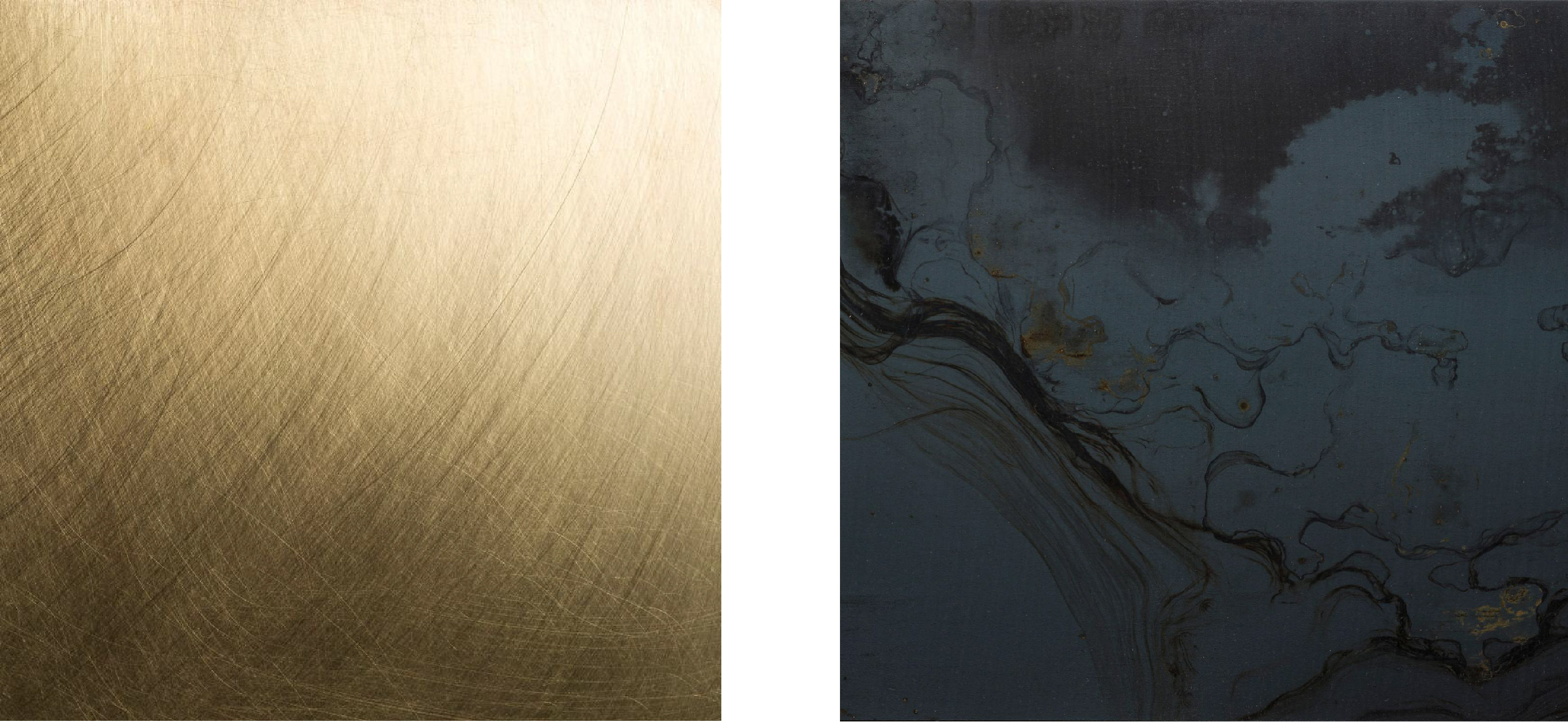
The Planium summer finish, therefore Brass, can be applied to the floor with PL01 Invisible Floor, a dry installation system that uses one-click coupling.

Ottone Planium
 
Partners news

Stainless steel becomes protagonist at Museum of Contemporary Art

20 November 2018

A large irregular mirror Prism with irregular and changing facets beyond: this is the new home of the Museum of Contemporary Art (MOCA) which was inaugurated in October in Cleveland. The four floors of the building are encapsulated in a faceted surface made of blue stainless steel with multiple purposes. The transparent façade coating has a special mirror enamel that allows you to filter the sunlight. In this way the interiors are well lighting, while the heat remains outside: this solution also solves the problem of natural overheating. The Museum can be accessed from all six sides, so the structure makes the most of the flexibility of the spaces. The diagonal orientation, finally, allows the building to be reflected on several fronts. Visitors can live a unique experience, having the illusion of a moving perspective. Ready to receive LEED Silver certification for its high energy-saving standards, the 34 thousand square meters minimalist black cube has been designed by the Iranian architect Farshid Moussavi.     www.mocacleveland.org www.farshidmoussavi.com

Marco Mignatti

Architecture