Smart is green. PCM, Phase Change Materials

06 March 2019

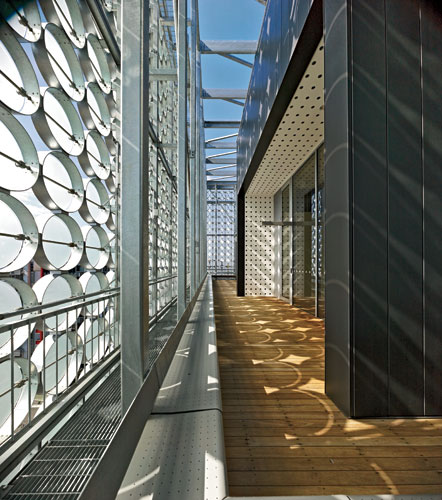
An “energy-smart façade” that generates and stores energy throughout the year makes this house, designed by zillerplus Architekten und Stadtplaner München, an “efficient house plus” – a building that is capable of generating more energy than its residents use. This is made possible by techniques such as the use of particularly clever phase-change materials (PCMs), which are also used in “pocket warmers”.

Smart is green

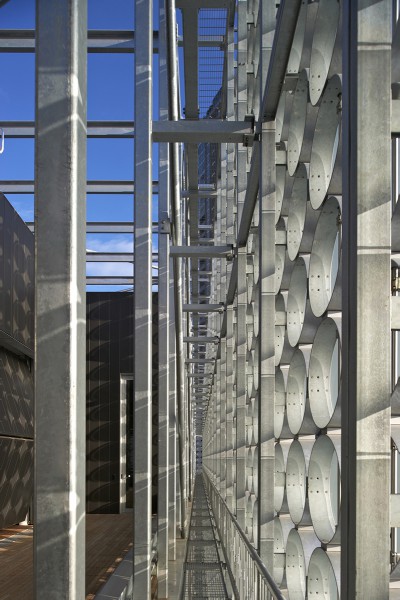
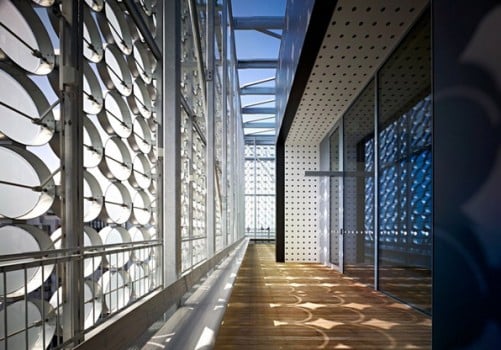
One Façade, Three Layers: all the Better for the Climate   The outer shell of the Smart is Green building is made up of layers including a vertical garden façade that acts as a heat shield during summer, along with insulating glazing, which protects from both heat and cold, and a PCM “curtain”. PCMs are in a constant aggregate state between solid and liquid. Like “pocket warmers”, which absorb heat when immersed in hot water and can be used to warm freezing hands when it is cold, these materials can absorb the warmth from the sun’s energy and release it later. Excess heat is thus removed from the area during the day, preventing the apartments from overheating. This stored heat is then released during the cooler hours of the night. Smart is green

Peak temperatures during both summer and winter can thus be intercepted and balanced out, resulting in a very pleasant interior climate. PCMs are also used for the building’s central heating storage facility, with a volume that is only half that of a conventional storage tank. The surplus heat from the solar thermal facility is stored here and maintained at the right temperature for under-floor heating. If there is a significant excess of solar energy, it is fed into the Wilhelmsburg local Energy Network.

Smart is green

In return, this ensures a sustainable heat supply, especially in long periods of cold weather. Both the exterior cladding and the roof are mounted with photovoltaic surfaces that transform energy from sunlight into electrical energy, and solar thermal surfaces, which convert solar power into heat energy. The façade and roof therefore play an active role in the building’s ingenious engineering concept, using innovative forms of technology to generate energy that can be consumed within the house itself. Moreover, such technologies are integrated into the very architectural concept behind the building.   Tomorrow’s Properties Will Help their Residents to Get Around   Like all of the concepts behind the Smart Material Houses, the façade with its clever materials is not the only innovative element – the integrated concept for the whole project is also groundbreaking. In Smart is Green this can be seen in the ground plan and the way in which it can be accessed, with various entrances to the individual apartments via stairs or lifts. The house is laid out so that the apartments can be configured or modified in a versatile way, allowing them to be partitioned or extended in order to meet the needs and changing living arrangements of their inhabitants. The attractiveness of “green living” is also embodied by the spacious terraces on each landing, each containing a small garden, between the planted and glazed areas on the southern side of the building.   The Technical Innovation Doesn’t Stop with the Building   Just in front of the green façade are facilities for providing green energy for getting around in the future, in the form of a fast charging station for electric cars. Surplus energy can be offloaded onto vehicles, which act as energy storage devices and can thus make an important contribution to the energy design of the building. E-cars also form a natural part of the mobility concept, as a car-sharing system is planned for the residents. All of this will make car-sharing among neighbours an attractive alternative to owning private vehicles. Extra charging devices for electric bicycles and scooters can also be installed in combi-boxes on the ground floor upon request. (Fabiana Cambiaso - Università La Sapienza) www.zillerplus.de   Smart Green, Zillerplus Architekten Prototype IBA 2013 Hamburg Completed: 2013 Site: Hamburg, Germany Materials: Phase change Materials (PCM), Steel, Concrete Applications: Curtains, Solar Shading Figures: © Zillerplus Architekten.

Marco Mignatti  

Materials

Walks of Design

15 December 2018

New B&B Italia Designs 2018


atoll


B&B ATOLL
design by Antonio Citterio

«B&B Atoll is a versatile collection that reinterprets traditional elements, like the bolster, associating them with a sleek, refined structure that fits smoothly into the contemporary language. It is versatile because it can be used in a wide range of settings, from the most formal, when partnered with the armchairs, to informal situations, thanks to the possibility of creating an L-shaped configuration with the daybed as end element.»


                                                                                                                                                                                                                  Antonio Citterio


Named after the coral formation B&B Atoll, the new modular seating system by Antonio Citterio, is a refined expression of a balanced aesthetic form and a decisive contemporary style that is also extremely elegant. The system is built on three basic platforms - 190 cm and 240 cm, both with 90 cm depth, and 130 cm with 140 cm deep - that are complemented by armrest and backrest elements to form various types of seats: sofas, dormeuses, corner-end modules, single or modular elements with chaise longue and pouf. The frames have light, slender lines and are applied on high die-cast supports with metal profile emphasising the line between the structure and upholstery. Two finishes are available, pewter and black chrome. The pieces are given even more character by a supporting element to be placed wherever desired, a bolster in two sizes - 65 and 90 cm - attached by leather straps to a die-cast structure. This accessory can be inserted between the seat cushion and the base structure to provide an additional support or become an armrest or backrest at will. B&B Atoll is a dynamic project with a constantly fresh ability to adapt to different compositions and create different seating types, from informal relax versions to most formal, also made possible by the use of complementary back cushions.

bull


BULL
design by Naoto Fukasawa

«As its name expresses, Bull is a table with 4 toned legs that stand firm on the ground. I designed this very firm looking table together with an elegant chair as a pair. Together they look if they were truly “The Beauty and the Beast”. The beast, after all, is a great looking table.»


                                                                                                                                                                                                               Naoto Fukasawa


The aim of Naoto Fukasawa’s Bull table is to communicate the immediate impression of a very solid yet extremely refined object. A stylistic formula that forms part of the designer’s distinctive language and which, in the case of Bull, uses a subtle structural tension among the elements: the legs with an ample round section, which although slightly inclined seem to be solidly “planted in the ground”, and in contrast a slim top that seems simply to be resting lightly on the frame. Available in two sizes - 240 and 280 cm - Bull can be entirely in oak in light, grey, black and smoked versions, or with an oak structure and top in black Marquinia or white Carrara statuarietto marble, both with matt finish.

belle


BELLE
design by Naoto Fukasawa

«The character of this elegant chair is expressed by the back support and the armrests, and highlighted by the obtuse angle line around the elbow area. All four legs are slightly curved outwards at the bottom to give a classic feel as well. The chair is named “Belle” after the story of “The Beauty and the Beast”.»


                                                                                                                                                                                                               Naoto Fukasawa


With a clever play of literary and stylistic references, the Belle chair is the delicate, feminine counterpart to the Bull table. With rounded lines and padded seat with leather upholstery, it reinterprets the detail of the rounded section of the table legs, and as it develops downwards adds a small element of curvature that creates a graceful touch. Towards the top, the legs join the chair back with elegant, elbow-shaped arms. Two solutions are offered for the backrest, oak wood in the same finishes as available for the frame - light, grey, black and smoked - or leather upholstery matching the seat, obtained thanks to a special manufacturing technology.

harbor


HARBOR
design by Naoto Fukasawa

“When I was working on the Papilio family project, I realized that the iconic strength of B&B Italia is in working with polyurethane foam as a mass. Hence the idea for this design to sculpt a form out of this material as if I was making a sculpture out of Carrara marble blocks. It is true to me that B&B Italia is a brand that creates sculptures in polyurethane. The name Harbor comes from a feeling of having a place to come back to. I also wanted this seat to have a feeling of wrapping around our body”.


                                                                                                                                                                                                               Naoto Fukasawa


The Harbor series of armchairs and pouf, presented with success in 2017, is enhanced by a new, equally contemporary and sinuous sofa. A range extention in the sign of design continuity, result of Fukasawa’s research into seating in the shape of upside-down truncated cone. The sofa reflects in particular the architectural, ergonomic shape of the conversation armchair, compounding its welcoming appeal by hosting two people. In fabric or leather, it has a visible metal zip on the rear of the backrest that acts as a decorative element and also allows the cover to be removed.

colosseo


COLOSSEO
design by Naoto Fukasawa

«Like the Harbor armchairs that are carved out from an upside down conical mass, these small tables were originally made by the same process. However they looked rather too solid and heavy so I shaved off some of the mass, then its arches resembled the Roman arches of Colosseum.»


                                                                                                                                                                                                               Naoto Fukasawa


Colosseo fits smoothly into the highly successful product category of accessories, furnishing elements that change function according to occasion and need, and for Colosseo this means transforming from coffee table to pouf. When designing this new product, Fukasawa arrived at the shape he was searching for by considering a solid in the form of an upside-down truncated cone, lightened by arch-shaped grooves that define the surface, creating an assonance with the structure of the famous Roman arena it is named after. Made of hard polyurethane painted in sixteen glossy colours, Colosseo is available in two sizes: 40 cm diameter x 45 cm height and 50 cm diameter x 55 cm height.

eda-mame


EDA-MAME
design by Piero Lissoni

«It’s as if it were a surface, a Möbius strip. Eda-Mame is strangely full of curves, it welcomes you and, if you want, it lets you drink an aperitif, almost as if it were an upholstered table


                                                                                                                                                                                                                      Piero Lissoni


Shaped by an organic development inspired by the form of a soy bean, the typical ingredient in Oriental cuisine, Eda-Mame is a furnishing element with a strong impact created by a sculptural design that can give great incisiveness to a space. A single object that is a fusion of three types of seating - high-back chair, easy chair and pouf. Its threefold nature lends Eda-Mame extreme versatility in both residential and public settings, and can also highlight areas for co-working, passage and short stays, like hotel lobbies. Made of moulded foam, Eda-Mame is upholstered in a stretch fabric with a light stitching. The support base is made of crosspieces with rounded steel feet connected to each other by a bar, all in pewter painted finish.

Jack


JACK
design by Michael Anastassiades

«This bookcase system started as a stacking exercise of an assembly of rods of the same diameter. The selected design is a reduced configuration, providing the optimum structure and modularity to address a diverse range of interior spaces. The technical solutions are discreet, allowing for arrangements that feel specifically fitted to a particular room. Its discipline lies in the structural rules used to build from one form to the next, assembling to make a cohesive composition.»


                                                                                                                                                                                                     Michael Anastassiades


Jack is the result of the first collaboration between B&B Italia and Michael Anastassiades. Known for his skills in working with light, the Cypriot designer has designed a modular bookcase system with a striking degree of technological perfection. In its search for the creation of an innovative language, this design challenge revisits and modernises a design classic, the 1950’s room centre bookcase, transforming it into a complement with a clean, essential yet architectural structure. The genius of the piece lies in concealing the engineered supports, including those holding up the laminated shelves, inside the vertical elements with a rounded section made of extruded aluminium and integrated by an exclusive, totally-invisible, floor-ceiling telescopic adjustment system. The system is available in 14 heights, ranging from 219 to 323 cm and taking in all measurements in-between, while the shelves are in two lengths, 75 and 90 cm, both 30 cm deep. Two are the finishes provided for the vertical elements and shelves for single-colour solutions, chalk white and black, both matt.

Alanda


ALANDA ’18
design by Paolo Piva

The Alanda coffee table, an iconic piece that ushered in the 1980s, is now revisited in homage to Paolo Piva, the great architect and designer who passed away last year. A highly successful classic and sought-after vintage furnishing complements, Alanda is one of the most typical design objects of a period with a wealth of strong, daring stylistic signs, often in a dialogue with architecture, reproducing its most attractive, characteristic elements in miniature. The Alanda’s structure, serving as both pedestal and support, recalls a group of upturned pyramids, a geodetic frame that has always characterized it as if it was a magical object, entrapping and amplifying cosmic energy. Alanda ‘18 is offered in two sizes - 120 x 120 cm
and 120 x 180 cm - with structure in glossy black painted steel and top in extralight or smoked glass.


New Maxalto Designs 2018


Nidus


NIDUS
design by Antonio Citterio

«Nidus is a curved sofa with no arms for formal use as a conversation seat. I felt that this type of product was lacking in my interior design projects, intended for large interiors where there is the need to create lounges with different groups of seating. It’s part of the experimentation in creating high-backed sofas, which provide a degree of comfort to seating designed for socialising.»


                                                                                                                                                                                                                  Antonio Citterio


The Nidus collection of upholstered furniture was inspired by the precise need to create a series of formal proposals with a relaxed feel, for moments of socialising and conversation in a harmonious, relaxed setting. Antonio Citterio has achieved this objective by paying great attention to structural details like the embracing shape of the curved sofas, available in two sizes. Together with the absence of arms and the high back, this solution makes it possible to bring people together in a fresh, relaxed and unusual way. This extrovert approach is also embodied by the armchairs, offered in three versions, only one of which with arms, intended as items to be arranged freely. All the Nidus pieces can be complemented by a comfy removable headrest, and have feet upholstered in the same fabric or leather as the seats, with the addition of a small metal detail at the base that is decorative and also guarantees protection against impacts.

Caratos


CARATOS
design by Antonio Citterio

«After 25 years of presenting products that use artisanal materials and processes, I felt the need to offer a “moulded” piece, a chair with a fusion structure, thanks to a significant industrial investment by the company. At the same time, I wanted it be part of the Maxalto collection. Caratos is absolutely contemporary, but recalls some twentieth century objects, echoing the idea of bronze, through a “full” opaque finishing that absorbs light,
and the great quality of the leather upholstery, giving it a “saddlery” look.»


                                                                                                                                                                                                                  Antonio Citterio


Chairs in two versions, armchairs, poufs and coffee tables are the new proposals that extend the Caratos series launched last year. These new items both reflect and strengthen the original designs’ essential features while softening them by introducing embracing shapes. The light die-cast graphite or amber painted aluminium structure is retained, while padded backrests contribute to the formation of the armrests, creating seating with no postural restrictions at all, encouraging conversation and relations between neighbours. The poufs and coffee tables echo the design of the frames and are ideal complements to the seats to create conversation areas and social settings.


New B&B Italia Outdoor Collection 2018


Bay


BAY
design by Doshi Levien

Bay is a collection of sculptural and monolithic yet visually light outdoor seats comprising of a sofa in two sizes, an armchair and a high-backed armchair. Their enveloping volumes are marked by a double polypropylene fibre interlacing that creates “air pockets”, granting transparency and lightness to the furniture. The frame accommodates padded solid seats and soft cushions for added comfort. The colours combinations are extremely refined, with tortora and anthracite for the interlacing, paired with elegant block colour and patterned fabrics for the seats and cushions.

Tabour


TABOUR OUTDOOR
design by Doshi Levien

Tabour, the collection of indoor ottomans introduced in 2016, now features a new outdoor version. Oblong oval and square in shape, they resemble primeval marine creatures or large unicellular animals, associating the sensuality of the organic shapes with highly technological materials. The fabric is stretched over the padded frame by a sort of oversized “button” that serves as a tray, painted white, tortora or anthracite.

Fiore


FIORE
design by Naoto Fukasawa

Fiore is a new series of outdoor tables, round and square available in two heights, in white or greige cement. “Many years ago, I called my chairs “Papilio” because their silhouettes reminded me of butterflies,” says Naoto Fukasawa. “Now I have called my latest project “Fiore”, meaning flower in Italian, because the Papilio chairs sit around these tables like butterflies flying around a flower. The combination of a Fiore table with the Papilio chairs creates a pleasant outdoor environment for a coffee or a quick meal.” An outdoor solution that offers utmost flexibility, suitable both in residential and public settings.

Tobi-Ishi


TOBI-ISHI OUTDOOR
design by Barber & Osgerby

The iconic Tobi-Ishi table - whose inspiration from the East is clear even in the name, which refers to the ornamental stones used in traditional Japanese gardens - is now presented in a low, cement version that emphasizes its sculptural, textural aspect. Available in two finishes: grey and anthracite.

Edoardo Croci

Materials

SM02 Evolution

SM02 Evolution is a technical floor with a dry laying system. This takes place by means of support and mechanical coupling between tile and tile. The coupling screw remains visible on the surface and therefore the combination of this installation system with the steel finish is relevant as the detail of the screw gives the steel a very industrial and hight-tech appearance. The fixing plate allows a simple, clean and free of joints laying of the tiles, reducing labor costs, ideal for designers looking for a floor with a modern and uniform style, able to recreate an elegant contrast with the finish of the cieling. The tiles have a minimal thickness, they can be laid quickly, reducing labor costs, and they can be walked on immediately. They can be placed on screed or on old floors that you wish to cover and preserve, avoiding the inconveniences and costs of demolition and disposal.

Evolution SM02


Win Your Design with Horm

Horm presents WIN YOUR DESIGN, a contest for architects and interior designer who are asked to submit by December 20, 2021 an interior design project (real or conceptual) of a residential or commercial environment.


The brand is offering a shopping voucher worth € 30,000 (excluding VAT) to be used for the purchase of its products,
The projects will be evaluated by a jury of experts in architecture and interior design composed by

  • Fabio Novembre
  • Roberto Palomba
  • Karim Rashid


The decision to hold this competition represents an opportunity not only for designers but also for Horm, a brand curious to explore the visions of new environments created by architects and interior designers from around the world. 


The artistic direction of the brand wants to identify talents, enrich the dimension of the product and collaborate with a community whose creativity has always been a source of inspiration in creating new harmonies of living.


To start designing immediately, the price list and CAD files of the products are available on the dedicated website https://winyourdesign.horm.it/.


Designers can enter the competition by sending a ZIP file through the form in the "upload" section of the Win Your Design website, also attaching a brief explanation of the concept and functional choices. In addition to the graphics, the zip file must also contain the list of Horm products used in the project and their relative cost.


The deadline for entering the contest is December 20, 2021.


The brand
HORM offers a “contemporary design” style where mediterranean, japanese, scandinavian and North American influences cohabit, as reinterpreted through the culture, passion and craftmanship of Made in Italy.
The collection is addressed to the Residential market, but undoubtedly extendible to Soft Contract. It is dedicated to an adult, educated and conscious audience, looking for and exclusive and refined marking for its ambiances, matching functionality, harmony in shape and fine materials.

Discover more
 

Tvzeb: reversibility and zero energy wood and cor-ten steel

02 February 2019

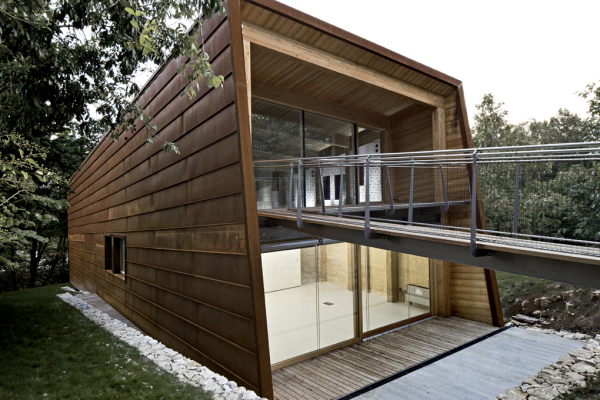
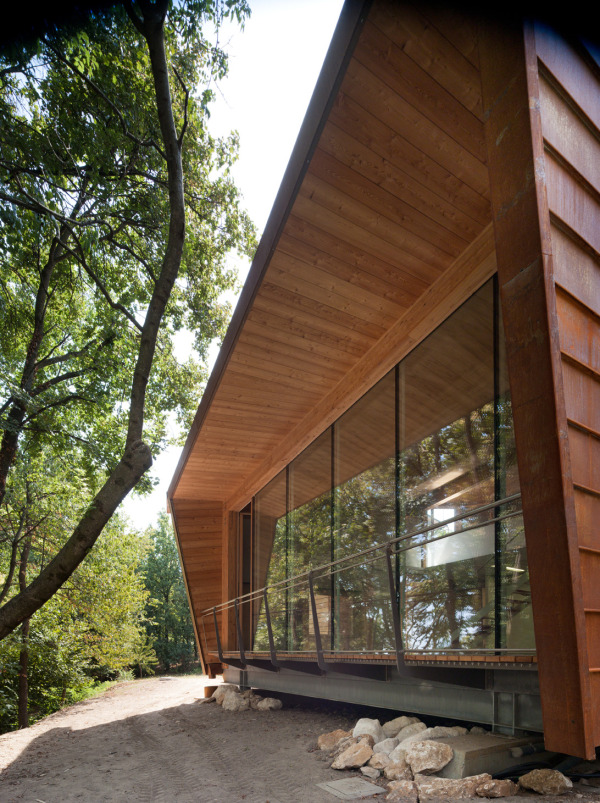
Tvzeb is an experimental zero energy building brought to fruition by virtue of a cooperative endeavour between the traverso-vighy architecture studio and the University of Padua’s Department of Technical Physics.  Tvzeb

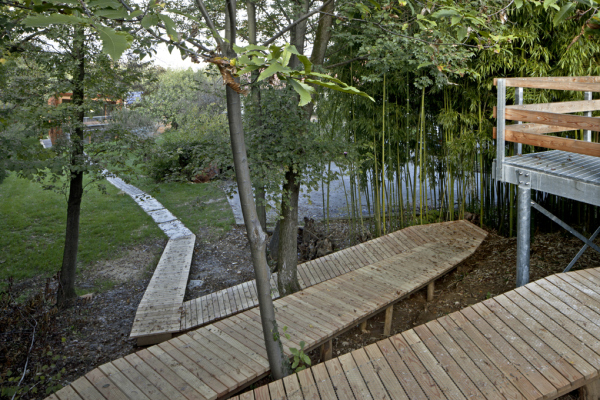
The goal of the project was to develop a low-impact building that blended seamlessly into the surrounding natural setting and exemplified the visual, renewable energy and user well-being resources of its context both in form and function. The building structure was designed and manufactured in parts by a network of small industrial and craft companies, combining CNC machined and handcrafted components.

 Tvzeb

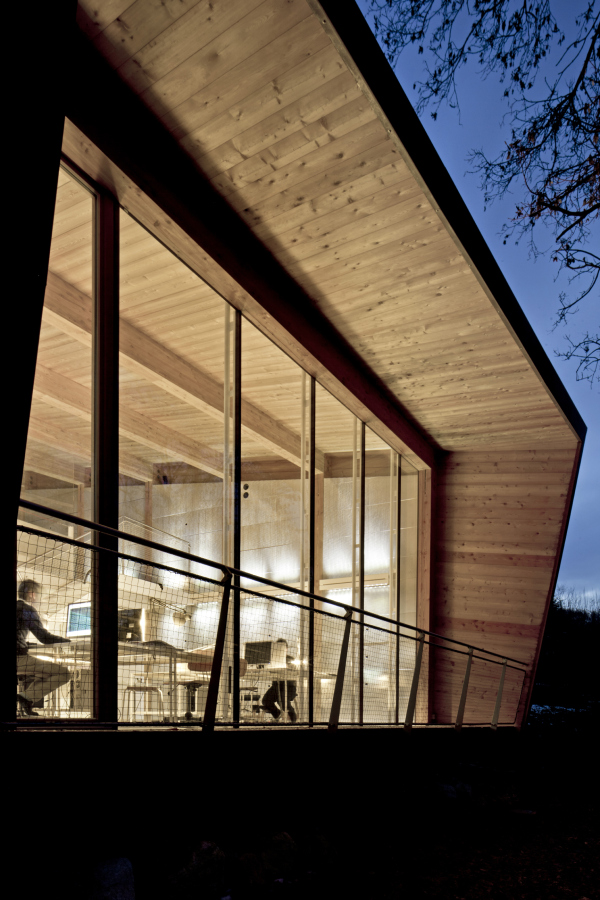
This reflects the project’s firm relationship to the concept of potential reversibility and respect for the land: the building can be disassembled at the end of its life cycle and its materials can be separated and recycled, restoring the site to the natural landscape. TVZEB reflects a strong relationship to sustainable practices and environmental awareness, concepts which are not limited to zero-energy measures: its location imposed a natural connection with the land through the use of materials that were produced by local craftsmen and industries, and through the selection of chromatic nuances and materials that would blend easily into the surrounding natural context. Natural light is integrated by an accurate and efficient indirect lighting system that involves a sequence of LED bars, developed by COEMAR, recessed into the floor. The light from this source is reflected off the internal walls fitted with aluminum panels. Each bar combines light from three different LED sources dynamically supplementing and emulating the natural light spectrum that penetrates the building envelope from outdoors.

Tvzeb

16 “sunpower” photovoltaic panels are integrated in the building’s design. The 5.6 kWh produced by the system supplies the annual energy demand of all the building’s functions.  Tvzeb

The metal cladding in cor-ten steel blends the building into the wooded surroundings. The metal roofing system was created by patient craftsmen, using the traditional crimping technique. The minor building block is clad with untreated larch boards. Larch is valued for its weather resistant qualities and is traditionally used as exterior cladding of Veneto rural and mountain buildings. The interior ambient lighting will change continuously both in quantity and color, as occurs in nature. The external walls and the building roof are insulated with a double layer of 90 mm polyester fiber wadding manufactured by ORV that derives from approximately 40,000 recycled plastic bottles. Besides providing excellent thermal and acoustic insulation, this material – unlike mineral wool – is produced with very low energy consumption.The quick assembly time was possible thanks to careful planning of all structural nodes. 55mm- thick larch planks cover the building structure’s roof and external wings. Xlam panels cover the longitudinal walls to provide bracing. It was assembled in 3 days with the aid of a crane truck. The precision joints between the timber and the metal plates were achieved by using self-centering lathed metal pins. The base plate rests suspended on the ground mimicking the deck of a ship. The floor is made using Hi-Bond corrugated sheets with a collaborating overlying concrete slab. The main structure of the building is made of laminated larch wood . The 450×200 mm. beams have been processed with a five-axis milling machine. The 15 mm. metal plates are laser cut and  pre-assembled on the timber structure. Tvzeb is suspended on the ground and connected to the foundation with just 18  steel spacers.

 Tvzeb

The metal base was manufactured in parts. Following pre-assembly carpentry, it was galvanized and installed onsite. This reflects the project’s firm relationship to the concept of potential reversibility and respect for the land: the building can be disassembled at the end of its life cycle and its materials can be separated and recycled, restoring the site to the natural landscape. (Fabiana Cambiaso, Università La Sapienza) Credits: www.tvzeb.org www.traverso-vighy.com TVZEB, an experimental project for sustainable architecture Prototype between University of Padua’s Department of Technical Physics - Traverso-Vighy Architecture Studio Completed: 2013 Site: Veneto Materials: Lamellar larch, Galvanized Steel; Cor-ten Steel, Larch boards, Xlam panels Applications: Structure, Cladding Figures: © Traverso Vighy.

Carlo Bardelli

Architecture

Fuori Salone 2019: THE PLAYFUL LIVING

Fuori Salone 2019: THE PLAYFUL LIVING 

In via Tortona sarà possibile visitare una casa pensata per le famiglie contemporanee. Un appartamento di 150 mq, dove vivere e crescere è semplice e piacevole. A renderlo possibile sono oggetti, materiali, luci e soluzioni d’arredo che trasformano i gesti della vita quotidiana in un gioco condiviso tra adulti e bambini.

Con talk, tavole rotonde e laboratori si parlerà delle famiglie contemporanee, per discutere di necessità e stili di vita in cambiamento, da conciliare in modo creativo. 

_____


Dal 9 al 14 aprile 2019 è presentato per la prima volta al pubblico THE PLAYFUL LIVING.

Un progetto che unisce design e idee per perseguire un obbiettivo semplice: portare il gioco in ogni aspetto della vita quotidiana, trasformando lo spazio domestico - con soluzioni semplici e razionali – in un luogo aperto alle emozioni, alla fantasia e alla creatività.

All’Opificio 31 di Via Tortona i visitatori potranno entrare ed esplorare ogni spazio di un appartamento di 150 mq, diviso su due livelli. Un luogo dove ogni elemento d’arredo è pensato per rendere più bella la vita degli adulti e stimolare la crescita dei bambini di diverse età, da 0 a 14 anni.

Una riflessione sui nuovi stili dell’abitare, un moodboard da cui partire e da mixare per trovare soluzioni personalizzate. I mobili si costruiscono ad incastro, come giocattoli, le luci creano ambienti colorati ed immersivi e i materiali solleticano i sensi, come le superfici in legno e i tessuti tecnici ricavati dalla plastica riciclata.

Diversi colori riempiono le pareti e i pavimenti delle stanze, in cui è possibile fermarsi a giocare con device tecnologici, oppure intrattenersi con giochi tradizionali in legno. Ci sarà spazio anche per scoprire profumi e sapori che sanno unire sogni e fantasie di persone di ogni età.

A rendere unico questo luogo nel panorama del Fuorisalone è il calendario quotidiano di incontri rivolti a professionisti, adulti, genitori e bambini.

Per i più piccoli si terranno laboratori creativi guidati da designer e illustratori.

Tavole rotonde e talk saranno dedicate ad argomenti che spazieranno in tantissimi ambiti, con un grande denominatore: la giocosità.

Architetti, stylist e professionisti del design sono invitati a partecipare ad incontri dal taglio specialistico come quello dedicato al valore dei colori negli spazi di vita e lavoro.

Il Progetto The Playful Living, che gode della partnership del CILAB – Laboratorio di Ricerca del Politecnico di Milano (in qualità di Comitato Scientifico), unisce al suo interno grandi player internazionali ed eccellenze italiane in settori trasversali.

RCS MediaGroup è media partner e sostiene l’iniziativa attraverso Quimamme.it e le testate Style Piccoli, Io e il mio Bambino e Insieme.


Partner di progetto: AXA, Candy, Cromatina Babies, Dyson, Faber-Castell, Futon Italy, Gerflor Italia, Grifal, Gruppo Fontanot, Luceplan, Nintendo, Peg Perego, Plasmon Biscotto “dei grandi", Sigma Coatings, Signify, Stars Box, Studio Arredi, Teknik Wood, Totem, Wooden Story

www.theplayfulliving.com

Facebook: https://www.facebook.com/theplayfulliving/

Instagram: https://www.instagram.com/theplayful.living/

Twitter: https://twitter.com/living_playful

Linkedin: www.linkedin.com/company/the-playful-living

________________________

DOVE: Opificio 31 (Via Tortona, 31)
QUANDO: Dal 9 al 14 aprile 2019

PRESS PREVIEW: 8 aprile – ore 10.00 – 19.00

Fuori Salone 2019: THE PLAYFUL LIVING

Fuori Salone 2019: THE PLAYFUL LIVING  Fuori Salone 2019: THE PLAYFUL LIVING

Fuori Salone 2019: THE PLAYFUL LIVING  Fuori Salone 2019: THE PLAYFUL LIVING

Dry technologies: Perforated aluminium panels and steel

This project deals with the extension and the restructuration of a young workers residence, a 10-levels building made of a concrete structure with overhangs every 2.50m. The existing building was built in a brutal way in the 1970s on the Fondation Eugene Napoleon domain, a group of Heritage buildings.

1308148693-frederic-delangle-10-425x5001

To go faster, allow freedom of interior organization and future flexibility, the extensions have been assembled using a metal frame.

1308148775-herve-abbadie-10-333x5001

The anodized aluminium envelope draws up a new geometry, free of architectural styles, that encompasses the extensions and the existing buildings.

1310853600_754_333_5001

It reflects the light and is slit by openings onto the windows and the balconies/galleries of the garden. Final touch to the Fondation’s composition, the garden is connected to the Boulevard by openings in the outer wall, to the communal life spaces on the ground floor and to the galleries on the western façade.

1308148735-herve-abbadie-4-528x3511

The housing itself is the result of working on expanding minimum space, on series and repetitions. The metal structure allows shifting forward or backward the light frame partition walls in the flats to create two spaces, the “services” in the hall and the living space close to the window.

herve-abbadie-51

 (Fabiana Cambiaso - Università La Sapienza) Credits: suzelbrout.com Figures: ©  Hervé Abbadie; © Frédéric Delangle Young Workers Residence, Paris, France aasb_agence d'architecture suzelbrout / Suzel Brout, Leslie Mandalka Site: 3751 mq Completed: 2011 Materials: Modular panels of anodised aluminium with serial holes made with laser technology, Steel Applications: Envelope, Structure  

Materials

Art is sacred, especially architecture

11 October 2018

The renewed impulse towards liturgical building, the sustainability of churches in the urban context and the miraculous properties of porcelain stoneware. "God is in the details," as German architect Ludwig Mies van der Rohe said, one among the masters of the Modern Movement, stated. Never was an expression more appropriate if we look at sacred architecture and the attention paid to particular technical aspects of design, to the social role of a liturgical building and the significance a place of worship can acquire once inserted in a urban context. These aspects became fundamental once again after the 2nd Vatican Council - with figures such as Cardinal Larcaro dedicated to promoting religious building constantly dealing with the city - and turned into the protagonists of the debate on contemporary architecture also because of the numerous works of religious buildings planned by archistar such as Richard Meier, Le Corbusier, Mario Botta, Renzo Piano and Tadao Ando. But most of all thanks to the renewed impetus of the Italian Episcopal Conference (CEI), involved in supporting this field by organizing competitions which calls for projects of news churches: only in the recent period, besides the call for the diocese of Mantua, also those for Forlì, Lucca and Monreale’s churches are being defined.   The activism of ecclesiastical clients seems to be in contrast to the general slowdown in the industry, with an overall drop in new buildings of 44% from 2006 to 2012 and a non-residential market that is struggling to reverse the tendency. A recovery that seems to be based above all on the development of environmental and urban sustainability, a goal which has always been dear to CEI. If green design and redevelopment are the possible future of architecture, sacred building is very much a part of that "human ecology" which also latest pontificates referred to, specifically: the attention paid to the energy efficiency of the building; the accurate selection of materials not harmful to health; the choice both of construction systems that favour the exposure to the sun of worship places and of technologically-advanced facilities. Good examples do not lack, from more than 700 churches in Germany that have solar panels installed on the roof to the Immaculate Sacred Heart of Mary at Brembo di Dalmine (Italy), where the designers from the PBEB Studio have created a church inside a factory felt into disuse.   A liturgical building that thus presents less features of a monument to show more and more the characteristics of an architecture with specific functional elements, naming universal accessibility and security. As well as respecting the equilibrium with the surrounding environment, be it a landscape, be it the urban fabric. In particular, the majority of religious buildings able to propose a contemporary language associate the innovation of forms and materials to the familiarity of a place aimed to spirituality, a point of reference of the local identity and within the social context it belongs to. Environmental sustainability is consequently the main goal of a sacred architecture aiming at conveying the concept of community, thanks to the use of green materials that represent a synthesis of contemporary aesthetics and functional quality. As for the materials, it is well known that ceramics are historically a common solution employed in the construction of religious buildings, for example for the covering of internal walls or for the decoration of domes and colonnades as well. A prominent role reiterated today by porcelain stoneware with its "miraculous" properties which let it adapt to different colours and spaces with different sizes, thanks to the availability of different shapes and thicknesses. Together with the elimination of glazes, these features allow the use of porcelain stoneware both indoor and outdoor, as in the case of the DSG Ceramics gres tiles which Ithaca Associate Architects and Itinera Associate Studio chose for the project they proposed to compete in the contest for the parish of Santa Maria del Carmine (Naples, Italy), organized by the Archdiocese of Sorrento-Castellammare di Stabia. The DSG products specifically selected for the project of the church facility are Luserna and Basaltina, both in the bush-hammered version: porcelain stoneware slabs able to resist to abrasion, with friction coefficient R11(perfect for uses in high-traffic areas), and with a stone effect capable of enhancing broader areas. An aesthetic detail fundamental for the creation of a unique pedestal that, according to the designers’ intention, should visually arise from the cross inside the church and then reach the exterior of the facility entirely travelling its perimeter, finally turning into a seat in the churchyard, as a symbol of welcoming. The indissoluble connection between the daily lives of all believers and the liturgy are indeed recalled by the principles which the project is based on, and is represented by a volcanic stone-effect flooring eliminating any continuity between the various parts of the sacred architecture.  Finally, to go back to quotations, in particular to another prestigious member of the Modern Movement, Le Corbusier asserts: "Architecture is the learned game, correct and magnificent, of forms assembled in the light." A light that, in some cases more than others, can truly be said to be of divine origin. Here you can download free textures of DSG products.

Marco Mignatti

Architecture

Levante collection by Roda

LEVANTE is the new Roda’s collection of outdoor teak furniture designed by Piero Lissoni.
The meticulous and authentic styling of all the items in this collection will grace any home or garden or outdoor environment, be it a designated dining area or simply a space intended for leisure and relaxation.


Though reminiscent of a certain classic type of outdoor furniture, the Levante collection is also highly contemporary. The styling is not only reassuring for those seeking a classic look, but also meets the requirements of those looking for furniture designed for the typical settings and environments of today’s world.
The table, available in two sizes to welcome additional guests, has a top made with wide framed staves, and can be combined with armchairs. The enveloping comfort of the seats is boosted by the softness of the cushions, which can be coordinated and personalized thanks to a wide range of fabrics, including new high-quality ecological acrylic textiles (obtained 50% from recycled fibers and generated by workmanship that utilizes less water and fewer chemical products).

Levante 001 armchair
Levante 007
Levante 007 lounge chair


The Levante family also includes a lounge chair and a classic chaise longue, both folding to better organize time and space, including settings with greater privacy.

Levante 008
Levante 008 chaise longue


Solid construction and functional quality, at the service of beauty, which for Roda become an expression of the craftsmanship and skill of Made in Italy design


Partners news

Kengo Kuma: Green cast

25 November 2018

It's Kengo Kuma's project that speaks of the continuous interest in reconnecting architecture with nature or, to quote the architect, the need “to recover the place”. Green-Cast-Kengo-Kuma-1Using architecture as a frame of nature, the project seems to echo a need for experiencing built space through its interaction with the elements and transformations affected by the passage of time. The faceted wall is populated with plants, creating an impression of two tectonic forces, the natural and the artificial, fighting for supremacy. Green-Cast-Kengo-Kuma-5The multi-purpose building is located near the railway station in Odawara, Japan. The façade, achieved by using decayed styrene foam, encompasses the building, leaving the ground floor transparent and accessible. The first floor facilitates a clinic and pharmacy while the upper floors are used for offices. The planters are comprised of aluminium die-cast panels, made in monoblock casting. Green-Cast-Kengo-Kuma-2Each panel is slanted, and its surface appears to be organic, of which cast comes from decayed styrene foam. Equipment such as watering hose, air reservoir for ventilation and downpipes are installed behind the panels so that the façade can accommodate a comprehensive system for the building. The piping delivers rain water to the aluminum die-cast planters, keeping the whole structure organic and alive. Green-Cast-Kengo-Kuma-3(Fabiana Cambiaso - Università La Sapienza)

Marco Mignatti

Facades