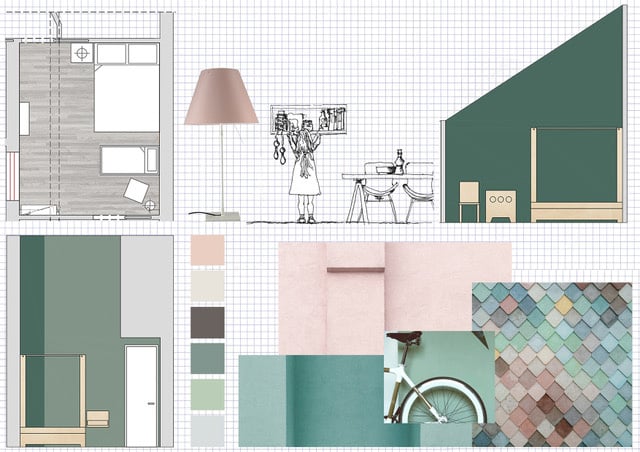
Kids Design Manifesto

Finally available to the public, on Amazon, the Kids Design Manifesto, the first international manifesto - presented in Italian, English, and Chinese - for all those who are really interested in the kids' world innovation.

The Manifesto, first and unique of its kind, is the result of a long and intense research work coordinated by CILAB - Creative Industries LAB within Politecnico di Milano, Design Department, since 2015, with contributions by Francesco Schianchi, Luca Fois, Arianna Vignati e Francesco Zurlo and the patronage of ASSOGIOCATTOLI.

The Kids Design Manifesto intends to be the cultural foundation of an international movement we called KIDNASCIMENTO (kid renaissance): a research and design approach that places the Kid at the center, as a person with his rights, as written in the Declaration of the Rights of the Child drafted by the League of Nations in 1923.

Design, as a multidisciplinary profession, is the most appropriate project culture and method to deal with "products and services" for kids.

Kids' products and services are, by nature, “systemic” as they convey emotional, cognitive, relational functions, other than their function use.

So, a toy is not just a medium of entertainment, but, as an Assogiocattoli's payoff claims, it is "food for the mind".

Especially in the first 1000 days of a kids' life, including the months of gestation, each sensorial experience contributes to the construction of the first and fundamental neural patterns which will determine their grown-up character.

Hence the strategic importance of the "Kids Design", to grow up conscious and independent kids, characteristics of freedom.


The Network of The Manifesto’s Ambassadors

The Ambassadors are all those who, after reading and sharing the values of the Manifesto, want to enter its network and participate in the research and the discourse of the Kids Design, organizing meetings, activities, and workshops to broaden and empower the Kidnascimento movement and to positively inform and push professionals, companies and institutions towards the most strategic social sector, the kids' one.


For those interested in becoming part of the network, contact [email protected].

Partners news

Nasce la partnership tra Syncronia e Jannelli&Volpi

Nel contesto del fuorisalone (17/22 aprile 2018), Jannelli&Volpi presenta l'evento 'Wallpaper Land', a cura di Matteo Ragni Studio. 

‘Wallpaper Land’ nasce dal voler raccontare il dietro le quinte di un’azienda - Jannelli&Volpi - che ha fatto della sua italianità e capacità produttiva altamente tecnologica, il successo nel settore della carta da parati. Che esporta da quasi sessant’anni, in tutto il mondo.Una storia che parla del prodotto. In fabbrica. Il luogo da cui partono le storie che scorrono e sono narrate sui rolli, che diventano carte da parati e viaggiano per arrivare a destinazione. Negli ambienti di chi ha scelto di raccontarle, sui muri delle singole architetture.

Nel contesto di questo evento, presenta il nuovo format PROJECT LOUNGE, che l’azienda italiana - leader nel settore dei rivestimenti murali e tessuti d'arredo - ha deciso di dedicare al contract - che occuperà in modo permanente un’intera sala al primo piano della sua storica sede di Milano (Via Melzo 7) - ideata per essere punto di incontro tra la fase produttiva e il prodotto, per professionisti e ambienti contract. Con la progettazione ideata insieme a Matteo Ragni Studio, la Project Lounge di Jannelli&Volpi vede protagonisti Syncronia - grazie alla partnership appena avviata - isieme a Hay, VeryWood e Waldmann.


Architecture

Smart is green. PCM, Phase Change Materials

06 March 2019

An “energy-smart façade” that generates and stores energy throughout the year makes this house, designed by zillerplus Architekten und Stadtplaner München, an “efficient house plus” – a building that is capable of generating more energy than its residents use. This is made possible by techniques such as the use of particularly clever phase-change materials (PCMs), which are also used in “pocket warmers”.

Smart is green

One Façade, Three Layers: all the Better for the Climate   The outer shell of the Smart is Green building is made up of layers including a vertical garden façade that acts as a heat shield during summer, along with insulating glazing, which protects from both heat and cold, and a PCM “curtain”. PCMs are in a constant aggregate state between solid and liquid. Like “pocket warmers”, which absorb heat when immersed in hot water and can be used to warm freezing hands when it is cold, these materials can absorb the warmth from the sun’s energy and release it later. Excess heat is thus removed from the area during the day, preventing the apartments from overheating. This stored heat is then released during the cooler hours of the night. Smart is green

Peak temperatures during both summer and winter can thus be intercepted and balanced out, resulting in a very pleasant interior climate. PCMs are also used for the building’s central heating storage facility, with a volume that is only half that of a conventional storage tank. The surplus heat from the solar thermal facility is stored here and maintained at the right temperature for under-floor heating. If there is a significant excess of solar energy, it is fed into the Wilhelmsburg local Energy Network.

Smart is green

In return, this ensures a sustainable heat supply, especially in long periods of cold weather. Both the exterior cladding and the roof are mounted with photovoltaic surfaces that transform energy from sunlight into electrical energy, and solar thermal surfaces, which convert solar power into heat energy. The façade and roof therefore play an active role in the building’s ingenious engineering concept, using innovative forms of technology to generate energy that can be consumed within the house itself. Moreover, such technologies are integrated into the very architectural concept behind the building.   Tomorrow’s Properties Will Help their Residents to Get Around   Like all of the concepts behind the Smart Material Houses, the façade with its clever materials is not the only innovative element – the integrated concept for the whole project is also groundbreaking. In Smart is Green this can be seen in the ground plan and the way in which it can be accessed, with various entrances to the individual apartments via stairs or lifts. The house is laid out so that the apartments can be configured or modified in a versatile way, allowing them to be partitioned or extended in order to meet the needs and changing living arrangements of their inhabitants. The attractiveness of “green living” is also embodied by the spacious terraces on each landing, each containing a small garden, between the planted and glazed areas on the southern side of the building.   The Technical Innovation Doesn’t Stop with the Building   Just in front of the green façade are facilities for providing green energy for getting around in the future, in the form of a fast charging station for electric cars. Surplus energy can be offloaded onto vehicles, which act as energy storage devices and can thus make an important contribution to the energy design of the building. E-cars also form a natural part of the mobility concept, as a car-sharing system is planned for the residents. All of this will make car-sharing among neighbours an attractive alternative to owning private vehicles. Extra charging devices for electric bicycles and scooters can also be installed in combi-boxes on the ground floor upon request. (Fabiana Cambiaso - Università La Sapienza) www.zillerplus.de   Smart Green, Zillerplus Architekten Prototype IBA 2013 Hamburg Completed: 2013 Site: Hamburg, Germany Materials: Phase change Materials (PCM), Steel, Concrete Applications: Curtains, Solar Shading Figures: © Zillerplus Architekten.

Marco Mignatti  

Materials

TODAY AND TOMORROW: LA CERAMICA E IL PROGETTO

16th July 2019

THE WINNERS OF COMPETITION 2019

In the last few years we witnessed a widespread diffusion of special ceramic materials, performing both for technical and aesthetic characteristics, for interiors and exteriors applications, and realized using new all-Italian technologies that have fueled the expressive potential of designers and brands.

This phenomenon can be seen not only in publications, catalogues, sector fairs, showrooms, but also in competitions dedicated to the ceramic world and in a variety of workshops, including international ones. On this topic of both formal and technological innovation of ceramics, in particular Italian, and all its possible applications, we will dedicate on Syncronia a series of stories and insights of great interest to professionals.

In this regard, it just ended the 8th Edition of La Ceramica e il Progettoan architectural competition promoted by Confindustria Ceramica and Cersaie with the aim of rewarding the best projects of italian architects and interior designers realized using made in Italy ceramic, in the categories of Residential, Commercial and Institutional buildings.

The jury, made up of Aldo Colonetti, Mario Cucinella, Fulvio Irace and Cristina Faedi, evaluated all the 115 projects received on the basis of creativity, functionality and aesthetic taste of the realization, taking into consideration the design, the use of ceramic material, the quality of the laying and the attention to environmental sustainability.

For the category Residential, the winner is the project Up Town - Lotto R3, Edificio a Torre in Milan by Scandurra Studio Architettura. Here the presence of ceramic material (ceramic tiles by Cotto d’Este) seems to be a sort of manifesto of the architect’s trade, revealing wisdom, knowledge and ability to know how to read materials and make them live within an articulated and complex space.

Up town
Up Town - Lotto R3, Edificio a Torre

For the category Commercial, the winner is the project Italia&Amore Ristorante Mercato Enoteca in Bozen by Roland Baldi Architects with Gruppe Gut and Heike Linster. An historic 5 floors building in which Ceramica Vogue tiles become a sort of large canvas with prints of line drawings, making the most of the potential of Italian ceramics through colors, textures and finishes.

Italia e amore
Italia&Amore Ristorante Mercato Enoteca


Italia e amore_01
Italia&Amore Ristorante Mercato Enoteca

For the category Institutional, the winner is the project Riqualificazione della Stazione Ferroviaria di Elmas in Sardinia by Paolo Fadda, Marco Tradori, Michele Onali and Federico Sollai. In its new design, the Elmas station keeps the original plan, accepting new spaces in which the porcelain stoneware cladding (ceramic tiles by Caesar) is made with large-format slabs and produces a linguistic effect capable of dialoguing, in terms of materials, with the surrounding landscape.

The jury also decided to award 7 mentions, 2 in Residential (Casa SN in Noto by Salvatore Spataro Architetto; Edificio C in Aversa by Paolo De Michele), 3 in Commercial (Duomo 37 in Tivoli by Nooow Architects; Hotel CampZero in Champoluc by BladIdea; AJI - Oriental takeaway in Milan by  Maurizio Lai Architects and 2 in Institutional category (Complesso Parrocchiale di San Ponziano in Olbia by studio A1 Engineering; Nuova sede della Croce Rossa Italiana Local committee in Scandiano by Studio M2R Architettura).

casa
Casa SN


duomo
Duomo 37


Duomo_01
Duomo 37


Camp zero
Hotel CampZero

The official award ceremony took place on the last 2nd of July at Salerno Maritime Station, after a conference about ceramics and architecture promoted by Ceramics of Italy in collaboration with Proviaggi Architettura.

#LACERAMICAEILPROGETTO #CERAMICSOFITALY #ITALIANCERAMIC #MADEINITALY #ARCHITECTURE


Carlo Bardelli

Architecture

¿ Espacio BIM ?

¿Todavía no conoces Espacio BIM? Se trata de una empresa que presta tanto servicios en el ámbito de la consultoría como formación e-learning en entornos BIM, VR (Realidad Virtual), AR (Realidad Aumentada) y MR (Realidad Mixta). Además, cuenta con el respaldo de Autodesk y Chaos Group puesto que es ATC o Authorized Training Center para ambos casos. Así mismo, en Espacio BIM cuentan con un gran abanico de profesionales experimentados en metodología BIM, así como en VR, AR y MR.

Consultoría BIM, y VR, AR y MR

El área de Consultoría BIM, y VR, AR y MR de Espacio BIM, cuentan con un gran abanico de servicios: y es que a día de hoy, son la única consultora especializada en metodología BIM, y Realidad Virtual, Realidad Aumentada y Realidad Mixta. Prueba de ello son los trabajos llevados a cabo en el sector AEC (Arquitectura, Ingeniería y Construcción): Implantación BIM en promotoras, constructoras, estudios de arquitectura...; Consultoría BIM para gestión de activos; O creación de recorridos virtuales y nube de puntos entre otros. Aquí te dejo algunos ejemplos de los trabajos realizados en Consultoria BIM, y VR, AR y MR.

BIM Software Store

Para acercar a un precio más competitivo plugin y software BIM a las empresas con las que trabaja, Espacio BIM ha creado BIM Software Store. ¿Quieres comparar y comprar software BIM al mejor precio? ¡Échale un vistazo!

Máster y Cursos BIM y de Realidad Virtual Online

Como ya sabes, Espacio BIM además cuenta con una gran variedad en su oferta formativa. En ella, te ofrecen cursos y máster BIM, VR, AR, y MR que se adaptan a las diferentes disciplinas y necesidades de tu perfil profesional de una forma dinámica. ¿Y qué es una formación online sin un equipo que respalde cada paso que des? En Espacio BIM lo tienen muy claro, y es que cuentan con un conjunto de técnicos que te ayudan en cada duda, consulta o ejercicio que se te plantee. Pero, ¿qué es lo que te ofrece esta formación online?

  • Certificación. Espacio BIM es ATC (Authorized Training Center) tanto de Autodesk como Chaos Group.
  • Sin horarios. Todos los máster y cursos BIM, VR, AR y MR son online y puedes acceder a todo el contenido cuando desees.
  • Independientemente de la formación -cursos o máster- que adquieras, te dan un año completo de acceso. ¿No es genial?
  • Variedad en el contenido. Infografías, masterclasses en vídeo, y todo tipo de recursos complementarios.
  • Desde cualquier dispositivo. Accede a todo el contenido e información sin preocuparte de tener un ordenador a mano.
  • Seguimiento personalizado. El equipo técnico profesional te resuelve todas tus dudas y evalúa tus colaboraciones en menos de 24 horas.
  • Completamente bonificable. Cuentas con la opción de bonificar íntegramente la formación a través de tu empresa.

¿Quieres saber más? Puedes echar un vistazo a su Curso Revit gratis de introducción a Autodesk Revit Architecture, o a los Master BIM que proponen.

"Me considero exigente y práctica y he encontrado en este equipo de enseñanza la respuesta perfecta para aprender de manera eficaz y ajustada la metodología BIM. La accesibilidad y resolución de dudas es inmediata y muy profesional. Lo recomiendo sin dudarlo y seguro que ampliaré mis conocimientos con ellos." Lucía Requena


Tutorial

ArboSkin: Durable and Recyclable Bioplastics Facade

10 Jenuary 2019

The spiky modules used to build this curving pavilion in Stuttgart, Germany, are made from a bioplastic containing over 90 percent renewable materials. Students and professors from Stuttgart University's ITKE  (Institute of Building Structures and Structural Design) designed the freeform facade to demonstrate the structural properties of a new bioplastic developed specially for use in the construction industry.

ArboSkin

Bioplastics are plastics made from renewable biomass sources such as starches, cellulose or other biopolymers, that offer sustainable alternatives to plastics derived from fossil fuels. The bioplastic used in the ArboSkin project is called Arboblend and is produced by German firm, Tecnaro, by combining different biopolymers such as lignin – a by-product of the wood pulping process – with natural reinforcing fibres.

ArboSkin

"Thermoformable sheets of bioplastics will represent a resource-efficient alternative [to oil-based plastics, glass, or metal] in the future, as they combine the high malleability and recyclability of plastics with the environmental benefits of materials consisting primarily of renewable resources," explained the project team.

ArboSkin

The pyramidal modules are made by extruding bioplastic granules into sheets before thermoforming them to create the faceted shapes and trimming off the excess material. The double-curved skin is formed by linking the pyramids together, with bracing rings and joists helping to create load-bearing walls. CNC-milling was used to remove sections from some of the modules, creating apertures in the facade. The waste material from this process can be re-granulated and fed back into the production process, while the plastic sheets can be composted at the end of their life.

ArboSkin

Mock-Up: The bioplastics facade mock-up was created within the framework of the Bioplastic Facade Research Project, a project supported by EFRE (Europäischer Fonds für Regionale Entwicklung / European Fund for Regional Development). It demonstrates one of the possible architectural and constructional applications of bioplastic materials developed during the course of the project. The blueprint is based on a triangular net composed by mesh elements of varying sizes. Bioplastic Façade Research Project: The ITKE has many years of experience in teaching and research in the fields of computer based design, simulation, and production of cladding for buildings with complex geometries. Currently, materials made from oil-based plastics, glass, or metal are mainly used to encase these structures. Thermoformable sheets of bioplastics will represent a resource-efficient alternative in the future, as they combine the high malleability and recyclability of plastics with the environmental benefits of materials consisting primarily of renewable resources. The interdisciplinary group of material scientists, architects, product designers, manufacturing technicians, and environmental experts was able to develop a new thermoformable material for facade cladding made primarily from renewable resources (>90%). Developed by project partner TECNARO within the framework of the research project ARBOBLEND®, a special type of bioplastic granules was employed, which can be extruded into sheets and further processed as required: the sheets can be drilled, printed, laminated, laser cut, CNC-milled, or thermoformed to achieve different surface qualities and structures and eventually produce various moulded components. The semi-finished products serve as cladding for flat or free-formed interior and exterior walls. The material can be recycled and meets the high durability and flammability standards for building materials. The goal of the project was to develop a maximally sustainable yet durable building material while keeping the oil-based components and additives to a minimum. The ecological audit was completed by project partner ISWA (Institute for Water Engineering, Water Quality, and Waste Management). Furthermore, the material’s resistance to microbial degradation was also determined. ArboSkin

Innovative Character of the Research Project: This research project marks the first occasion for the development of bioplastic sheets primarily based on renewable resources. The sheets can be freely formed, are designed for applications in the building industry and are specifically meant for building exteriors and cladding. At the beginning of the project such product was not available on the market. The conception of this material as flame-retardant sheet material also aims at applications for building interiors. With this new development, we can therefore soon offer a product that addresses two trends: - the increasing demand for resource-efficient and sustainable building materials - the increasing development of buildings featuring double-curved geometries and planar facade components with 3D effects (relief). (Fabiana Cambiaso Università La Sapienza) www.itke.uni-stuttgart.de © ITKE; © Roland Halbe   Exhibition Pavilion, Stuttgart, Germany Campus Stadtmitte,ITKE (Institute for Building Construction and Structural Design), Faculty of Architecture, Stuttgart University Area of facade: 145 mq Completed: October 2013 Material:  Biobased Thermoplast Bioplastic Applications: Envelope  

Carlo Bardelli

Facades

Planium's Autumn Copper between Architecture and Design

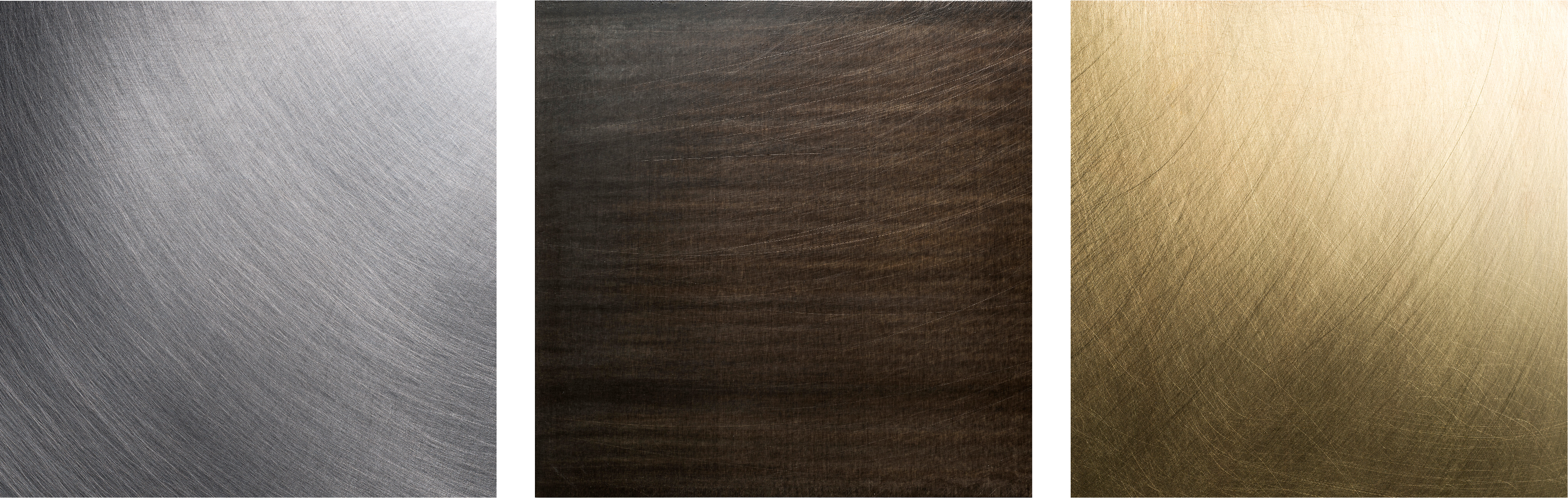
Planium treats Copper, the historical metal par excellence, in three versions: brushed, satin or canvas. With the satin finishing process its brightness is filtered and the materiality is more elaborate. The relationship between Copper and Architecture is a particular one, so much so that the oxidation of the metal can become a chromatic trump card, passing from Titian Red to Brilliant Green.


Planium Copper


The Metaphone®, concert hall and urban music instrument

The Metaphone® is the contemporary keystone of the whole project, embodying the site’s new musical and acoustic role. An architecture of materials, sound and light, it is the emblematic space of 9 – 9bis: a building to be looked at and listened to, an immense instrument played by musicians who are alternately invisible or in the limelight. The musical flow of the site strikes its walls and makes them sing. And like music, it evolves in time, in the passing of time: it is transformed into harmonies of sound and colour, fluid, fleeting, but constantly renewed, which will become the spirit of the place. META-AMORIN

The Metaphone® is both concert hall and “urban musical instrument”, whose walls produce and diffuse sounds, in harmony with the play of light. The concert hall and its annexes (technical rooms and audience boxes) are contained within a volume of black concrete, itself wrapped in a light skin made of scales of different materials: ground glass, steel, wood... This scaly skin extends outwards and opens above the concourse, forming a great porch protecting the entrance and terrace. Between the concrete mass and the scaly skin, attached to a metallic structure, technical walkways are provided for installing and maintaining the sound and lighting equipment. On the roof, the lattice of scales extends into a sheet of integrated photovoltaic cells. The instrumental elements are made up of plates of different materials, whose acoustic properties have been calculated to produce musical sound. There are two principles of sound production: mechanical or electroacoustic, with vibrating bowls mounted on the plates to form loudspeaker membranes (this technique is commonly used in the car industry). These systems have been developed and tested by making a prototype of the musical facade, composed of 8 modules measuring 1.2 m, half fitted with an acoustic instrument, the other half with vibrating plates.

META-AMORIN

What can be composed with such an instrument? Obviously, it is not a tool for producing special effects. On the contrary, the aim is to give a totally and resolutely musical shape to a concert hall built on a site dedicated to music. Undoubtably unique. The principles of composition include factors relating to architectural space, materials and light. Factors relating to environment and use, to maintenance and cost... One can only imagine the variety of timbres that can be produced. In addition, the dimensions of the hall offer a playing area great enough for an orchestra bigger than Berlioz himself could ever have dreamed of. It is an exceptional space which will make it possible to invent musical forms commensurate with the architecture. Composers from all over the world will be invited to create works for this auditorium. This is how the originality and power of the project will be maintained. META-AMORIN

For the public, the Metaphone® is likely to be a “curiosity”. People will come to Oignies to see and hear it. It will serve as a secular bell, marking the hours, midday or sunset. It will signal the beginning of a concert or the interval, produce a peripheral sound space, discreet so as not to inconvenience the neighbours … It could also be used as an instrument in an orchestral composition, with the musicians playing beneath the porch. META-AMORIN

(Fabiana Cambiaso, Università La Sapienza) Credits: www.herault-arnod.fr Figures: © André Morin; © Marie Clérin   Concert Hall, Oignies (Pas-de-Calais), France Hérault Arnod Architectes Site: 1 980 m² Completed: 2013 Materials: Frosted Glass, Wood, Corten Steel Applications: Envelope  

Materials

Moroso - Salone del Mobile 2019

There is a thread connecting Moroso’s participation at the Salone del Mobile 2019, and it is embodied by the desire of narrating a new way of living in which experiences and different styles blend together, also thanks to the collaboration with business friends and partners, who share with Moroso the same sensitivity and open-mindedness towards world cultures; the same desire to experiment and the love for art; this also as a response to the “total look” proposed and promoted from larger groups.


At the stand, designed once again this year by Patricia Urquiola, the new products from the Moroso collection interact with lamps by Ingo Maurer, rugs by Kvadrat and also with craft items, the result of research and rediscovery of ancient techniques, such as the throws crafted at a small atelier in Friuli, which produces high quality hand-woven items. All of this with the aim of representing different spaces and ways of living narrated in a warmer and more involving way.


Key feature of the Moroso textiles for Salone del Mobile 2019 is a soft fabric, a very rich bouclé with an inspiration coming from the 70’s, which the company has re-discovered in its historical archive and to which it has given a contemporary restyling.


The colour palette chosen for the fabrics interprets a very fresh and spring-like attitude: from a pinkish and softer terracotta to the various shades of grey with touches of blue and indigo, from ice green to very intense earthy colours. A very rich bouquet of soft and intense tones that are harmonised to create rooms which are reassuring and welcoming, yet with a strong contemporary look.


The stand


The stand, designed by Patricia Urquiola, is projected towards the research for formal simplicity, where colour, the bi-dimensional element, generates geometric perspectives, lights and sensations, which create a tri-dimensional view. Three tones of colour: terracotta and two shades of azure greys, one lighter and the other darker. Minimalist references aiming at the simplest pictorial resolution.


Contrasting, asymmetric chromatic levels create multiple visual lines thanks to which every display area is connected to the others. At the same time, abstracted tensions and the colour applied onto this canvas create true visual corners of photographic focus. Canvas and frame are thus the display materials chosen for their pictorial value: idealistic inspiration, referencing the works of the Cuban artist Carmen Herrera.


The rectangular surface has a single entrance and a single exit. On the inside, 7 platforms, 60cm above ground, create 7 still-life situations. Each platform displays a room, where geometric lines and contrasting colours become the background for sofas and furniture in general. In the centre space, a plaza, a true agora, where the public can sit and enjoy the variety of movement, the rhythm and tensions of the space.


Furthermore, as mentioned, the lighting of the stand enjoys the collaboration of Ingo Maurer’s products. The two brands are connected by a mutual interpretation of projects and by an aesthetic that transcends the pure object, creating products that have become true archetypes of furniture and design.


At the base of the concept for this stand, an ideal bridge between art and architecture; inspiration, always dear to Patricia Urquiola’s work, and at the foundations of her works of design and research.

stand_001


On stage


In the more life-style settings, two platforms are dedicated to the new sofa Gogan designed by Patricia Urquiola, in which the balance between the elements comes from the fairly irregular shape. Thanks to a game between gravity and balance, shapes which should be heavy appear lightweight. The Gogan sofa draws its name from the Japanese stones positioned on the edges of rivers and lakes to protect and decorate the banks.

stand_002


The modular system Josh, designed by Edward van Vliet in 2018, is also on stage this year. Thanks to its clean and linear structure and the possibility of upholstering with different types of fabrics, it is considered to be a kind of mannequin in an haute couture atelier in the shape of a modular sofa.


The range of dining tables and seats is enriched and enlarged, putting a new focus on the dining area. Among the products proposed, there is the dining table Il Naturale, by Heinz Glatzl and Joachim Mayr, in collaboration with Schotten & Hansen, which reflects the expertise of artisan woodworking both in its archetypal shapes and in the treatment of the material. The solid wood is in fact dried naturally and then treated with natural resins and other precious substances which give an authentic colour to the wood. On stage also the pieces from the Armada collection, by the Doshi & Levien; this year a new element, a sofa, joins the family of armchairs, whose rounded shapes recall sails billowing in the wind.

stand_003


The Mathilda collection by Patricia Urquiola, whose seats feature a coloured “wrist-band” which links up the structural elements, it is shown together with its dining table, in solid wood, characterised by two trestle legs which support the top. On the same setting, find their right space the new Klara chairs, which enrich the pre-existing collection of armchairs.

Two platforms are dedicated to the launch of two new families of products.


On the first one, the Heartbreaker sofa by Johannes Torpe, immediately recognisable thanks to its armrest shaped like a “half heart”, which is playfully re-created as a whole, when two sofas are put one next to the other. From the same designer, a family of seats that represent a balance between clean lines and aesthetic grace, called Precious.

stand_004


On the second platform, the Yumi collection by Bendtsen Design Associates, made up of chairs, small armchairs, armchairs, dining and side tables, in all its completeness, elegance and polyhedric qualities.

stand_005

Moroso Press Office

Email: [email protected]

Tel: +39 02878990

Architecture

Thermal insulation. Isocappotto system

05 April 2019

Those living in temperate bands of our land, especially in Europe but also in Canada and in the United States, knows how difficult it is to deal with the increasingly extreme and sudden changes in temperature. Often, in fact, severe weather events and disturbances cause significant excursions between the low and high temperatures. In these situations, keeping a high level of comfort at home and at work inside buildings may not be easy.

Marco Mignatti

To ensure good living and working conditions, without resorting to massively expensive and polluting air conditioning systems, it is necessary to have a good thermal insulation system with the right envelope thermal inertia. In this way it is possible to enjoy a very good thermal and acoustic insulation, with the resulting benefits. To obtain optimum results in every type of intervention, Isopan – a company specialized in the field of insulated panels for roofing and wall – achieved Isocappotto coating systems. It is not a traditional coat, but a evolved double skin metal panel faced sandwich, covered with different materials to obtain the same aesthetic of the plastered walls. The ISOCAPPOTTO system can be defined as a kind of faux flashing, as it differs from the classical system of traditional walls for the presence of a double skin metal faced sandwich covered with different materials. In this way you can hide the presence of sandwich panel, imitating the aesthetic of classic plastered walls.

ISOCAPPOTTO is a system that can be applied to any type of intervention, from the construction of new buildings or industrial production sectors (Office buildings, factories, warehouses) as well as residential buildings such as houses or condominiums. The system also represents a valuable solution in case of renovations or improvements of existing buildings.

Isocappotto can have two types of insulation: mineral wool or polyurethane. Polyurethane isolation allows a series of advantages such as: high heat resistance, mechanical stability, speed, stability, lightness and flexibility. The benefits of mineral wool insulation can be summarized in: high thermal insulation, good fire behaviour, high sound insulation, flexibility, dimensional stability and mechanical.

Materials