Metroquality - BRERA DESIGN DAYS FERRAMENTA, 15-18 ottobre

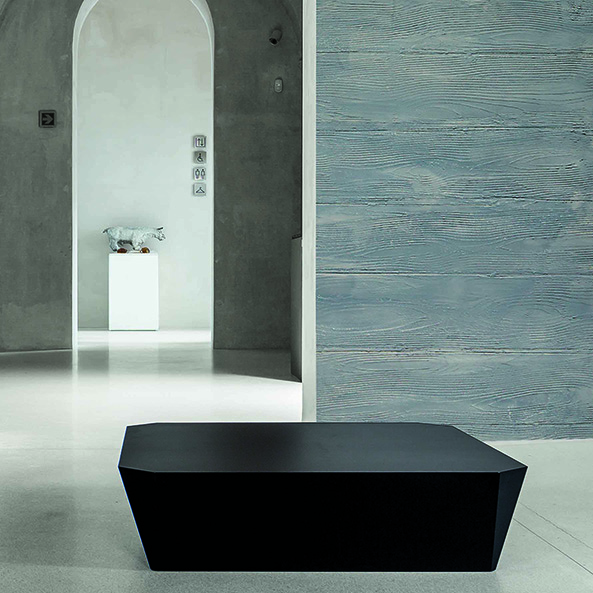
Lo spazio Metroquality in via Solferino 24 (MI), il punto di incontro tra il mondo della progettazione e le aziende, diventa sede della mostra FERRAMENTA, che nasce dall’idea di far convergere le conoscenze e le capacità di un’azienda che lavora i materiali come Niva, con la creatività di un gruppo di tredici architetti e studi milanesi.

Diceva Enzo Mari “Da trent’anni si producono oggetti di design che hanno l’unico scopo/caratteristica di sembrare diversi uno dall’altro.” In questo senso, le opere di FERRAMENTA hanno la straordinaria caratteristica di non somigliare a nulla: sono tredici numeri primi, nati dalla pura creatività di progettisti da sempre impegnati nella produzione industriale.

È così che il metallo viene plasmato, piegato, bucato e saldato per dare vita alle idee degli artisti: la materia prende forme complesse, affascinanti, e straordinariamente rari. Anzi, unici.

Metroquality ospita FERRAMENTA da lunedì 15 a giovedì 18 ottobre, in occasione di Brera Design Days 2018.


DOVE:

Spazio Metroquality, via Solferino 24, Milano

QUANDO:

  • lunedì | dalle 14:00 alle 18:00
16
  • martedì, mercoledì, giovedì | dalle 9:00 alle 18:00 
Architecture

Mapei: eco-friendly products for quality architectures

Founded in 1937 in Milan, Mapei has become the world's largest producer of adhesives and building products. By the time the company has developed a stronger sensitivity to sustainability, it allocated more than 70% of investments in research and development for the study of eco-sustainable products. In 2000 it was awarded the "business award for Eco efficient" in "environmentally-friendly" category in an important initiative of the Lombardy region and the Chamber of Commerce. Today the commitment is even stronger, as shown by some of the main building where Mapei was involved, alongside the best international architects.   The Marina Bay Sands resort in Singapore, designed by Israeli architect Moshe Safdie, also includes the ArtScience Museum and the Gardens By the Bay: a futuristic project for which several coatings, such as ceramics, marble, slate and bamboo, were laid. Waterproofing works were made to ensure moisture protection and impact resistance. For this, Mapei products with very low emission of volatile organic compounds (VOC) have been chosen.   Dragon Bridge is in Da Nang in Vietnam. It is a concrete bridge with steel arches in the shape of a dragon. The weight of the bays and the exposure of atmospheric aggression made the use of specific products necessary, in order to achieve the concrete to protect the structure. Mapei has provided concrete additives and eco-friendly paint resistant to ultraviolet rays.   Environmental responsibility is very important for the company and his choices, starting from design and operation; ensuring greater durability means avoiding subsequent interventions on buildings and infrastructures. Mapei’s products are the result of intensive research, aimed to obtain innovative formulas integrated into complete application systems, more effective. Special attention is also compatible with substances of health professionals working in business and advanced technology solutions that contribute to environmental protection. The eco-sustainability is a commitment that requires, application and research method, but above all experience. And that's why Mapei is committed to working on large architectural projects and achievements are also important from an environmental point of view.
Materials

ALPI research creates SILVER RAIL: wood and metal together, in praise of light

Wood, through metal, explores new design expressions that address the theme of the reflection of light: this is the approach behind Silver Rail, the latest proposal from ALPI, the first company in the world to industrialize the process of reconstituted wood, and now an unchallenged technological reference point in the wood sector. Silver Rail is the result of intensive R&D activity – a true characteristic of the company’s DNA – that has allowed ALPI to develop materials conceived to interact with light, confirming its role as a professional partner and its outstanding ability to interpret and foresee market trends with solutions that are increasingly sophisticated in both aesthetic and technological terms, capable of giving concrete form to any idea from its spheres of reference: large luxury brands, giants in the automotive and nautical sectors, prestigious furniture makers, and the fields of product design, interior architecture and contract. Decorative wooden surfaces crossed by metal lines that reflect light: Silver Rail is a material with a modern design - applicable to finished products or horizontal and vertical surfaces - combining the softness and warmth of wood with the glow and rigor of metal. An innovative offering, the result of sophisticated technology and the careful, tailor-made workmanship typical of ALPI; a synthesis of two apparently antithetical materials, conceived to respond to the emerging trend towards luminosity in interior decorating, in the year UNESCO has proclaimed as that of light and light-based technologies.   Silver Rail lends itself to infinite possibilities of personalization: from the choice of color and design from the vast range of ALPI woods to the indication of the number and the spaces between the metal lines, which can be governed by regular, precise geometric patterns or designed with more sinuous shapes. With proper lighting, the material offers intriguing luminous effects that add character to rooms and enhance the design of objects and furnishings. Silver Rail is available in the ALPIlignum and ALPIkord versions:   ALPIlignum This product is the company’s cornerstone: the true symbol of the ALPI universe, the finest expression of its R&D activities and the perfect blend of technological innovation and artisan know-how. A line of woods that offers unlimited aesthetic variety and personalization: reproducing the colors and grain of natural materials (over 120 types in the catalogue) or creating Design Wood with unusual chromatic effects, allowing for maximum creativity. ALPIlignum is a sliced wood that can be applied to any surface and produced in different thicknesses depending on the application. It is therefore an extremely versatile product, capable of responding to all project needs in functional and aesthetic terms. Its particular production process involves peeling logs (of Poplar, Lime Wood or Ayous), always of certified origin, to make sheets that are immersion dyed and "reassembled" by stacking the layers of dyed wood to make a “new log”. The absence of the typical defects of traditional wood, the uniformity and reproducibility of colors and sizes make it ideal for rapid implementation of single production runs or series. ALPIkord The line of prefinished woods treated with state-of-the-art products and varnishes to bring out the natural beauty of the entire ALPIlignum range, applied on a surface and then varnished. The result is a large wooden panel ready for application to any surface, to reduce the time needed for working, varnishing and installation. The practicality of ALPIkord finishes is joined by high levels of quality, unique design and customization, as well as the environmental certifications pertaining to ALPIlignum. By request, FSC certification, the most important international guarantee of its kind of the sustainable origin of our wood, is also available for ALPIkord. ALPI, wood&more: Italian roots for international excellence An absolute leader in the production of decorative surfaces in multilaminar wood, ALPI was the first company in the world to industrialize the manufacturing process for reconstituted wood, setting new qualitative standards. The perfect balance between manual skills and high technology make the firm unique. On the one hand, ALPI is pure innovation, ahead of the demands of the market; on the other, it represents painstaking craftsmanship. An example of excellence that thanks to the depth of its collections – applicable to finished products and horizontal or vertical surfaces – combined with the ability to design bespoke solutions, is an unchallenged technological reference point for the wood sector. A professional partner of leading luxury brands and major manufacturers of automobiles and yachts, as well as prestigious names in furniture, product design, interior architecture and 360° contract, ranging from hôtellerie to multi-apartment developments, retailing to offices to public spaces. What sets ALPI apart on the worldwide scene is its direct control of the entire process, from the log to the finished product, starting with forest management using chain-of-custody certification to guarantee the legal and sustainable sourcing of the wood and total product traceability. ALPI is therefore a guarantee of an eco-responsible, versatile design product, made possible by major investments in R&D, raw materials of the highest quality, avant-garde technology and the finest tailor-made craftsmanship. Other important features of the firm are its vast range of offerings and great ability to respond to the specific requirements of a highly diversified client base, also through the design and development of custom lines and one-off collections. Today ALPI – helmed by Vittorio Alpi, the founder’s grandson – has industrial facilities of 180,000 sq. meters (52,000 indoors) in Italy, and 346,500 sq. meters (over 67,000 indoors) in Africa, for a production capacity of over 30 million square meters per year, with capillary distribution networks in over 60 countries. The firm stands out for reliability and solidity, based on sales growth that surpassed the level of 130 million euros in 2014.     www.alpi.it


Materials

Build4future. Cooperation for building the future

06 December 2018

Global trends make now new solutions in the construction industry necessary. The Fraunhofer Innovation Engineering Center (IEC), along with 12 small and medium-sized enterprises in the construction sector in South Tyrol has launched a research project detailed in this regard. Development of innovative and sustainable methods, handcrafted processes, technical and organizational innovations and a lot of planning: these are the main focus of the research team that is part of the Build4future project. Supported by the province, with the participation of the Faculty of Science and Technology of the Free University of Bolzano, CasaClima Agency and the TIS Innovation Park for scientific aspects, it has very important aims as to trace strategies for the industrialization of processes in the construction of buildings. The need arises from the current situation of construction companies. These are mostly small or medium size and they have a good level of technical knowledge within them, but this is not enough to put them in competition with other European companies that operate at a lower cost. To meet this challenge, and therefore be in step with the needs of the future, at the beginning of 2011 the Build4Future cooperation project was created; in this project the economy cooperates with science to develop the necessary strategies and measures. The Institute took part at KlimaHouse 2014 with the Build4future group to sensitize the public to the issue of sustainable innovation and, above all, to send out a clear signal that push all going in the same direction. The key word seems to be cooperation between different actors operating in the field in the different phases of design, planning and implementation.   Fraunhofer Italy Established in late 2009 in Bolzano, it is a branch of the Fraunhofer Society, the first organization for applied research in Europe. The name comes from the German physicist Joseph von Fraunhofer. The projects to which the company devotes itself are international and able to tap more disciplines: general optics partnership aim to create a network system to achieve the desired results by the various innovation projects. www.fraunhofer.it/it/Progetti/Build4Future.html

Carlo Bardelli

Green building

King Fahad National Library: fabric membranes in facade cladding

09 December 2018

The King Fahad National Library, one of the most important cultural buildings in the Kingdom of Saudi Arabia, was completed and went into use for its intended purpose in November 2013. This project sees Professor Eckhard Gerber and his Gerber Architekten team accomplishing one of the most important urban development and cultural projects in the capital, Riyadh. The design functions as the central driving force behind a piece of urban development and rearrangement, and combines the challenge of designing within the existing building stock with respect for Arabian culture. The symbolic cuboid shape of the new building surrounds the existing building on all sides, thus presenting the National Library as a new architectural image in the Riyadh cityscape without abandoning the old building, which now operates as an internal stack, making it the centre of knowledge within the new library as a whole. The square new building is covered by a filigree textile façade following traditional Middle Eastern architectural patterns and linking them with state of the art technology. The design goes back to the early days of an international competition dating from 2003. When the National Library is completed, Gerber Architekten will be working on planning the Olaya Metro Station, another of this country’s major projects. Gerber National LibraryGerber Architekten developed a cuboid building surrounding the existing library on all sides, thus presenting the National Library as a new architectural image within Riyadh’s urban space. The new building encloses the old one protectively, and combines itself with it in an unusual way, following monument preservation principles. The cruciform existing building, topped by a dome, is concealed inside the new building. The old structure is integrated as a building within a building, while its existing dome – originally in concrete – has now been reconstructed in steel and glass, and continues to be a cultural symbol of the library. The entire former roof of the existing building, which occupies an extensive area, now provides a reading landscape flooded with light and offers a special atmosphere that will encourage the exchange of knowledge in this way. Inside – as if hidden in a treasure chest, a knowledge storehouse – are the book stacks. Visitors access the open-access sections on the third floor of the new building via bridges from the reading area. Everything is covered by a new roof, punctuated by skylights under which white membranes gently distribute the light throughout the entire interior. The main entrance hall is on the ground floor, which also houses exhibition areas, a restaurant and a bookshop.A library area for women only, in which they can spend time without a burka, is provided on the first floor of the new south wing; this space is separated from the other building uses, and is also accessed separately. Gerber National Library Gerber National LibraryThe key element of the façade was developed especially for the new building. It is a cladding made up of rhomboid textile awnings, marked by its play with revealing and concealing. Inserted white membranes, supported by a three-dimensional, tensile-stressed steel cable structure, act as sunshades and interpret the Arabian tent structure tradition in a modern, technological way. This sequence of old and new creates a uniform and prestigious overall architectural appearance with characteristic styling. At night the façade glows with changing colours and becomes the city’s cultural lighthouse. This filigree steel cable structure has a solar penetration level of only 7 per cent, and at the same time makes it possible to look both in and out. Given exterior temperatures of up to 50o Celsius, the membrane façade, which was optimised in relation to the local sun path by means of complex, three-dimensional light refraction, combines the required protection from the sun with maximum light penetration and transparency. Gerber National Library Gerber National LibraryTESSUTO_MEMBRANE_FACCIATE This façade was combined with ventilation and cooling for the building by means of layered ventilation and floor cooling. In this way, thermal comfort is increased and energy consumption significantly reduced by using certain methods and technologies for the first time in the Arab world.

Edoardo Croci

Facades

Win Your Design with Horm

Horm presents WIN YOUR DESIGN, a contest for architects and interior designer who are asked to submit by December 20, 2021 an interior design project (real or conceptual) of a residential or commercial environment.


The brand is offering a shopping voucher worth € 30,000 (excluding VAT) to be used for the purchase of its products,
The projects will be evaluated by a jury of experts in architecture and interior design composed by

  • Fabio Novembre
  • Roberto Palomba
  • Karim Rashid


The decision to hold this competition represents an opportunity not only for designers but also for Horm, a brand curious to explore the visions of new environments created by architects and interior designers from around the world. 


The artistic direction of the brand wants to identify talents, enrich the dimension of the product and collaborate with a community whose creativity has always been a source of inspiration in creating new harmonies of living.


To start designing immediately, the price list and CAD files of the products are available on the dedicated website https://winyourdesign.horm.it/.


Designers can enter the competition by sending a ZIP file through the form in the "upload" section of the Win Your Design website, also attaching a brief explanation of the concept and functional choices. In addition to the graphics, the zip file must also contain the list of Horm products used in the project and their relative cost.


The deadline for entering the contest is December 20, 2021.


The brand
HORM offers a “contemporary design” style where mediterranean, japanese, scandinavian and North American influences cohabit, as reinterpreted through the culture, passion and craftmanship of Made in Italy.
The collection is addressed to the Residential market, but undoubtedly extendible to Soft Contract. It is dedicated to an adult, educated and conscious audience, looking for and exclusive and refined marking for its ambiances, matching functionality, harmony in shape and fine materials.

Discover more
 

Art is sacred, especially architecture

11 October 2018

The renewed impulse towards liturgical building, the sustainability of churches in the urban context and the miraculous properties of porcelain stoneware. "God is in the details," as German architect Ludwig Mies van der Rohe said, one among the masters of the Modern Movement, stated. Never was an expression more appropriate if we look at sacred architecture and the attention paid to particular technical aspects of design, to the social role of a liturgical building and the significance a place of worship can acquire once inserted in a urban context. These aspects became fundamental once again after the 2nd Vatican Council - with figures such as Cardinal Larcaro dedicated to promoting religious building constantly dealing with the city - and turned into the protagonists of the debate on contemporary architecture also because of the numerous works of religious buildings planned by archistar such as Richard Meier, Le Corbusier, Mario Botta, Renzo Piano and Tadao Ando. But most of all thanks to the renewed impetus of the Italian Episcopal Conference (CEI), involved in supporting this field by organizing competitions which calls for projects of news churches: only in the recent period, besides the call for the diocese of Mantua, also those for Forlì, Lucca and Monreale’s churches are being defined.   The activism of ecclesiastical clients seems to be in contrast to the general slowdown in the industry, with an overall drop in new buildings of 44% from 2006 to 2012 and a non-residential market that is struggling to reverse the tendency. A recovery that seems to be based above all on the development of environmental and urban sustainability, a goal which has always been dear to CEI. If green design and redevelopment are the possible future of architecture, sacred building is very much a part of that "human ecology" which also latest pontificates referred to, specifically: the attention paid to the energy efficiency of the building; the accurate selection of materials not harmful to health; the choice both of construction systems that favour the exposure to the sun of worship places and of technologically-advanced facilities. Good examples do not lack, from more than 700 churches in Germany that have solar panels installed on the roof to the Immaculate Sacred Heart of Mary at Brembo di Dalmine (Italy), where the designers from the PBEB Studio have created a church inside a factory felt into disuse.   A liturgical building that thus presents less features of a monument to show more and more the characteristics of an architecture with specific functional elements, naming universal accessibility and security. As well as respecting the equilibrium with the surrounding environment, be it a landscape, be it the urban fabric. In particular, the majority of religious buildings able to propose a contemporary language associate the innovation of forms and materials to the familiarity of a place aimed to spirituality, a point of reference of the local identity and within the social context it belongs to. Environmental sustainability is consequently the main goal of a sacred architecture aiming at conveying the concept of community, thanks to the use of green materials that represent a synthesis of contemporary aesthetics and functional quality. As for the materials, it is well known that ceramics are historically a common solution employed in the construction of religious buildings, for example for the covering of internal walls or for the decoration of domes and colonnades as well. A prominent role reiterated today by porcelain stoneware with its "miraculous" properties which let it adapt to different colours and spaces with different sizes, thanks to the availability of different shapes and thicknesses. Together with the elimination of glazes, these features allow the use of porcelain stoneware both indoor and outdoor, as in the case of the DSG Ceramics gres tiles which Ithaca Associate Architects and Itinera Associate Studio chose for the project they proposed to compete in the contest for the parish of Santa Maria del Carmine (Naples, Italy), organized by the Archdiocese of Sorrento-Castellammare di Stabia. The DSG products specifically selected for the project of the church facility are Luserna and Basaltina, both in the bush-hammered version: porcelain stoneware slabs able to resist to abrasion, with friction coefficient R11(perfect for uses in high-traffic areas), and with a stone effect capable of enhancing broader areas. An aesthetic detail fundamental for the creation of a unique pedestal that, according to the designers’ intention, should visually arise from the cross inside the church and then reach the exterior of the facility entirely travelling its perimeter, finally turning into a seat in the churchyard, as a symbol of welcoming. The indissoluble connection between the daily lives of all believers and the liturgy are indeed recalled by the principles which the project is based on, and is represented by a volcanic stone-effect flooring eliminating any continuity between the various parts of the sacred architecture.  Finally, to go back to quotations, in particular to another prestigious member of the Modern Movement, Le Corbusier asserts: "Architecture is the learned game, correct and magnificent, of forms assembled in the light." A light that, in some cases more than others, can truly be said to be of divine origin. Here you can download free textures of DSG products.

Marco Mignatti

Architecture

Kimano, decorated parquet becomes furniture

The parquet decorates itself and it becomes furniture. The Xilo 1934, specialized (also) in the field of wood floors, presented at Cersaie 2015 a product of great interest: the design floor Kimano. We talk about a decorated parquet, expression of a unique style that combines the elegance of wood product to the aesthetics of a classic finish. XILO_KIMANO4.jpg

This made in Italy product also has advantages, including ease of maintenance, as well as being more resistant to scratches and, in case of damage, the surface can be repaired. In addition, it is natural: no formaldehyde or toxic emissions, but only water paint with a greater protective layer. Kimono, available in multiple formats, is indicated for installations on radians and cooled; it is perfect for glued installation and floating.

XILO_KIMANO.jpg XILO_KIMANO2.jpg

And above all it gives rise to new locations. The flooring is no longer just finishes for interiors and exteriors, but it becomes subject to personalize our rooms and create geometric patterns or shapes that change the appearance. Kimano was created by the artist from Palermo Fiorella Bonanno. Daughter of art, with a love for decorations from a young age, Bonanno is passionately dedicated to the study and reproduction of typical Sicilian décor wood, keeping alive the artistic traditions of his homeland.  

Materials

Telefónica's Headquarters: multilayer envelope

29 October 2018

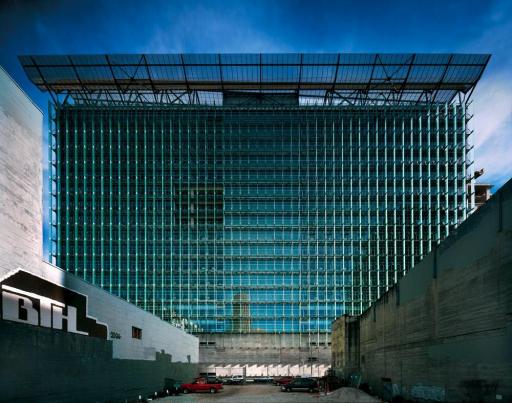
Located in the north of the Spanish capital, with a strong architectonic identity, the project, which follows an architectonic philosophy of sustainable development, is a gigantic business campus enclosed within a glass wall, crowned by the greatest solar paneled roof in Europe. Telefόnica’s HeadquartersThe 26,000 m2 of solar panels that cover the canopy-roof transform solar energy into electricity, 4,389,000 kw/h/year, which in turn reduce atmospheric emissions of CO2 by 2000 Tn. The new headquarters of Telefónica, Distrito C, which is, due to its dimensions, the largest corporate project in Europe, and one of the largest in the world, houses its twelve thousand employees in one sole headquarters located in the north of Madrid, in Las Tablas. A total of 16 buildings, 400,000 square meters, and 6,000 parking spots are some of the figures that shape Distrito C, located in Las Tablas. Telefόnica’s HeadquartersCharacterized by the homogeneity of the buildings, joined by an immense roof canopy, the new business campus is spread over a 200,000 square meter rectangle of surface area and extends below ground. The district is divided into four phases, in each of which are two four-story buildings and one ten-floor tower. In addition to these twelve buildings, there is another singular building –the Central Building- where the company management is located, another housing all of the catering services (open to the public) and a third holding a daycare center, a fitness center and a health center for company employees. Telefόnica’s HeadquartersThe project uses one sole coating material on the façade: glass. It utilizes the entire range, from total transparency as an intrinsic quality of the glass, to the artificial and absolute opaqueness of color silk-screened glass. For the former, extra-clear glass in large dimensions 4x2m is used. For total opaqueness, a new type of glass that was developed specifically for the project was used, making the interior vision compatible with the exterior opaqueness thanks to an advanced technology. Telefόnica’s HeadquartersTechnically the façade was constructed through a modular system of double curtain walls. The combination of filtering qualities and distances between layers reduces the resulting solar factor –relationship between visible light transmitted and rejected heat- to 19%. This favorable relationship is absolutely necessary for the installation of the cold beam air-conditioning system with its reduced maintenance costs. Except for the four towers, all of the buildings are crowned by an impressive canopy, a rooftop that covers the entire construction, unifying the complex. Additionally, the canopy, which serves the purpose of refreshing and shading the common areas and corridors that internally connect the four phases, supports the largest surface area of photovoltaic solar panels (16,000) in all of Europe. An impeccable landscaping project incorporating the architecture and organized around a large pond was developed in Distrito C. (Fabiana Cambiaso, Università La Sapienza) Credits: www.rafaeldelahoz.com    Telefónica Headquarters -  Rafael De La-Hoz Castanys Architetto Site: Madrid, España Completed: 2008 Materials: Glass Applications: Envelope Photos: © Rafael De La-Hoz Arquitectos; © Roland Halbe; © Miguel de Guzmán; © Luis Asín; © Joan Roig
Edoardo Croci

Facades

20 years of Light + Building

5 dicembre 2019

Light + Building festeggia vent’anni di entusiasmante lavoro pionieristico nel settore dell’illuminazione e della building automation.

Ottenere più risultati all’interno del team, essere il primo ad esplorare nuovi mondi e il fascino di nuova partenza.
L’illuminazione e la building automation creano connessioni visionarie. Light + Building le renderà visibili nel 2020 in occasione del suo 20° anniversario.

All’insegna del motto “Connecting. Pioneering. Fascinating.” Light + Building celebra nel 2020 non solo il suo 20° anniversario, ma anche un intero settore in forte crescita, in quanto l’illuminotecnica e la building automation rappresentano il catalizzatore del XXI secolo.
“Possiedono il potenziale per garantire efficienza, sicurezza, comfort e salute a gran parte della popolazione mondiale e di ciò beneficeranno in particolare le aree urbane in rapida crescita ", dichiara Wolfgang Marzin, Presidente del Consiglio Direttivo di Messe Frankfurt.

Foto 1
Light + Building festeggia vent’anni di entusiasmante lavoro pionerisitco nel settore dell’illuminazione e della building automation.
Fonte: Messe Frankfurt / Pietro Sutera

Light + Building punta quindi i riflettori sul networking di sistemi intelligenti di building automation così come sull’influenza del lighting design orientato al futuro. Dall’8 al 13 marzo 2020 i temi top di Light + Building forniranno inoltre risposte concrete alle richieste mondiali dei mercati in crescita.

I temi top in breve


La “Dynamische Digitalisierung“(Digitalizzazione dinamica) è il tema predominante che come una sorta di fil rouge attraversa tutti i temi top, che faranno riferimento nelle sezioni “Connecting“, “Pioneering“ e “Fascinating“ al claim di Light + Building. Il tema “Progressives Energie-Management“ (Energy management progressivo) affronta la tematica dei ruoli talvolta mutevoli dei produttori di energia e dell’utenza. Ciò può venire disciplinato tecnologicamente tramite sistemi ‘smart’ di building automation. Inoltre con il tema “Smart Urban” la fiera leader mondiale raffigura sia lo stato attuale che il futuro delle infrastrutture intelligenti per la ricarica dei veicoli elettrici nei quartieri urbani. L’aumento prospettico della mobilità elettrica richiede altresì infrastrutture di ricarica efficienti su tutto il territorio; questo complesso tematico sarà illustrato dal tema “Fortschrittliche ELadeinfrastruktur“ (Infrastruttura di ricarica elettrica avanzata). A ciò si aggiunge il tema della “Vernetzte Sicherheit” (Sicurezza in rete) come altra questione importante del settore e degli utenti. Questi quattro blocchi tematici rientrano nella sezione “Connecting”.
Parallelamente la sezione tematica “Pioneering” abbraccia settori che offrono un grande potenziale, ma non sono ancora pienamente affermati sul mercato, tra cui “X as a Service“, dove la “X” rappresenta una prestazione immediata – per esempio un sistema d’illuminazione o di sicurezza. Anche la “Vorausschauende Wartung” (Manutenzione predittiva) offre un lavoro pionieristico; tramite lo studiato utilizzo di sensori e software la manutenzione degli impianti elettrici degli edifici può essere effettuata prima che la loro efficienza diminuisca o si verifichino degli errori. Il tema “Digitale Zwilling – BIM” (Gemelli digitali – BIM) diviene, non solo a livello tematico, il punto d’incontro di tutte le parti coinvolte nell’integrazione dei sistemi.
Oggi design non significa esclusivamente la forma degli apparecchi d’illuminazione; altrettanto importanti sono le loro caratteristiche tecniche
e in particolare la connettività. La sezione tematica “Fascinating” di Light + Building 2020 mette in evidenza gli attributi essenziali dell’illuminazione e dell’illuminotecnica future-oriented. Il tema “Funktionale Ästhetik” (Estetica funzionale) illustra un megatrend che rinuncia deliberatamente all’ornamento per concentrarsi invece sulle rispettive esigenze d’illuminazione di differenti situazioni. Suscita emozioni, anche in relazione a epoche diverse, il tema “Klassische Authentizität” (Autenticità classica), mentre il complesso tematico “Historischer Aufstieg“ (Progresso storico) crea una connessione tra passato e futuro con citazioni contemporanee del design archetipico del passato. “Futuristischer Fokus” (Focus futuristico) pone in primo piano gli stili di vita e le modalità di lavoro moderni. Questo tema pone sotto la ‘giusta luce’ un tavolo per la prima colazione o un co-working office e al riguardo contribuiscono concept d’illuminazione flessibili. L’offerta internazionale e i temi top di Light + Building 2020 saranno completati dall’ampio programma di eventi collaterali. A ciascun target group di visitatori – architetti, designer, commercianti, artigiani, imprenditori, ingegneri, arredatori e progettisti – Light + Building offre eventi mirati.

Light + Building Fiera leader mondiale dell’illuminazione e dell’edilizia intelligente Francoforte sul Meno, 8-13 marzo 2020
All’edizione 2018 della fiera leader mondiale dell’illuminazione e dell’edilizia intelligente hanno partecipato 2.719 espositori e 220.864 visitatori per consolidare o avviare contatti commerciali, sperimentare le innovazioni e discutere delle nuove prospettive. In totale le aziende espositrici internazionali hanno rappresentato il 70% dell’offerta della fiera e anche la domanda è stata rappresentata per il 52% dai visitatori esteri. Tra le nazioni maggiormente rappresentate sul fronte dei visitatori si contano, dopo la Germania, Cina, Italia, Paesi Bassi, Francia, Regno Unito, Svizzera e Belgio. Anche in occasione del suo 20°anniversario Light + Building propone il ‘light event’ aperto al pubblico Luminale, che si svolgerà dal 12 al 15 marzo 2020. Con circa 250.000 visitatori, Luminale si annovera tra le principali manifestazioni di Francoforte e della regione Reno-Meno.
Luminale nasce nel 2002 ad opera di Messe Frankfurt che da allora promuove e sostiene ampiamente la manifestazione insieme alla Città di Francoforte sul Meno. Luminale s’impone come la Biennale dell’arte della luce e del design urbano, con l'obiettivo di fornire nuovi impulsi a cavallo tra arte, tecnologia e urbanità per rendere la città un luogo affascinante, proiettato verso il futuro, nonché un “creative hub“.
Il prossimo appuntamento con Light + Building è dall’8 al 13 marzo 2020.


La brand family di Light + Building conta attualmente quindici fiere nel mondo - Argentina, Cina, India, Russia ed Emirati Arabi Uniti.

Informazioni essenziali su Messe Frankfurt
Frankfurt Messe Frankfurt è il più grande operatore al mondo specializzato nell’organizzazione di fiere, congressi ed eventi dotato di un proprio polo fieristico. Con oltre 2.500* collaboratori dislocati in 30 sedi consegue un fatturato annuo di circa 715* milioni di euro. Messe Frankfurt
ricorre a una profonda interconnessione con i vari settori e a una rete di distribuzione internazionale per servire in maniera efficiente gli interessi commerciali dei suoi clienti. Un’ampia gamma di servizi, onsite e online, garantisce ai clienti in tutto il mondo un livello di qualità costantemente elevato e flessibilità nella pianificazione, organizzazione e realizzazione della loro manifestazione. La gamma deii servizi offerti spazia dall’affitto del polo fieristico all’allestimento degli stand, dai servizi di marketing al personale e alla ristorazione. La sede principale della Società è a Francoforte sul Meno. Gli azionisti sono la Città di Francoforte, che detiene il 60 percento, e il Land Assia con il 40 percento. La sede principale della Società è a Francoforte sul Meno. Gli azionisti sono la Città di Francoforte, che detiene il 60 percento, e il Land Assia con il 40 percento.


Per ulteriori informazioni::

www.light-building.com/brand

* dati provvisori 2018


Edoardo Croci

Architecture