SAIE 2015 – future challenges: energy conservation and green living

Requalification, recovery of buildings and cutting-edge technology to design the home of the future: this is what was presented at 51° Edition of the SAIE, international building exhibition in Italy.

logoSAIESmartHous_ILNUOVOSAIE

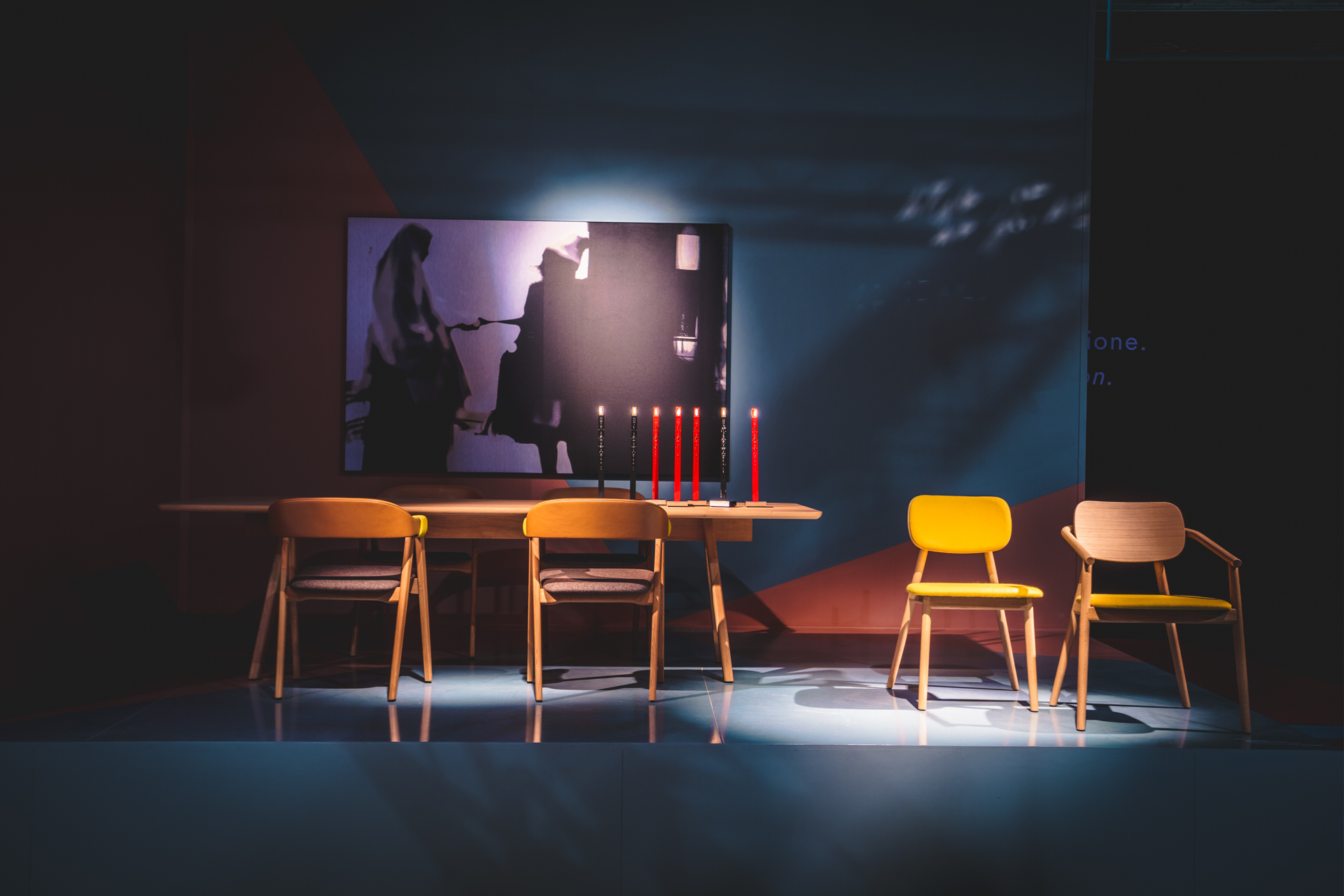
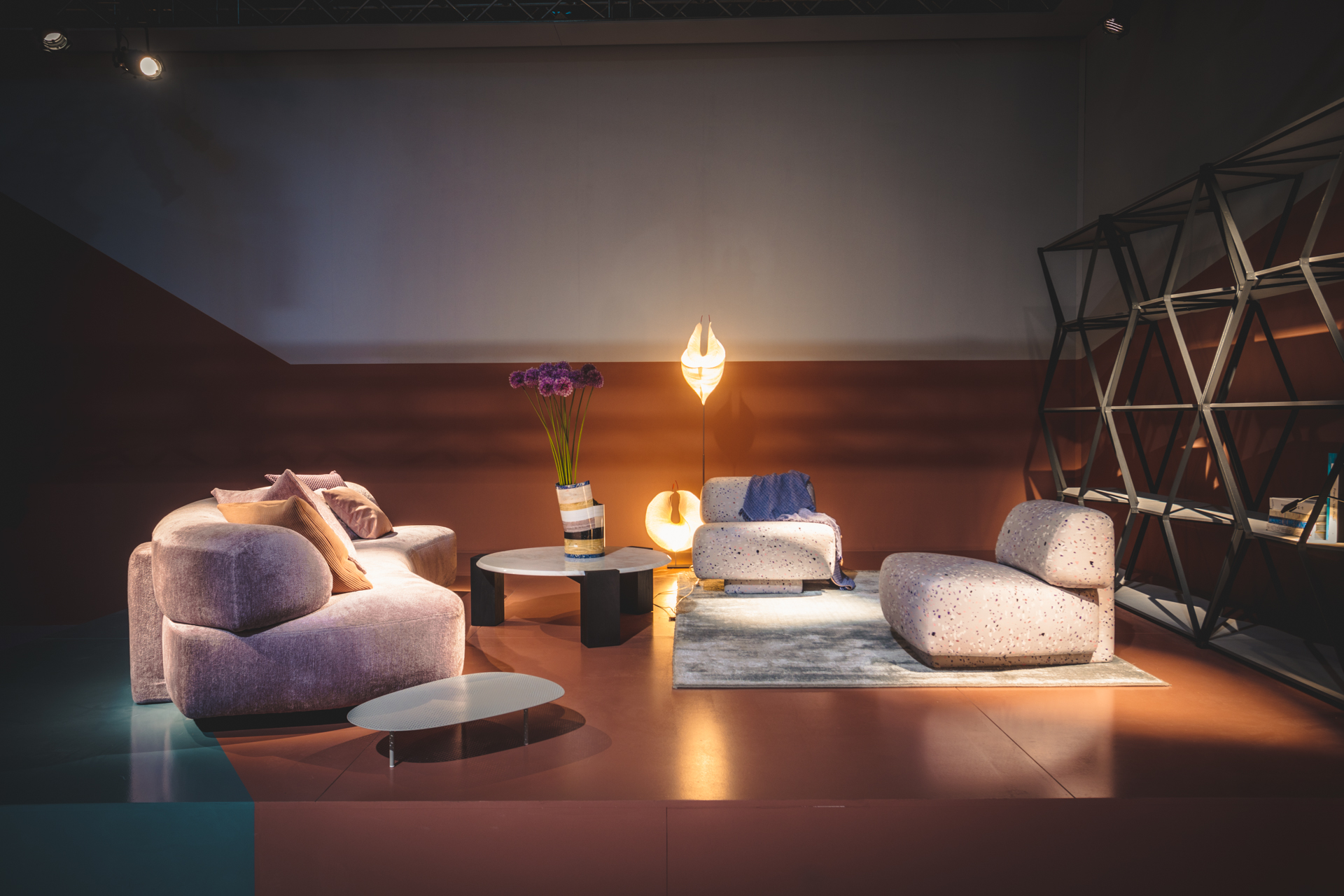
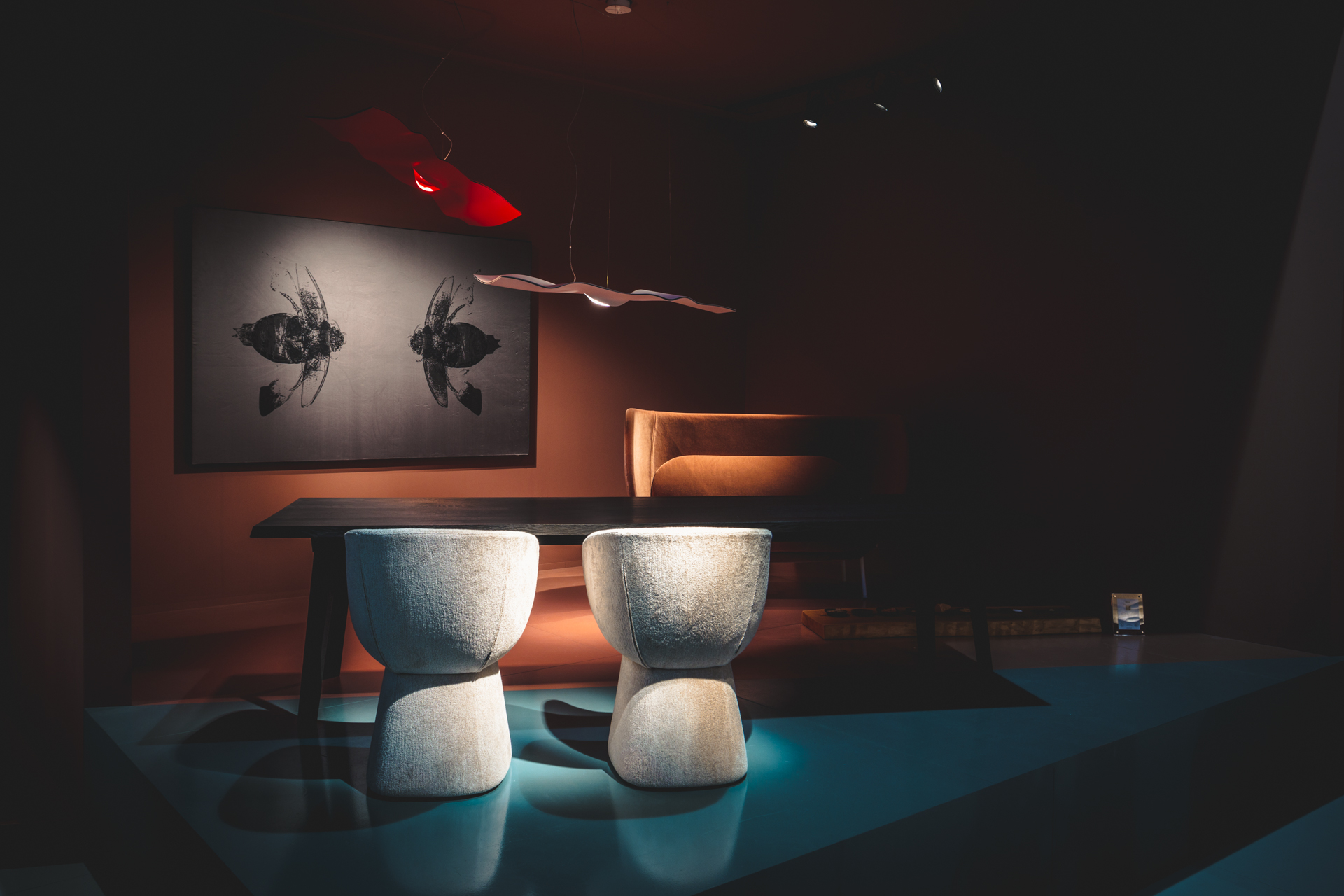
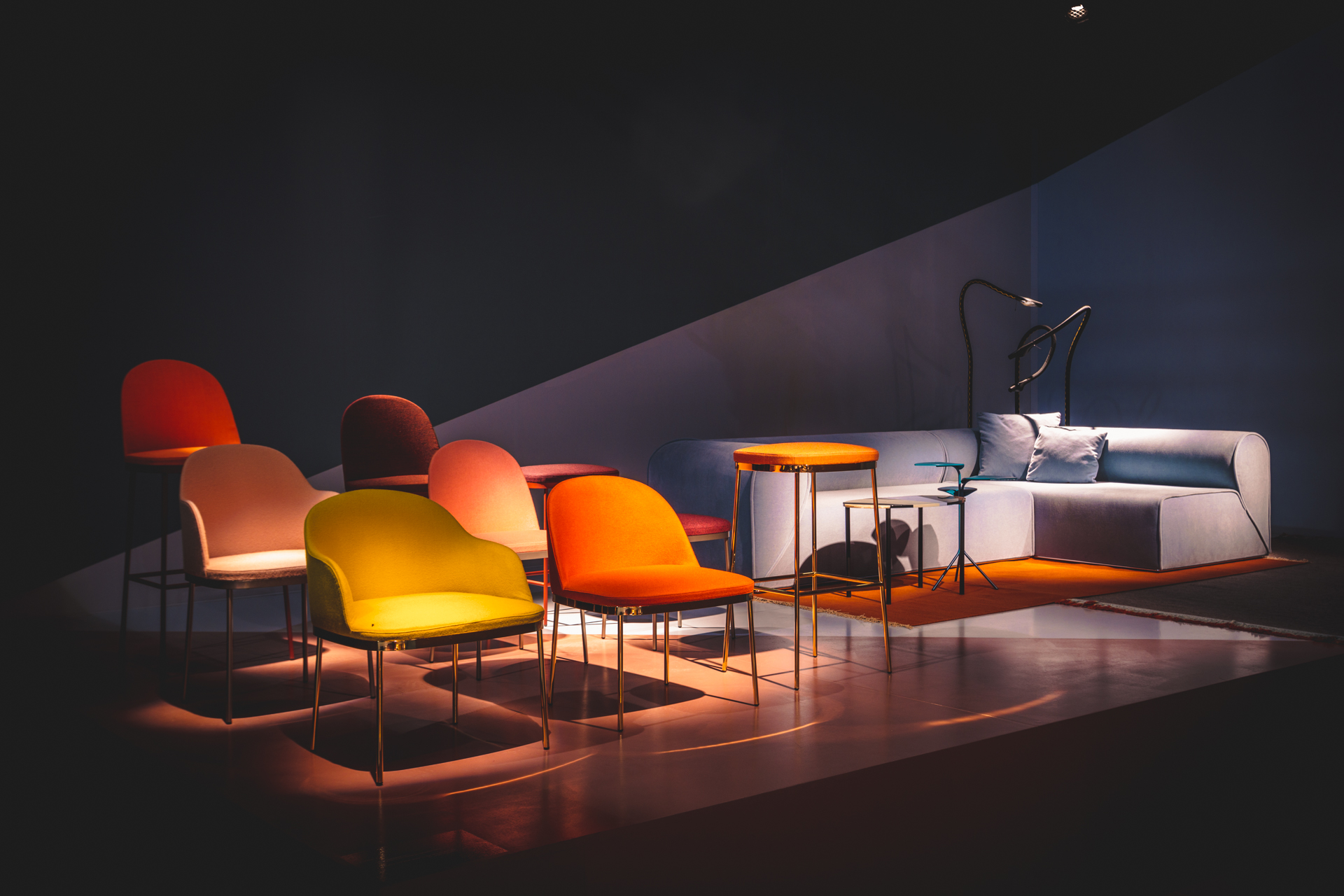
At the heart of the new SALT SMART HOUSE, in the Services area of Bologna fair (held like the interior of a great intelligent and sustainable house), SMART HOUSE LIVING has been presented. This project consists of 4 souls: an exhibition – Smart House Solution – on which was represented a new culture of sustainable living, which allowed visitors to ' touch ' practical applications and innovative technological solutions; a playful and participatory path – the Wheel of Sustainability – to bring the public to the culture to "triple zero" (zero consumption, zero emissions, zero waste); the Forums on the themes of designing, building and inhabiting the houses of tomorrow; the BIG Energy Idea — a ' emotional room ' of innovation told through videos and sounds: a project to push for change through knowledge. SAIE_bologna

In SMART HOUSE LIVING area, energy has been the main topic thanks to the forum "Building & Innovation". In the Digital Smart Building technology how this innovation can revive the construction industry has been the main topic. Many laid optical fiber is still unused. Since last July with the Decree Unlock Italy, "all new buildings must be equipped with a passive multiservice physical infrastructure inside the building, consisting of adequate space and installation of high-speed communications to the fiber optic network termination points". The legislation makes the provision in new homes be mandatory. Esprit Nouveau _SaieSAIE #Idrogeo has been the main new of this edition: it is an informative area and exhibition dedicated to the theme of recovery and securing of the territory from the hydrogeological point of view, that this year 2015 focused on the theme of urban land preservation thanks to the work of engineers and geotechnical in particular. 'Green' has been the guest star in new edition of SAIE, too. Inside the 'Live' path, #Landmaking group has organized ‘To build green’, an area where some of Italian excellences in the field of green have been gathered. The construction industry's interest is directed towards the energy efficiency of existing buildings, as well as through the performance improvement with the aid of new and more modern systems and engineering solutions. Costruire sostenibile

Architecture

BedZED: prototype of eco-neighbourhoods

19 November 2018

BedZED (Beddington Zero Energy Development) is the UK's first and largest carbon-neutral eco-community and is located in Sutton, a residential town 40 minutes South East from London. BedZED consists of 82 residential homes with a mixture of tenures – 34 for outright sale, 23 for shared ownership, 10 for key workers and 15 at affordable rent for social housing – and 1'600 square metres of work space, an onsite shop, café, sport facilities, health centre and childcare facilities with a further 14 galleried apartments for outright sale. Residents have been living at BedZED since March 2002 and currently BedZed is home to 220 residents. BedZed2The BedZED design concept was driven by the desire to create a net 'zero fossil energy development', one that will produce at least as much energy from renewable sources as it consumes. Only energy from renewable sources is used to meet the energy needs of BedZED the development is therefore a carbon neutral development - resulting in no net addition of carbon dioxide to the atmosphere. BedZed1BedZED was developed by the Peabody Trust in partnership with Bill Dunster Architects (ZedFactory); ARUP and BioRegional Development Group, environmental consultants. Transport: A green transport plan promotes walking, cycling and use of public transport. BedZED has good public transport links, including two railway stations, two bus routes and a tramlink. BedZED was the first low car development in the UK to incorporate a car club. A 'pedestrian first' policy with good lighting, drop kerbs for prams and wheelchairs and a road layout that keeps vehicles to walking speed. The BedZED project introduced the first legally binding Green Transport Plan as a condition of planning permission. On-site charging points for electric cars are available in Sutton town centre. Energy: Buildings are constructed from thermally massive materials that store heat during warm conditions and release heat at cooler times. BedZED houses are arranged in south facing terraces to maximise heat gain from the sun, known as passive solar gain. 777 square meters are covered with solar panels. Each terrace is backed by north facing offices, where minimal solar gain reduces the tendency to overheat and the need for air conditioning. BedZED homes and offices are fitted with low energy lighting and energy efficient appliances to reduce electricity requirements. BedZED receives power from a small-scale combined heat and power plant (CHP). The heat from the CHP provides hot water, which is distributed around the site via a district heating system of super-insulated pipes. To enable residents and workers to keep track of their heat and electricity use, meters are mounted in each home and office kitchen. Water: Water use is reduced to 76 litres/day; out of which 18% represents rainwater or recycled water; use of aerated taps, low flush toilets, smaller bathtubs. One innovation at BedZED is the use of a reed-water biofiltration system that purifies blackwater into graywater for use in non-potable applications, such as toilet flush or water for gardening. Waste: separate waste collection system. Local materials: To reduce the embodied energy of BedZED, construction materials were selected for their low embodied energy and sourced within a 35-mile radius of the site where possible. Where possible, BedZED is built from natural, recycled or reclaimed materials. (Fabiana Cambiaso - Università La Sapienza) www.zedfactory.com/zed www.bioregional.com Photos: © 2010 Andrew Butterton; © 2010 ZEDfactory Ltd; ©2009One Planet Living; ©2008 The Independent.

Carlo Bardelli

Green building

Downtown Spa by Aquatica

Would you like to transform your client’s outdoor space into an exclusive wellness spa? COVID-19 dramatically increased anxiety and stress levels, depriving many of much needed spa and wellness retreats while lockdowns limited people's options to spend time outdoors. Aquatica, an award-winning designer and manufacturer of therapeutic bathtubs recently introduced the perfect spa solution for luxury homes, a beautiful 4-seater hydromassage hot tub. The Downtown Spa series feature a compact exterior combined with a spacious interior, allowing four adults to comfortably soak in style in ergonomically designed lounge chair seating with soft built-in headrests. Easy to install and use, the Downtown Spa is one of the best modern hot tubs for luxury homeowners. 


Aquatica Downtown spa


World-Class Spa & Wellness Technology 


Your clients will definitely appreciate the opportunity to enjoy a therapeutic wellness treatment anytime in their private hydromassage hot tub. This life-changing spa product offers numerous healing benefits, such as relieving stress, anxiety, insomnia, inflammation and muscle pain. 


Aquatica Spa Downtown


The Downtown Spa is equipped with 32 hydro-massage jets, 12 air massage jets and back massage with Air Assist Turbo Massage (AATM™). These high-tech wellness features deliver a powerful whirlpool massage along the entire back, from cervical to lumbar. Aquatica’s integrated Chromotherapy LED-powered lighting system creates the most relaxing ambiance, allowing bathers to completely switch off and forget about their worries. Chromotherapy can also reduce swelling, relieve pain, decrease inflammation, and accelerate open wound healing. Each color in the program has different characteristics, and bathers can select a specific light show to suit their mood.


Aquatica Downtown


Choose The Best Hot Tub Exterior To Match Your Outdoor Space


All Aquatica spas are equipped with world-class wellness technology, a robust stainless-steel structure with a 25 year warranty, and a durable DurateX™ tub shell with a warranty of up to 10 years. Clients can choose from five different styles of Downtown Hot Tubs to fulfill your design needs. Let’s take a look at the options:


⦁    Inground Spa
If you're looking for an easily accessible outdoor spa, then take a look at the Downtown Inground Spa, one of the best 4-person hot tubs on the market for accessibility and versatility. The Downtown Inground Spa is easy to get in and out of, making it a popular hot tub choice for older people, families or individuals who struggle with mobility. This built-in spa pool can perfectly complement almost any outdoor setting, permanently enhancing the value and overall appearance of the outdoor space. It also includes more jets and high-tech features than most other inground spas on the market, which tend to lack hydrotherapy technology and can only integrate a small amount of jets. 


Spa Downtown Aquatica


⦁    DurateX™
If you're designing an outdoor space for a contemporary home, you should consider The Downtown Hot Tub with the DurateX™ one piece cabinet, a proprietary light-weight glass-carbon composite. This durable material is easy-to-clean and will maintain its natural surface shine and original color for many years. Combining DurateX™ technology with state-of-the-art marine grade gelcoats, enables us to guarantee against micro-cracking or other surface defects for 10 years of intensive use. DurateX™ boasts exceptional UV, blush, chemical & blister resistance (bromine and chlorine water) and  is also capable of withstanding air and water temperature variations. 


Aquatica Spa Downtown BIM


⦁    Thermory Natural Wooden Siding
Are you working on a project in the countryside? The Aquatica Downtown Spa With Thermory Wooden Siding is the best choice for a lakeside or forest setting. Featuring a stunning cabinet made of real solid wood, the hot tub's wooden aesthetics complements the natural beauty of the great outdoors. This is one of the best spa hot tubs for nature lovers and eco-conscious consumers, as the thermally treated wood is sourced only from sustainable forests. The wood undergoes a special chemical-free modification with steam, making sure it is completely non-toxic, and does not need to be handled as hazardous waste. 


Thermory Natural Wooden Spa Aquatica


⦁    Maridur® 
If you're designing an outdoor space for a yacht or seaside property, you should consider the Downtown Spa with Maridur siding, a premium moisture-resistant material. Made in Germany, this radiant white cabinet provides outstanding outdoor protection all year-round. Developed specifically for marine indoor and outdoor applications, it features high-edge stability that is both swell free and rot free. This low-maintenance material does not gather dust or dirt and is extremely easy to clean. Maridur is easy to paint and varnish, offering plenty of design opportunities, if you need a specific color to match the outdoor decor. Aquatica’s master craftsmen lacquered these beautiful contemporary panels, following processing with high gloss UV resistant polyurethane enamel. This not only provides a beautiful high-gloss appearance, but it is also guaranteed to last for years to come.


Aquatica Maridur Spa Downtown


⦁    Infinity 
Are you searching for that wow-factor to impress your clients? The Downtown Infinity Hot Tub with a magical vanishing edge is guaranteed to do the trick! This innovative infinity system is designed to overflow continuously, while simultaneously heating the water to the perfect temperature. An integrated surge tank allows the overflow of the Downtown Infinity hot tub spas to operate in a closed circuit. The surge tank collects displaced water when additional bathers enter the hot tub. The water overflows into the decorative channel surrounding the rim of the infinity hot tub. If a person leaves the spa, the water from the balancing tank flows back inside. 


Infinity Spa Aquatica


Hot Tub Accessories- A Luxury All-Weather Synthetic Leather Cover 


The Aquatica Downtown Hot Tub Cover is a smart and stylish accessory, making sure the hot tub is fully protected in all temperatures, even in the sun and snow. This high-performance product features exceptional durability combined with abrasion and stain resistance. Made of Lederplast BIOCOTE®, an innovative antimicrobial synthetic leather, this low-maintenance material is hygienic and easy-to-clean. The material’s integrated BioCote ® antimicrobial technology prevents the growth of bacteria, mold and microbes by 99.99%. This protects the cover against degradation such as staining and discoloration. This fashionable hot tub accessory is available to buy in white, black, grey and brown.


Hot Tub Aquatica Downtown


Create The Ultimate Home Spa Experience


Transform your client’s outdoor space into a world-class spa by adding extra features.


⦁    Integrated Bluetooth - Aquatica’s state-of-the-art Integrated Bluetooth Audio System sets the perfect mood for hydromassage therapy, with powerful Class D amplifier technology, weather-resistant pop-up speakers, and an integrated subwoofer. The system can be connected to a phone or computer via Bluetooth from any music app.


Home Spa Aquatica Downtown


⦁    Auxiliary Water Chiller-Heater - The Auxiliary Water Chiller-Heater allows homeowners to use the spa anytime of the year, easily adjusting the temperature to suit your needs and the weather outside. The eco-efficient MODBUS protocol based air pump offers a wide range of between -23°F to 109.4°F (-5°C to 43°C) .

⦁    The Aromatherapy Package - The soothing perfume canister is plumbed into the air blower system, heating the air and releasing relaxing fragrances from specially-infused beads. Aromatherapy treats a wide array of mental and physical issues from stress and anxiety, to headaches and digestive issues. 


Aromatherapy Aquatica


⦁    Electrical System For Yachts - The Downtown Spa can be installed on a yacht or luxury cruise liner. The hot tub can be permanently plumbed in and equipped with automatic electronic filling and super-fast draining.


Yachts Spa Aquatica


⦁    Pneumatic Bathtub and Spa Elevator - This cleverly designed elevator provides fast and easy access to all internal electrical and plumbing parts. The Pneumatic Bathtub & Spa Elevator makes servicing and maintenance a simple and stress-free experience. 


Spa Elevator Aquatica Downtown


⦁    Aquatica Professional ServicesWe can dispatch one of our experienced engineers or technicians to your project location to train your plumber, and oversee the installation process. This provides peace of mind, by ensuring the hot tub is installed correctly. 


Professional Services Spa Aquatica


Explore Aquatica’s entire collection of luxury hydromassage outdoor spas and freestanding solid surface bathtubs. Discover the Aquatica Professional Trade Program with great deals and discounts for builders, designers, architects, home stagers, contractors & plumbers. 


RMIT Design Hub: translucent skin and energy performance

13 Jenuary 2019

The purpose of the Design Hub is to provide accommodation in one building for a diverse range of design research and post graduate education. The Hub provides a collegial research base where post graduates in fields such as fabric and fashion design will work alongside those involved in architecture, aeronautical engineering, industrial design, landscape architecture, urban design and so on.

Design Hub del Royal Melbourne Institute of Technology 4

Research groups have the ability to locate and fine tune their accommodation within ‘warehouses’ – open plan spaces where research teams can set up and tailor their work environment to suit their particular needs. Teams may stay for anywhere from six months to three years depending on the nature of and funding limits to their research and education programs. Research may include the need for workshops to make physical models to be located alongside computer studios, three dimensional printing, virtual reality modelling and so on. Given the time frames associated with research projects all the warehouses require a high level of adaptability and flexibility. In that sense these spaces are designed to accommodate the organic nature of research – ever evolving, adapting, changing and growing. The plan of the Hub acknowledges the desire for incidental cross pollination where researchers from one field encounter those from completely unrelated other fields as part of their day to day use of the building. An exhibition space and design archive provide a public interface with both industry and research outcomes. These spaces combined with a variety of lecture, seminar and multi purpose rooms facilitate high level exchanges in a number of forums.

Design Hub del Royal Melbourne Institute of Technology 3

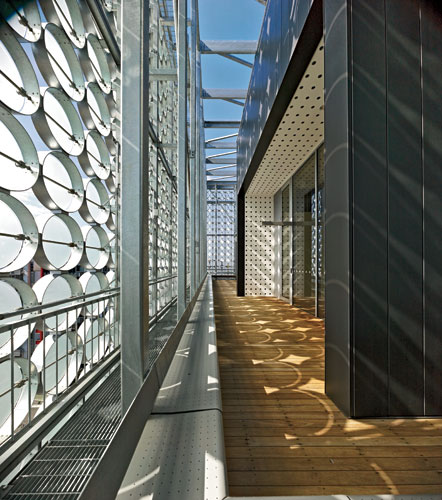
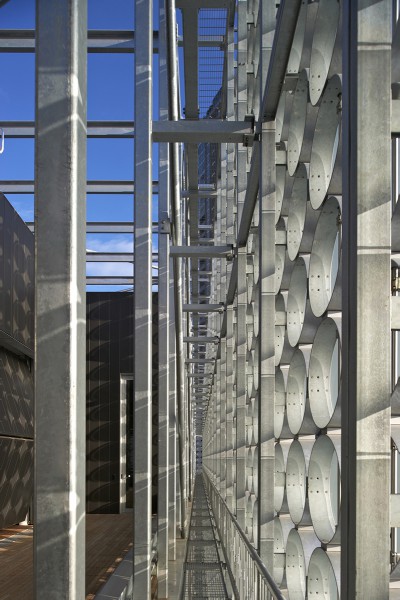
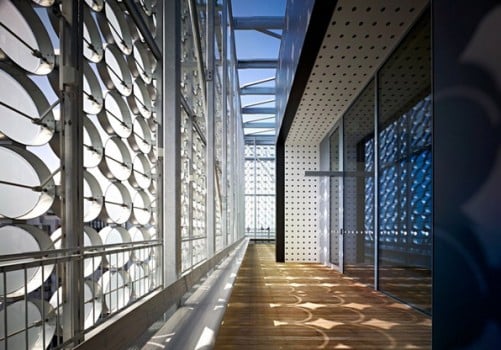
The Hub has a large number of ESD features and incorporates strategies of water, waste and recycling management that are the equal of any ESD focussed building on the planet. In particular the outer skin of the Hub incorporates automated sunshading that includes photovoltaic cells, evaporative cooling and fresh air intakes that improve the internal air quality and reduce running costs. The cells have been designed so that they can be easily replaced as research into solar energyresults in improved technology and part of the northern façade is actually dedicated to ongoing research into solar cells to be conducted jointly by industry and RMIT. The entire building façade, in other words, has the capacity to be upgraded as solar technology evolves and may one day generate enough electricity to run the whole building. The façade comprises a specifically detailed double glazed inner skin on each face of the building and an automated operable second skin shading device. The second skin shading device surrounds the entire building, from the ground floor to the roof plant level. It is made up of nominally 600 mm diameter sandblasted glass disks, which are fixed to either a horizontal or vertical aluminium axel. Each axel is fixed to the outer face of a galvanised steel cylinder of a slightly greater diameter and nominally 130 mm in depth. 21 glass discs and steel cylinders are fixed together in panels of nominally 1.8 m by 4.2 m, which are supported on a secondary galvanised steel frame set out about 700 mm from the curtain wall face of the building. These are accessed by an external service walkway on each level.

Design Hub del Royal Melbourne Institute of Technology 2

Each typical panel is made up of 12 operable glass discs and 9 discs which are fixed. At the ground and plant room levels all glass disks will be fixed. There are 86 panels on each level and therefore 774 panels for the nine levels of the building. Perimeter air intakes and fine mist sprinklers incorporated into the double glazed inner skin provide passive cooling to the UFAD system. The water used in this ‘Coolgardie safe’ system is harvested from the roof. Fresh naturally cooled air provides a less expensive, lower energy consumption and more desirable thermal comfort alternative to a wholly conditioned work environment.   Credits: www.seangodsell.com RMIT University, Melbourne, Australia, by Sean Godsell Material: Frosted glass,  Low-E insulating glass, steel profiles and galvanized steel Application: Envelope Area: 13,000 sqm Completed: 2012 Figures: © Earl Carter (Fabiana Cambiaso – Università La Sapienza Roma).

Marco Mignatti

Facades

ArboSkin: bioplastica riciclabile per facciate innovative

15 Ottobre 2018

L'università di Stoccarda ITKE Institute, Dipartimento di Strutture e Costruzioni della Facoltà di Architettura, nell'ambito del Research Proiect Bioplastic Facade, ha progettato e costruito il nuovo padiglione ArboSkin: è composto di 388 piramidi di bioplastica, materiale totalmente biodegradabile o riciclabile derivante da materie prime vegetali rinnovabili annualmente, come l'amido di mais o la farina.

ArboSkin  

L'intero padiglione è realizzato con elementi di facciata in 3D e dimostra le potenzialità estetiche e strutturali delle bioplastiche. Ha vinto recentemente un premio in uno dei più importanti concorsi tedeschi sulle idee innovative.ArboSkin  

La bioplastica è un materiale estremamente malleabile, ma con buone prestazioni strutturali, particolarmente adatto nello sviluppo di facciate complesse e con motivi in rilievo. Allo stesso tempo consente di rispondere alla crescente domanda di materiali da costruzione provenienti da risorse efficienti e sostenibili, limitando l'utilizzo di derivati da combustibili fossili. ArboSkin

Il progetto della struttura a guscio è basato su una rete di forme triangolati in pezzi tetraedrici di dimensioni diverse. La doppia pelle curva è fatta con piramidi di bioplastica di 3.5 mm di spessore che vengono assemblate meccanicamente per creare la superficie di forma libera. La forma complessa a doppia curvatura portante è realizzata collegando tra loro i tetraedri con anelli di rinforzo e travicelliI fogli di bioplastica possono essere modellati e adattati liberamente per soddisfare qualsiasi esigenza estetica dell'edificio.

ArboSkin

I fogli di bioplastica sono stati plasmati e termoformati ad alta temperatura consentendo di coniugare una elevata adattabilità ai disegni più complessi e i rifiuti prodotti durante la fresatura sono stati recuperati, ricostituiti e riutilizzati per creare altri elementi di facciata tridimensionali. I granuli di bioplastica sono estrusi in lastre, che a loro volta sono ulteriormente elaborate in base alle singole esigenze per ottenere superfici e strutture anche di notevole complessità. I prodotti semilavorati sono utilizzabili sia per rivestimenti esterni sia per rivestimenti interni. A fine vita il materiale può essere riutilizzato o smaltito tramite compostaggio. ArboSkin

Finora le bioplastiche erano state utilizzate solo per il confezionamento ma questo padiglione dimostra che il materiale può essere promosso ad alternativa verde al cemento, la cui produzione rappresenta l'otto per cento delle emissioni globali di anidride carbonica. (Fabiana Cambiaso Università La Sapienza) www.itke.uni-stuttgart.de ©ITKE; ©Roland Halbe.

Carlo Bardelli        

Facades

Learning from Vernacular. Mud, wood and stone

28 November 2018

Mud huts, wooden houses, stone houses: the architecture of all the world is changing, evolving and adapting to the environment, climate and local materials. Great examples of sustainable construction, expressions of traditional cultures, arise from here.

Schule, Anna Heringer

"Learning from Vernacular" exhibition was staged at the Vitra Design Museum. It has been an opportunity to discover examples of traditional architecture: a contemporary design that hides new forms of construction, from South Africa, Egypt, China, to Malaysia up to Cameroon; wooden architecture, spectacular projects in bamboo up to structures that resemble tunnel and were made with Palm grass. Togo Tamberma, Tata Photos, Deidi von Schaewen

The exhibition presents the residential projects of the Auburn University of Rural Studio in Alabama, the collaboration between architects and craftsmen in India, the work of architect Carin Smuts in South African townships or the bamboo structures of the Colombian Simón Vélez. Films, photographs and plans demonstrate how the buildings were built and the everyday life of their inhabitants. Learning from Vernacular Learning from Vernacular Learning from Vernacular

With its 40 models, the exhibition presents a veritable panorama of world architecture. And it opens the eyes of the public for the abundant variety of materials, shapes and construction techniques that exist outside of the commercial market and are handed down from generation to generation. In these cases, the social aspects of architectures are often just as important as aesthetics or the economy. Thanks to the numerous examples of renewable raw materials and energy-neutral solutions, it offers numerous opportunities for sustainable development of resources. Learning from vernacular was made possible thanks to the complete collection of École Polytechnique Fédérale de Lausanne (EPFL). This collection includes more than 700 1:20 scale architectural models and many documents. The collection is part of a large archive dedicated to modern architecture, whose Director Pierre Frey is the curator of the exhibition. One of the pioneers of sustainable and social construction practice is the architect Anna Heringer, that held a conference at Vitra Museum about projects in countries such as China, Morocco or Bangladesh, where she developed a unique approach to architectural design that closely involves the community and local materials. www.design-museum.de www.anna-heringer.com  

Marco Mignatti

Green building

Planium: Metal in interior design

Many times metal has been the protagonist in the history of art and architecture for the contribution it provides in external devices. Today, however, metal is present more and more frequently in interior design. Furnishing with metal means spreading a sense of minimalism, of design reduced to the essential, which also gives a perception of rigor to the whole. Metal is eternal, its maintenance is minimal and - very important - can be recycled.


Planium


Depending on the treatment that Planium reserves for it, metal can have a different brightness and materiality, with a direct effect obviously on the aesthetics ... the brushed metal, for example, has a more shiny character than the satin which, however, is more sophisticated to the touch and sight because it alternates light and dark, shadow and light. And this can also be true for steel, be it stainless steel or oxidized, for the iridescent copper and for its alloys obtained with tin or zinc, that is the "gilded" bronze and brass ...

Installing with Planium is a matter of speed, but also of reversibility: with dry laying, alternatives to traditional models, the brand invests in environmental sustainability, avoiding the use of glues and silicones. In different ways, the following are proposed: the support laying of AP01 Lay Floor - the fastest ever - the one-click laying of PL01 Invisible, the "mechanics" of SM02 Evolution with visible angular screws or finally the always practical and magnetic MG01 Magnetic Floor.

Partners news

Metroquality - BRERA DESIGN DAYS FERRAMENTA, 15-18 ottobre

Lo spazio Metroquality in via Solferino 24 (MI), il punto di incontro tra il mondo della progettazione e le aziende, diventa sede della mostra FERRAMENTA, che nasce dall’idea di far convergere le conoscenze e le capacità di un’azienda che lavora i materiali come Niva, con la creatività di un gruppo di tredici architetti e studi milanesi.

Diceva Enzo Mari “Da trent’anni si producono oggetti di design che hanno l’unico scopo/caratteristica di sembrare diversi uno dall’altro.” In questo senso, le opere di FERRAMENTA hanno la straordinaria caratteristica di non somigliare a nulla: sono tredici numeri primi, nati dalla pura creatività di progettisti da sempre impegnati nella produzione industriale.

È così che il metallo viene plasmato, piegato, bucato e saldato per dare vita alle idee degli artisti: la materia prende forme complesse, affascinanti, e straordinariamente rari. Anzi, unici.

Metroquality ospita FERRAMENTA da lunedì 15 a giovedì 18 ottobre, in occasione di Brera Design Days 2018.


DOVE:

Spazio Metroquality, via Solferino 24, Milano

QUANDO:

  • lunedì | dalle 14:00 alle 18:00
16
  • martedì, mercoledì, giovedì | dalle 9:00 alle 18:00 
Architecture

Carbon fiber and robots. A Pavilion inspired by a beetle

The Institute for Computing Design (ICD) and the Institute of Building Structures and Structural Design (ITKE) at the University of Stuttgart have designed a Pavilion visually and physically reminiscent of an insect, or rather a beetle. The working group is not new to these recent projects: in fact another hall has been recently designed, and it is based on the exoskeleton of a lobster; its structure is designed and built on the model of the skeleton of a sea urchin.   The project is based on robotic development of double modules structures composed of layers of carbon fiber: in this way the entire architecture remains minimal and lightweight, allowing a high degree of freedom. It covers an area of 50 square meters, but weighs only 593 kg. Beetle-Shells-Structure-7-495x350The team of researchers and students have used high resolution 3D models of various beetle shells – known as elytra – to conduct an analysis of the complex internal structures, working closely with biologists and paleontologists of the University of Tuebingen. Beetle-Shells-Structure-6-495x350These structures were converted then into a set of design principles, made with glass and carbon fiber reinforced polymer to give the hall an optimal strength-to-weight ratio.   "The project presents a new approach to composite fiber structures in architecture", explained researcher and member of the ICD team Marshall Prado.
Materials

ZIP

15th October 2019

design by Meneghello Paolelli Associati

Collection of rectified glazed porcelain tiles, for both floor and wall covering. Tiles are available with plain borders and with moulded edges, in the format 60x60 cm and 60x120 cm. Both versions present three different colors: ivory white, anthracite black and terracotta. Thanks to the shaping, obtained on the edges of the tile, Zip expands the decorative system incorporating the joint, making it a creative element as well as joining tiles. The colored and shaped joint becomes a graphic sign, thus creating a continuous surface. Zip is zipper, in all respects. The elegance of the colors, the simplicity of its design, the matt finish and the uniform texture enhance the decorative role of the joint, essential component of the design of this collection. Moreover, the perfect modularity facilitates the laying and creation of personal and inventive compositional schemes, ideal both in residential and extra-residential environments. The graphic signs of Zip become a style imprint, icon of a new way of interpreting ceramics.

ZIP_01

ZIP_02


ZIP_03ZIP_04

Ceramica Bardelli
Via G. Pascoli 4/6
20010 Vittuone (MI)
Email: [email protected]
Press Office
Sabrina Giacchetti Studio
Email: [email protected]

Carlo Bardelli

Partners news