Basket Apartments. Wooden slats and three-dimensional wire mesh's envelope

06 January 2019

The project is located on a long and very narrow site, on the edge of Parc La Vilette in Paris’s 19th district, within an urban development done by Reichen & Robert architects. On the northeast, new Paris tram route is passing along the site. The site is bordering with tram garage on the southwest, above which is a football field. The first 3 floors of the housing will inevitably share the wall with the tram garage. Basket ApartmentsThe parcel has a very particular configuration; 11m in width and extending approximately 200m north-south. This foreshadows the importance of processing the eastern facade overlooking the extension of the street Des Petits Ponts which hosts the tram and both cyclist and pedestrian walkways. The long volume of the building is divided into two parts connected with a narrow bridge. Between two volumes there is a garden. The building has 11 floors: a technical space in the basement, shared programs in the ground floor, and student apartments in the upper nine floors. The layout is very rational and modular. Basket ApartmentsThe major objective of the project was to provide students with a healthy environment for studying, learning and meeting. Along the length of the football field is an open corridor and gallery that overlooks the field and creates a view to the city and the Eiffel tower. This gallery is an access to the apartments providing students with a common place. All the studios are the same size and contain the same elements to optimize design and construction: an entrance, bathroom, wardrobe, kitchenette, working space and a bed. Each apartment has a balcony overlooking the street. Basket ApartmentsNarrow length of the plot with 10 floors gives to site a significant presence. Each volume contains two different faces according to the function and program. Basket ApartmentsThe elevation towards the street des Petits Ponts contains studio balconies-baskets of different sizes made from HPL timber stripes. They are randomly oriented to diversify the views and rhythm of the façade. Shifted baskets create a dynamic surface while also breaking down the scale and proportion of the building. Basket ApartmentsThe elevation towards the football field has an open passage walkway with studio entrances enclosed with a 3D metal mesh. Both volumes are connected on the first floor with a narrow bridge which is also an open common space for students. Basket ApartmentsThe building is energy efficient to accommodate the desires of Paris' sustainable development efforts. The Plan Climates goal is that future housing will consume 50KW-h.m.² or less. The objectives of energy performance and the construction timetable were met by focusing on a simple, well insulated and ventilated object that functions at its best year round. Accommodations are cross ventilating and allow abundant day lighting throughout the apartment. External corridors and glass staircases also promote natural lighting in the common circulation, affording energy while also creating comfortable and well lit social spaces. The building is insulated from the outside with an insulation thickness of 20 cm. Thermal bridge breakers are used on corridor floors and balconies to avoid thermal bridges. Ventilation is controlled by double flow mechanical ventilation, providing clean air in every apartment with an optimum temperature throughout the year. The incoming air also reuses heat from the exhaust air. The roof is covered with 300m² of photovoltaic panels to generate electricity. Rainwater is harvested on site in a basin pool used for watering outdoor green spaces. (Fabiana Cambiaso - Università La Sapienza) www.ofis-a.si  Photos: ©Tomaz Gregoric.

Edoardo Croci

Architecture

FONDOVALLE AND LB TOWARDS THE “COMPASSO D’ORO 2020” AWARD

23rd October 2019

On the last 14th of October, the ADI DESIGN INDEX 2019 took place, completing the nominations for the “Compasso d’Oro 2020” Award.

ADI, Association for Industrial Design, analyzed all the 970 applications for products, projects and services, selecting 378 out of 970 that, together with the 178 recruited in 2018, compete now for the “Compasso d'Oro 2020” Award, the most important recognition in the world of industrial design, which rewards and enhances the quality of Italian design. The selection includes the best of Italian know-how, showing different shades of Made in Italy.

One of the selected products, in the “Design for materials and technological systems” area, is 20Pure by Ceramica Fondovalle, a technical porcelain stoneware slab similar in appearance to stone, with dimensions of 324x163 cm and a thickness of 2 cm.

20Pure has been realized thanks to Naturetech Technology by LB company, point of reference in design and construction of plants for the production of dough and porcelain stoneware for the ceramic industry. Naturetech is able to create an aesthetic effects on the product that replicate the uniqueness and exclusivity typical of natural materials. These effects - wood, marble, granite, natural stones – include the vein passing through the entire mass, particularly evident on slabs with a tickness.

FOTO 1
20Pure in the “Cardoso” color


The result is the same finish both on the edge and on the surface of the slab, that allows to apply it as a top element, without further processes besides cutting, drilling and shaping the edges to bring out the continuity of the veins and the richness of the material.

FOTO2


FOTO 3

The collaboration between Ceramica Fondovalle and LB aims to propose a full-fledged use of the ceramic product, admitting not only the more traditional uses such as floors and walls, but also proposing itself as a true furnishing element.

The 20Pure slabs has already been used in the installation "The golden castle" of LB in the courtyard of “La Statale” University of Milan during Fuorisalone 2018, realized in collaboration with the Italian architect Francesco Lucchese.

Installazione “Il castello dorato”, Fotografia di Beppe Raso
“Il castello dorato” installation, Photo by Beppe Raso

More info:

www.adi-design.org/homepage.html

www.fondovalle.it

www.lb-technology.it

Marco Mignatti

Partners news

A greenhouse suspended between Park and city

10 October 2018

Designed by architects Paolo Brescia and Tommaso Principi from OBR, the new restaurant on the terrace of the Palace of Art, with the "Arts & Foods" Hall curated by Germano Celant, is one of the most important initiatives of the Triennale di Milano for Expo 2015. After restoring the roof terrace over the main hall according to the original plans by Giovanni Muzio, Triennale of Milan shows a new dimension of quality catering, prepared by Michelin-starred chef Stefano Cerveni. © Gianluca Di Ioia - La Triennale di Milano All of the Milan Triennale exhibition have defined a synthesis between design and architectural experimentation. At such times the Park was transformed into a theatrical platform of new myths for urban living and Muzio's building became an admirable cultural promotion device. © Gianluca Di Ioia - La Triennale di Milano_9 The OBR project, winner of the competition organized by Triennale of Milan in January 2014, interprets the tradition with a lightweight, rigorous and dynamic solution. The restaurant is designed as a transparent greenhouse surrounded by greenery and suspended on the Sempione Park, with a spectacular view of the Castello Sforzesco and the entire skyline of Milan. Going up on the terrace of the Palazzo dell'Arte, you are greeted by an aromatic garden designed by landscape architect Antonio Perazzi, behind which the restaurant Glass Pavilion (33 x 5 metres), set back from the façade portals. © Gianluca Di Ioia - La Triennale di Milano_8 “Triennale has always been a reference of social and cultural life of Milan. The restaurant like greenhouse suspended between the Park and the city was born from the idea of enhancing the terrace of Palazzo dell'Arte as a place strong urban sociability, evolving sensitive space that works under dynamic exchanges between inside and outside "-Paolo Brescia and Tommaso Principi explain. © Gianluca Di Ioia - La Triennale di Milano_7 The Hall, which is completely open on the perimeter, is characterized by a light stainless steel modular structure which allows easy and fast mounting and dismounting directly in situ, combining industrial technology with craftsmanship. The structure design, engineered by Buro Happold and Milan Engineering and built by Capoferri firm, resumes the geometries of historic spans of Muzio. © Gianluca Di Ioia - La Triennale di Milano_6 A large 400 square meter mobile tent floats suspended above the Glass Pavilion. Completely open on one side, it runs the Hall like a greenhouse, thermoregulating with different mode day/night and summer/winter bioclimatic use, and allowing guests to dine repaired by the sun or dining under the stars. As a video installation, the curtain suspended on greenhouse comes alive with images and lights designed by Guido Bianchi, referring to events sponsored by Triennale for Expo and providing guests with a unique experience between haute cuisine and design, suspended between the park and the city. © Gianluca Di Ioia - La Triennale di Milano_5 The Pavilion is 33 meters long, 4.7 meters wide, 3 meters high and it has an area of about 150 square meters. The architectural design was developed by Paolo Brescia, Tommaso Principi and Andrea Casetto from OBR, with Maddalena D'alfonso, and it involves the construction of a glass Pavilion above the terrace of the Palazzo dell'Arte of Triennale di Milano, recently restored by the architect Alessandro Pedron. © Gianluca Di Ioia - La Triennale di Milano_4

Edoardo Croci

Architecture

NEW GEOMETRIES

12th September 2019

The creative soul of Planium combines constant attention to quality, aesthetics and design with an attitude for experimenting with new codes and styles, innovative expressive languages ​​derived from a ductile, natural and versatile material, such as metal.

Today, in living spaces, with a retro and minimal aesthetics, the patterns for floors, walls, fabrics and the design of furnishing and lighting complements create new geometries.

Triangles, hexagons, diamonds, rectangles, squares are drawn on the surfaces, thanks to the combination of different colors and materials. The tops are emptied, leaving space for profiles with minimalist taste, for graphics, for optical designs.

We find the geometric trend also in Planium coverings and floors, where infinite modular compositions can be obtained with modular tiles. The same space can thus originate unique scenarios, changing according to the use and the desired aesthetic result. This gives rise to solutions rich in personality, definition and distinction.

Thanks to the clever combination of sizes and cuts, colors and textures, it is possible to create walls or floors of great visual impact, or to emphasize delimited areas, highlighted by geometric decoration. Traditional or reminiscent combinations of retro or more modern, contemporary aesthetics are born; essential and sober solutions or, on the contrary, with lively movement effects. We use different metals with distinct shades to create bright and strong contrasts or the same tone-on-tone material, but with different textures to obtain soft and subtle nuances.

Our color palette ranges from the silvery tones of steel, to the warm ones, gilded in brass and bronze, to the red notes of copper, to the dark and unique nuances of the calamine, up to the brown or anthracite shades of oxidized steels. Our textures space creating smooth or raised, natural, brushed, satinized or even oxidized surfaces.

However, the result is the same, harmonized, balanced and with a strong identity.

Geometrie 03Geometrie 02Geometrie 01

Edoardo Croci

Partners news

Planium Metals for the airport scenarios

A "mantle" of Calamine laid on the floor covers the interior of an airport; Aviation Blue and Anthracite Gray for a setting that is not only for photography: Planium has installed Calamine and Embossed Steel slabs in the two important airports of the world Capital, New York, using the innovative PL01 Invisible dry installation system, with "one-click" between tiles. Also very popular with Calamina is the MG01 Magnetic Floor dry installation system, equipped with a magnetic underlay that binds to the metal core contained in the finish.


Calamina


Partners news

GIUSEPPINA E NAPOLEONE RIVIVONO A PARIGI GRAZIE ALLA MAESTRIA DI MOSAICISTI FRIULANI

27 Febbraio 2020

GIUSEPPINA E NAPOLEONE RIVIVONO A PARIGI GRAZIE ALLA MAESTRIA DI MOSAICISTI FRIULANI

Dopo lo splendido progetto di mosaico realizzato a Venezia per la boutique di Palazzo Torres, Friul Mosaic realizza i mosaici con tessere di oro e smalto della nuova boutique parigina Dolce & Gabbana.
In collaborazione con Eric Carlson, studio Carbondale.

Giuseppina letteralmente “accompagna” le signore lungo la scala fino al reparto dedicato a loro, mentre Napoleone fa altrettanto con i signori. 
«Pazzesco arrivare in cima alla scala con il viso dell’imperatrice che osserva i tuoi acquisti» ha commentato un’ospite della maison».

Lo store parigino di Dolce & Gabbana è un tuffo nell'era napoleonica: marmi, legni pregiati, mosaici di vetro e smalto: la nuova boutique del brand è una capsula del tempo che riporta allo splendore delle corti europee. Un lusso da Ancien Régime che spazia dall’oro e il rosso del Barocco, ai cipriati e pastelli del Rococò, un décor massimalista con ricami che riprendono arazzi e dipinti parietali del Rinascimento. A esprimere questa estetica della stravaganza pura non sono solo le collezioni di abbigliamento, accessori e gioielleria, ma anche il mosaico realizzato da Friul Mosaic nella boutique parigina appena restaurata in Rue du Faubourg St. Honoré nel cuore di Parigi. 

Napoleone Bonaparte - foto: Alessandra Chemollo

Giuseppina Bonaparte


Napoleone Bonaparte e Joséphine de Beauharnais accompagnano rispettivamente nella boutique uomo e in quella della donna, nelle loro riproduzioni fatte a mano a mosaico in vetro e smalto dei ritratti di Baron François Gérard. Una scala in marmo rosso Rouge de Roi collega i due piani dello store, dove il design rispecchia a tratti l'estetica francese e quella italiana. «Ci sono volute 4500 ore di incollaggio e 200 ore di posa per ultimare una realizzazione che è un vero e proprio elogio alla bellezza - racconta Barbara Bertoia, una delle titolari del laboratorio di San Martino al Tagliamento fondato dal padre William – un progetto che ci rende orgogliosi, tanto più che Dolce&Gabbana ci hanno scelto nuovamente dopo una prima positiva collaborazione per la loro boutique di Venezia». 
«La sfida, - continua Bertoia -, è stata è stata quella di adattare l’opera pittorica alle esigenze tecniche dell’arte musiva, raggiungendo un risultato organico e piacevole. Poiché le due riproduzioni dovevano essere il più possibile fedeli all’originale in termini di colori, dettagli ed effetto finale dell’opera, abbiamo utilizzato gli smalti veneziani che con la loro vasta gamma di colori ci hanno consentito di creare delle sfumature e dei minuziosi particolari dei tessuti e dei mantelli. Abbiamo utilizzato anche una buona quantità di ori veneziani per poter dare risalto alle corone ed ai gioielli oltre che ai dettagli dei troni e delle vesti delle due figure. Il numero di tessere è davvero difficile da quantificare anche perché per la realizzazione dei volti e dei vestiti abbiamo dovuto utilizzare la tecnica del micromosaico, l’unica in grado di riprodurre così fedelmente i due dipinti».

Preparazione mosaico Giuseppina Bonaparte
Bozzetto preparatorio per il mosaico di Giuseppina Bonaparte


Il team di artisti artigiani di Friul Mosaic ci ha lavorato per tre mesi, utilizzando tessere d’oro e smalti veneziani, stando attenti a mantenere alti i livelli di qualità e dettaglio oltre a rispettare i tempi stretti richiesti dal committente. 
Realizzati “a rovescio”, come da dettami della tecnica inventata per il mosaico moderno dal maestro sequalsese Giandomenico Facchina (altro friulano diventato famoso a Parigi, dove decorò l’Opera), i ritratti, alti 7 metri e larghi 5, sono stati poi portati in Francia con un trasporto dedicato su camion. Giunti alla boutique, sono stati messi a dimora dai mosaicisti di Friul Mosaic.
«Il tutto – sottolinea Bertoia – dovendo anche fare i conti con la scala presente nel negozio e dietro la quale sono stati collocati: una sfida in più che abbiamo affrontato con tutta la passione che mettiamo ogni giorno nel nostro lavoro». 

Il team di artisti al lavoro
Team di artisti al lavoro 


Il progetto di Parigi è la testimonianza di quanto l’artigianato italiano possa essere bello e prezioso in tutto il mondo. Nel prossimo futuro di Friul Mosaic ci sono nuove commesse da parte del settore. «L’alta moda – conclude Barbara Bertoia – è un ambito che sta richiedendo molti mosaici esclusivi e con il quale, quindi, stiamo collaborando positivamente.

Fase di lavorazione
Fase di lavorazione
 

*Foto dei Bonaparte in mosaico realizzate in boutique da Alessandra Chemollo

Azienda: Friulmosaic
Vias S. Giacomo, 42
33096 San Martino al Tagliamento PN Italia
tel. +39 0434899217
www.friulmosaic.com


Press Office: tac comunic@azione
tel. +39 0248517618
tel. +39 0185351616
[email protected]
www.taconline.it
twitter.com/tacomunicazione
facebook/tacomunicazione


Edoardo Croci

Soft House. A dynamic textile façade, low-energy and wood

11 March 2019

The city of Hamburg will become, until September, in the European capital of sustainable architecture, anticipating the trends of smart cities of the future, to find an innovative response to the most urgent problems of the contemporary urban living. softhouse-alchimag-slide The occasion is the International Building Exhibition (IBA), an event with over a century of history, born in 1901, and today more than ever pushed the green innovation of the construction industry. Hundreds are the proposals in a few weeks on the streets of Hamburg with international authorship. Architects, landscape architects, urban planners, engineers will meet to implement a wide range of architectural solutions related to reality and, above all, can be exported in any other context. Soft HouseAmong the protagonists of IBA, we find an award-winning team from the Massachusetts Institute of Technology (MIT), authors of "Soft House". "An architecture suited to respond to the continuous changes of our time," says the architect Sheila Kennedy Professor of MIT and leader of the study team KVA Matx, where energy infrastructure are not ends in themselves but as means of creating innovative buildings where technologies are the protagonists. Soft HousePosted in Wilhelmsburg Island, Soft House presents: -a dynamic South façade made of a Web of textile strips integrated photovoltaic cells and applied to a horizontal axis solar tracking. Photovoltaic elements are always oriented toward the Sun, picking up the maximum amount of clean energy to power your home. At the same time the fabric of the façade becomes a brise-soleil: natural shielding that protects the Interior from the heat during the summer months, leaving the light penetrate deep into winter; -a light wood frame and wooden furniture components that transform the perimeter structure of classic German Passivehaus, in a flexible and moldable living space, corresponds to the standard Passivehaus. -energy produced from “solar curtains” is transferred directly to the LED lighting system, essential to keep down the level of carbon emissions. Soft HouseThe Soft House is a clear demonstration of how the energy technology, can be transformed into a piece of design that contributes to the efficiency of low-energy buildings, besides being completely dismantled and recycled at the end of the life cycle of the building. "We need to achieve maximum creativity and flexibility to see how far we can bring new materials," says Sheila Kennedy. "The most interesting applications for the new materials are those who work at different levels, once this is achieved, we will be able to insert ourselves in the market, revolutionizing the sustainable architecture". (Fabiana Cambiaso – Università La Sapienza) Credits: www.kvarch.net web.mit.edu   Soft House, Kennedy & Violich Architecture   Residential area: 
4/180 mq Finished on March 2013 Materials: Wood, Textile membranes Applications: Structure, Casing, Screens.

Carlo Bardelli

Facades

Ceramic mortar becomes surfaces. Innovation and design

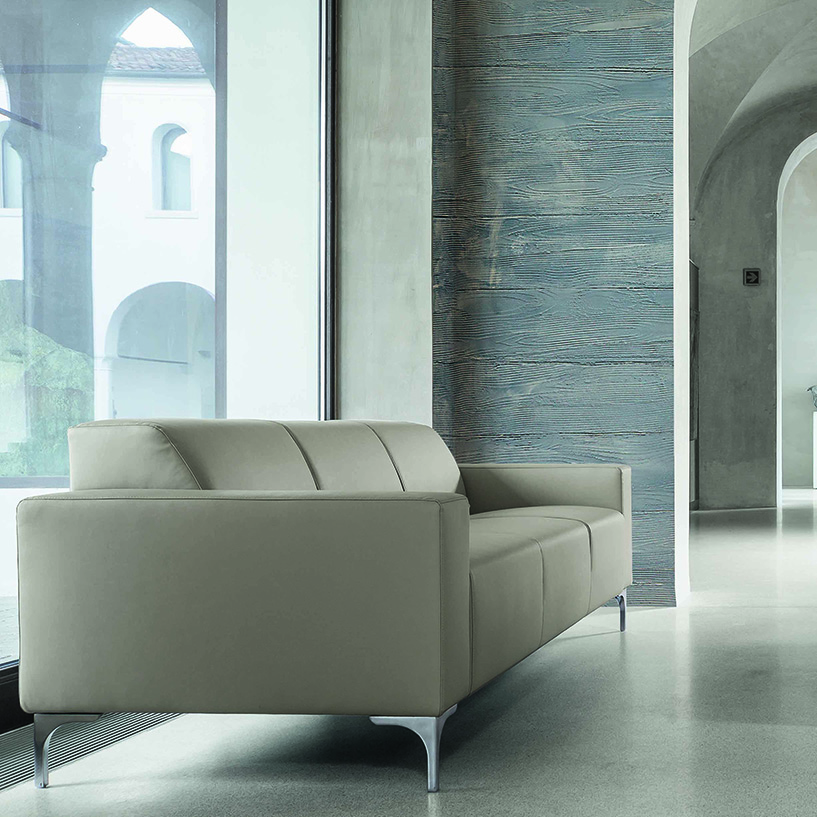
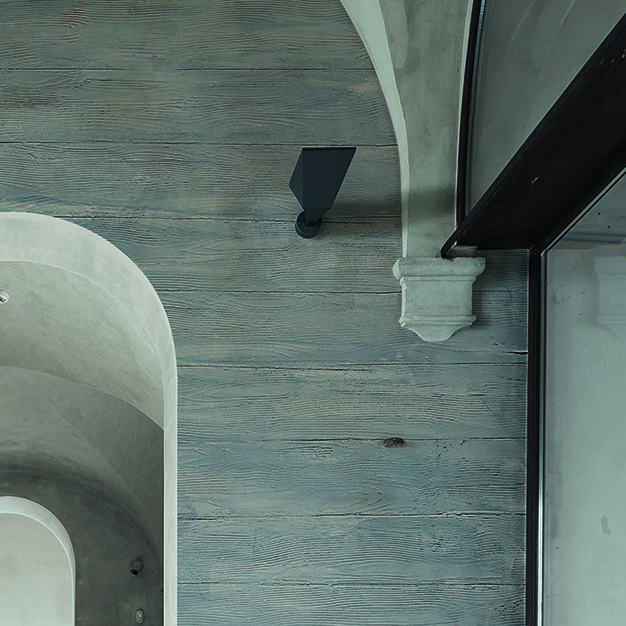
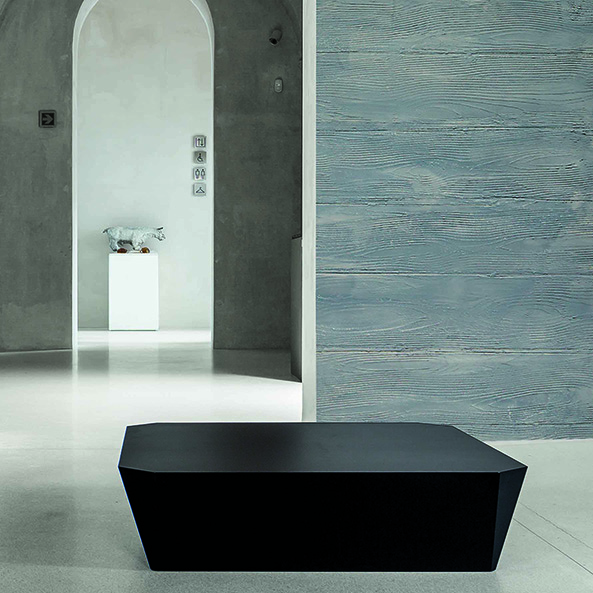
Ceramic fiber reinforced mortar covers the walls indoor and outdoor. 3D surface

This is one of the news presented at Made Expo by the Florentine company 3D Surface: a new collection with a refined design, developed with the use of special fused material.

3D surface

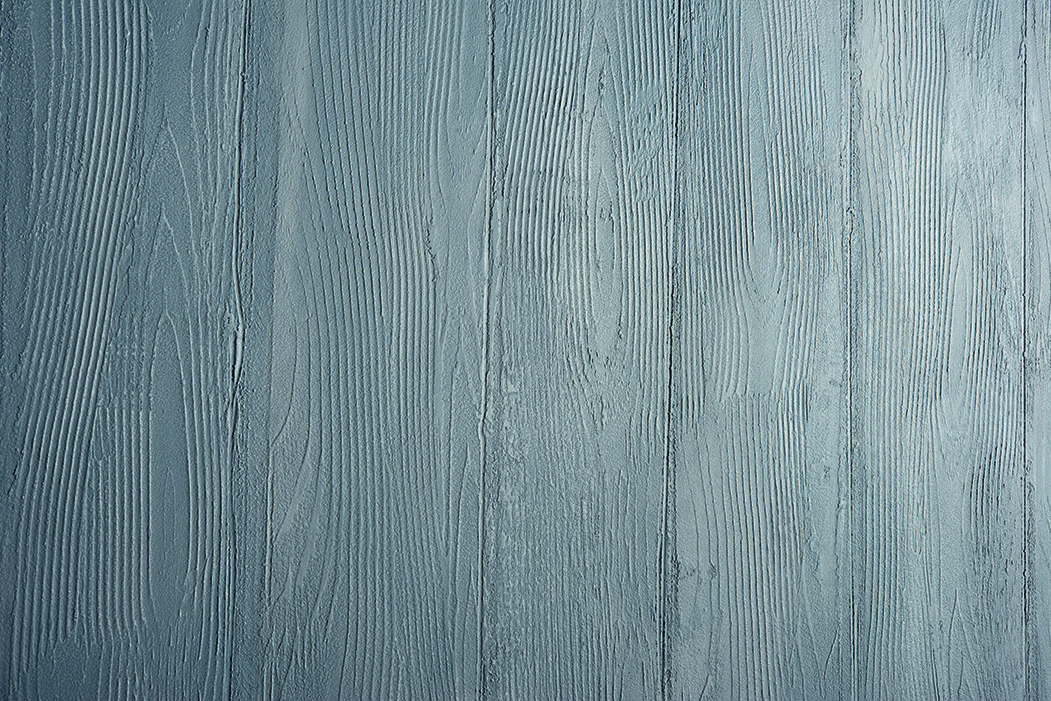
There are thirteen decorative textures with an organic and refined design, composed of elements that interact with each other. At the fair, inside the exhibition architecture workshop, touching the new "wall sculpture" became possible. The surfaces come alive, walls change their skin and transform.

3D surface

This is an innovation in the usual coating scenario. Architects, designers and planners have in their hands a versatile material that allows them to conceive new solutions, leveraging the tactile and sculptural quality of these textures.

3D surface

These materials also provide continuous solutions, surfaces are uninterrupted. It is an interesting change that combines innovation, research and design.   www.3dsurface.it

Materials

Villages Nature, eco-tourism at the gates of Paris

23 December 2018

#SUSTAINABILITY – After the announcement of the project in early summer, the work of Villages Nature have already begun. Villages Nature is the new eco-tourism destination, based on the search for harmony between man and nature. It is designed and it will be managed by applying the highest standards of sustainable development, in particular by using local renewable energy: geothermal energy deep in the Dogger in the Île-de-France, which will cover 100% of the energy requirements of the site.


Villages Nature is located 32 km east of Paris, in the Seine-et-Marne. It marks the start of a new generation of tourism projects and territorial programming that combines accessibility through transport, urban proximity and local energy. Territorial integration is planned by an innovative Sustainable Action Plan establishing quantitative and qualitative parameters that are applied to all project phases: design, construction and exploitation of tourism. This project is developed with the British NGO BioRegional: they adopt the same "One Planet Living" methodology. In 2013 Village Nature was also chosen by the United Nations Environment Programme as a major project to apply the "Global Partnership for sustainable tourism".

Marco Mignatti

Thermal insulation. Isocappotto system

05 April 2019

Those living in temperate bands of our land, especially in Europe but also in Canada and in the United States, knows how difficult it is to deal with the increasingly extreme and sudden changes in temperature. Often, in fact, severe weather events and disturbances cause significant excursions between the low and high temperatures. In these situations, keeping a high level of comfort at home and at work inside buildings may not be easy.

Marco Mignatti

To ensure good living and working conditions, without resorting to massively expensive and polluting air conditioning systems, it is necessary to have a good thermal insulation system with the right envelope thermal inertia. In this way it is possible to enjoy a very good thermal and acoustic insulation, with the resulting benefits. To obtain optimum results in every type of intervention, Isopan – a company specialized in the field of insulated panels for roofing and wall – achieved Isocappotto coating systems. It is not a traditional coat, but a evolved double skin metal panel faced sandwich, covered with different materials to obtain the same aesthetic of the plastered walls. The ISOCAPPOTTO system can be defined as a kind of faux flashing, as it differs from the classical system of traditional walls for the presence of a double skin metal faced sandwich covered with different materials. In this way you can hide the presence of sandwich panel, imitating the aesthetic of classic plastered walls.

ISOCAPPOTTO is a system that can be applied to any type of intervention, from the construction of new buildings or industrial production sectors (Office buildings, factories, warehouses) as well as residential buildings such as houses or condominiums. The system also represents a valuable solution in case of renovations or improvements of existing buildings.

Isocappotto can have two types of insulation: mineral wool or polyurethane. Polyurethane isolation allows a series of advantages such as: high heat resistance, mechanical stability, speed, stability, lightness and flexibility. The benefits of mineral wool insulation can be summarized in: high thermal insulation, good fire behaviour, high sound insulation, flexibility, dimensional stability and mechanical.

Materials